🎉 Up to 70% Off Selected ItemsShop Sale
Aoum II by Auguste Herbin
Auguste Herbin
1882-1960 | French
Aoum II
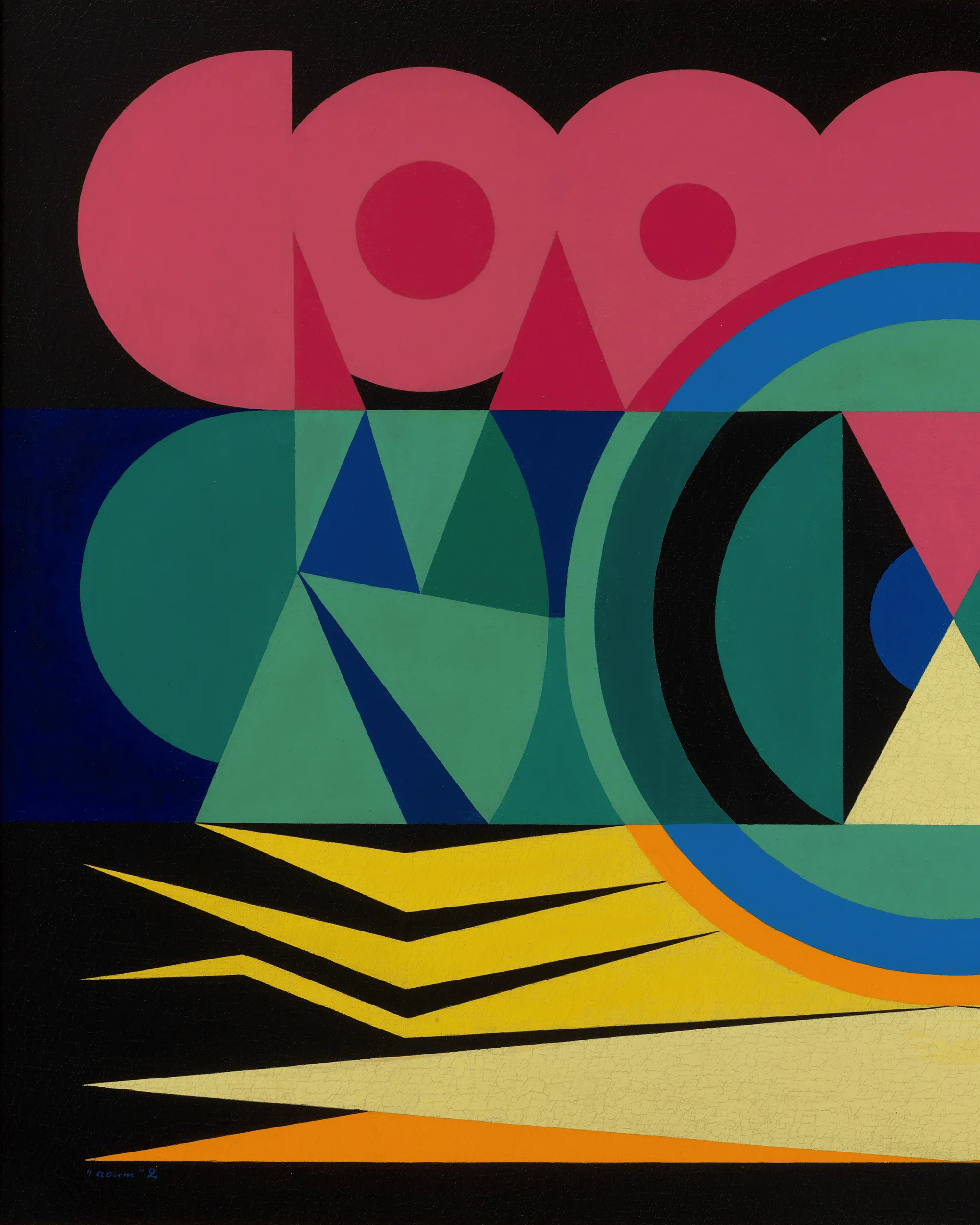
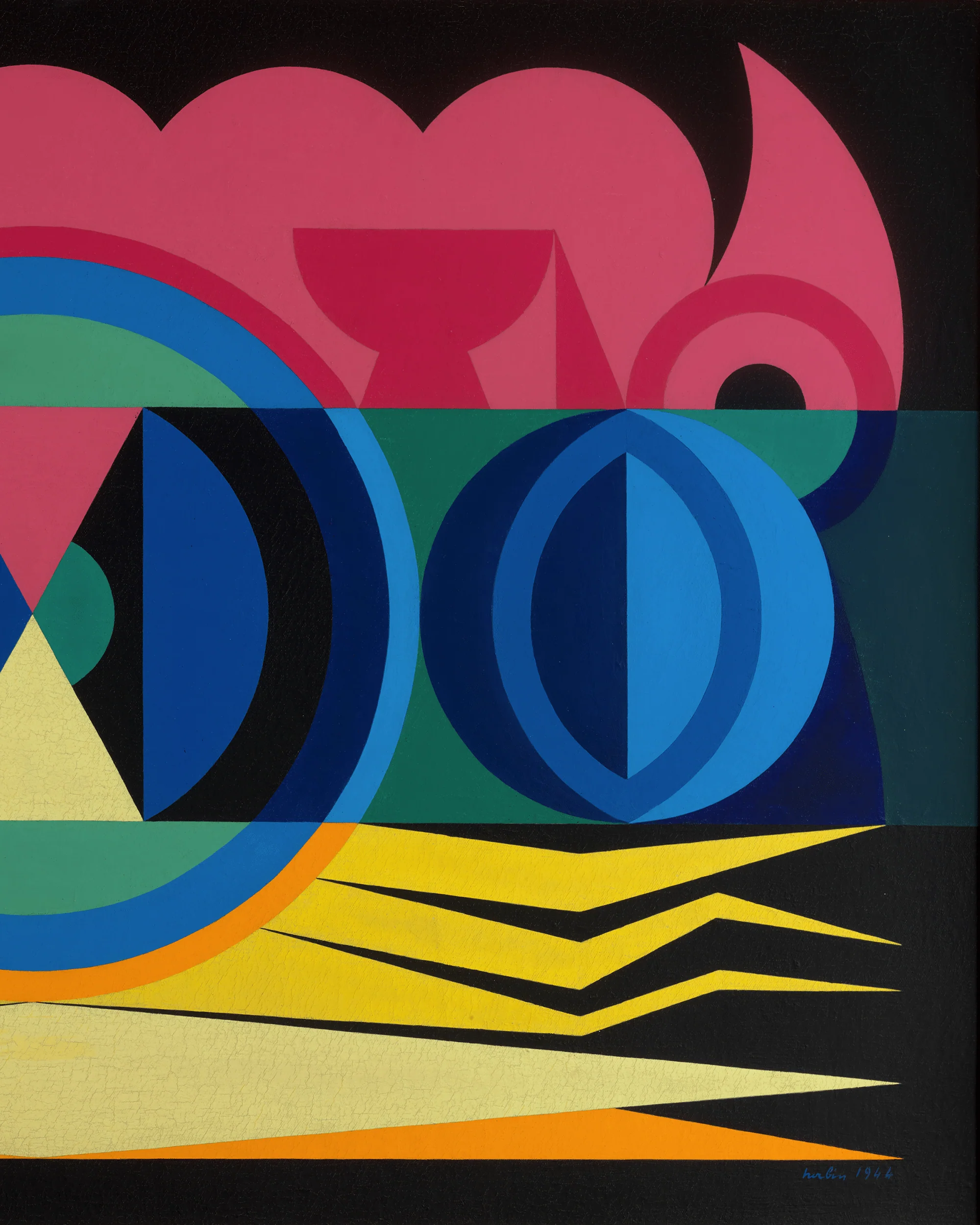
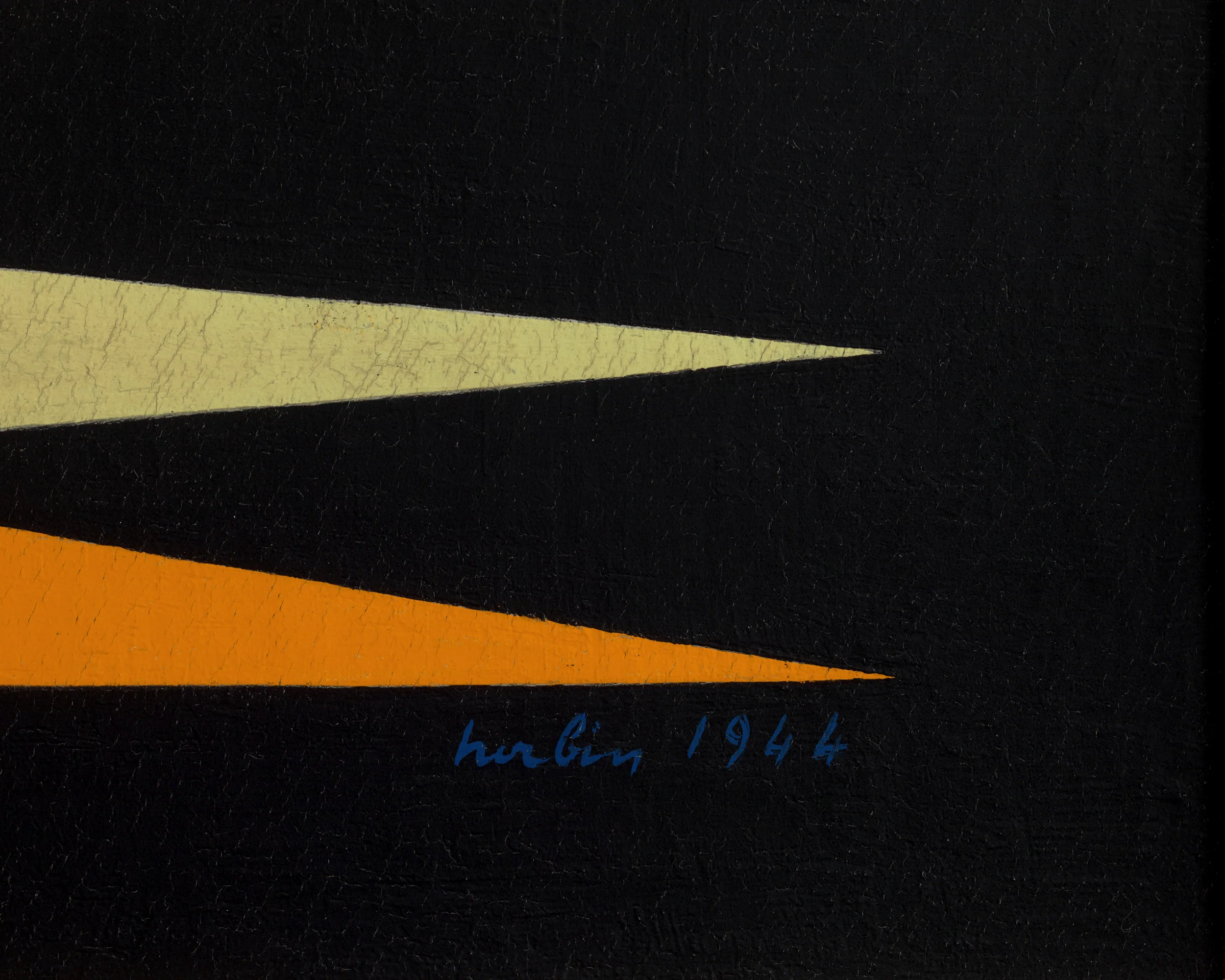
Signed and dated 'herbin 1944' (lower right); titled "aoum" 2 (lower left)
Oil on canvas
This bold and vivid abstract oil on canvas was painted by French painter Auguste Herbin, a pioneer in popularizing Modernist abstraction. Over his expansive nearly 60-year career, Herbin rubbed shoulders with art history greats from Pablo Picasso to Georges Braque before honing his personal and innovative style. Entitled Aoum II, the painting stands apart for its daring color palette and crisp composition.
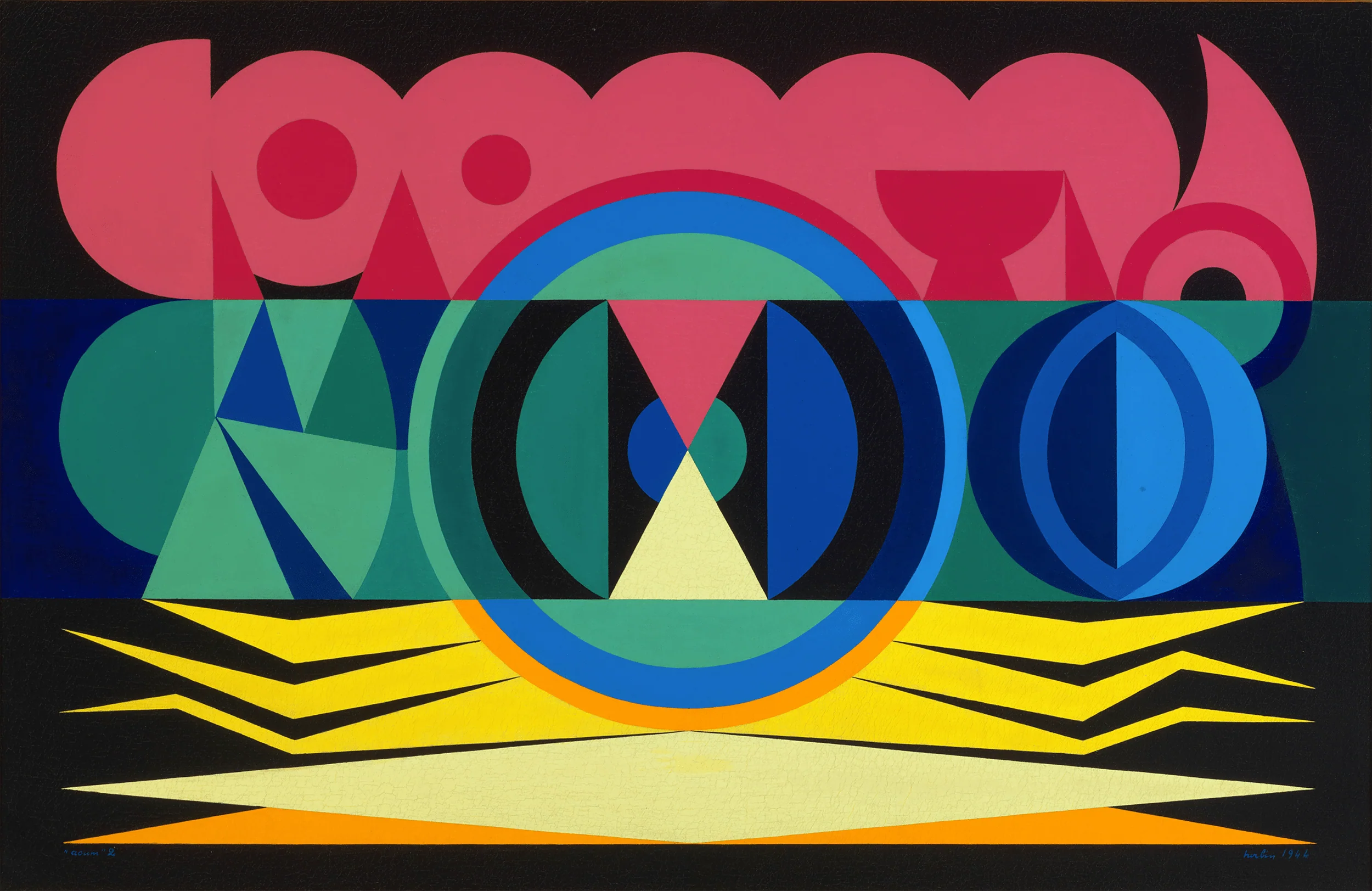
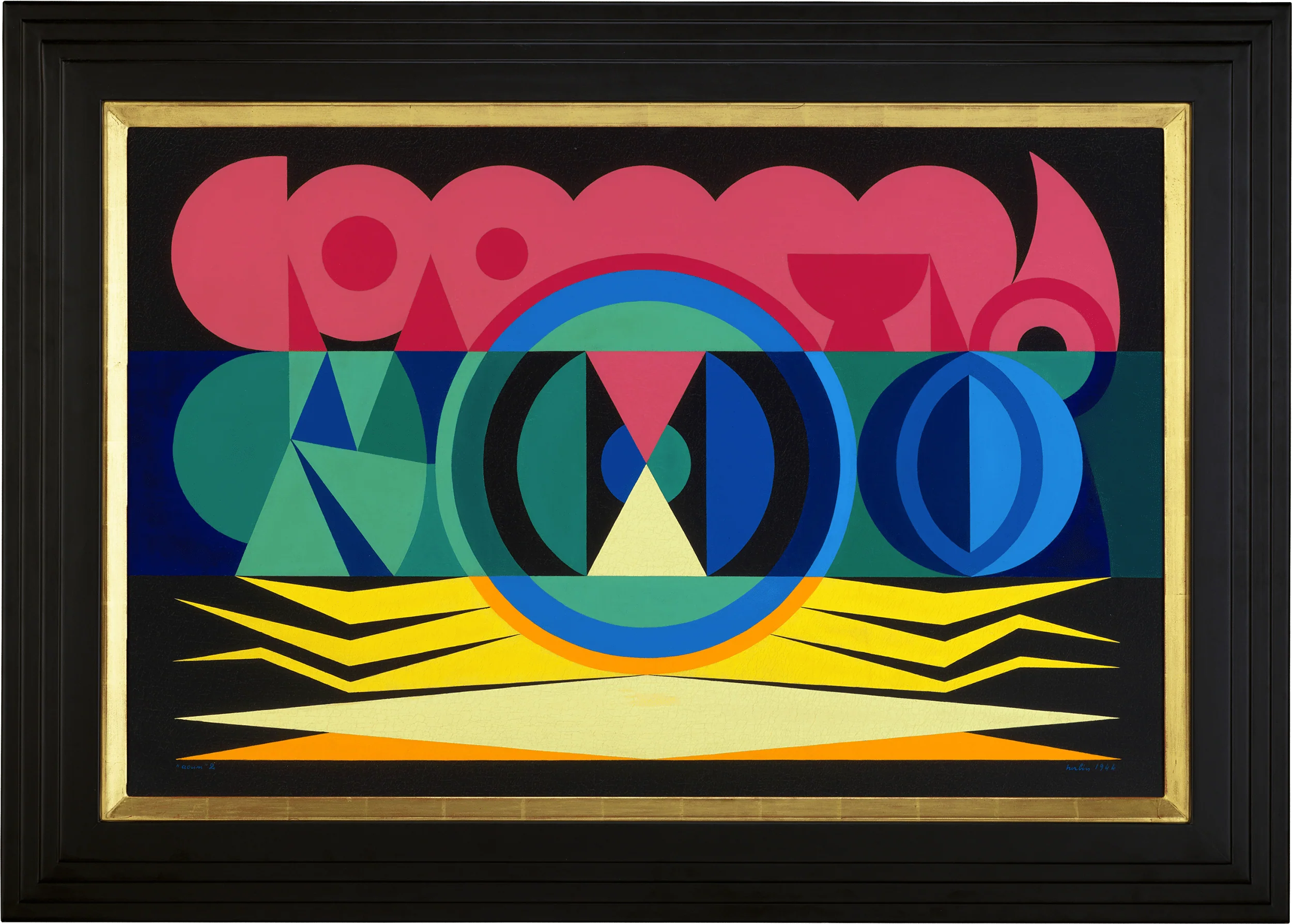
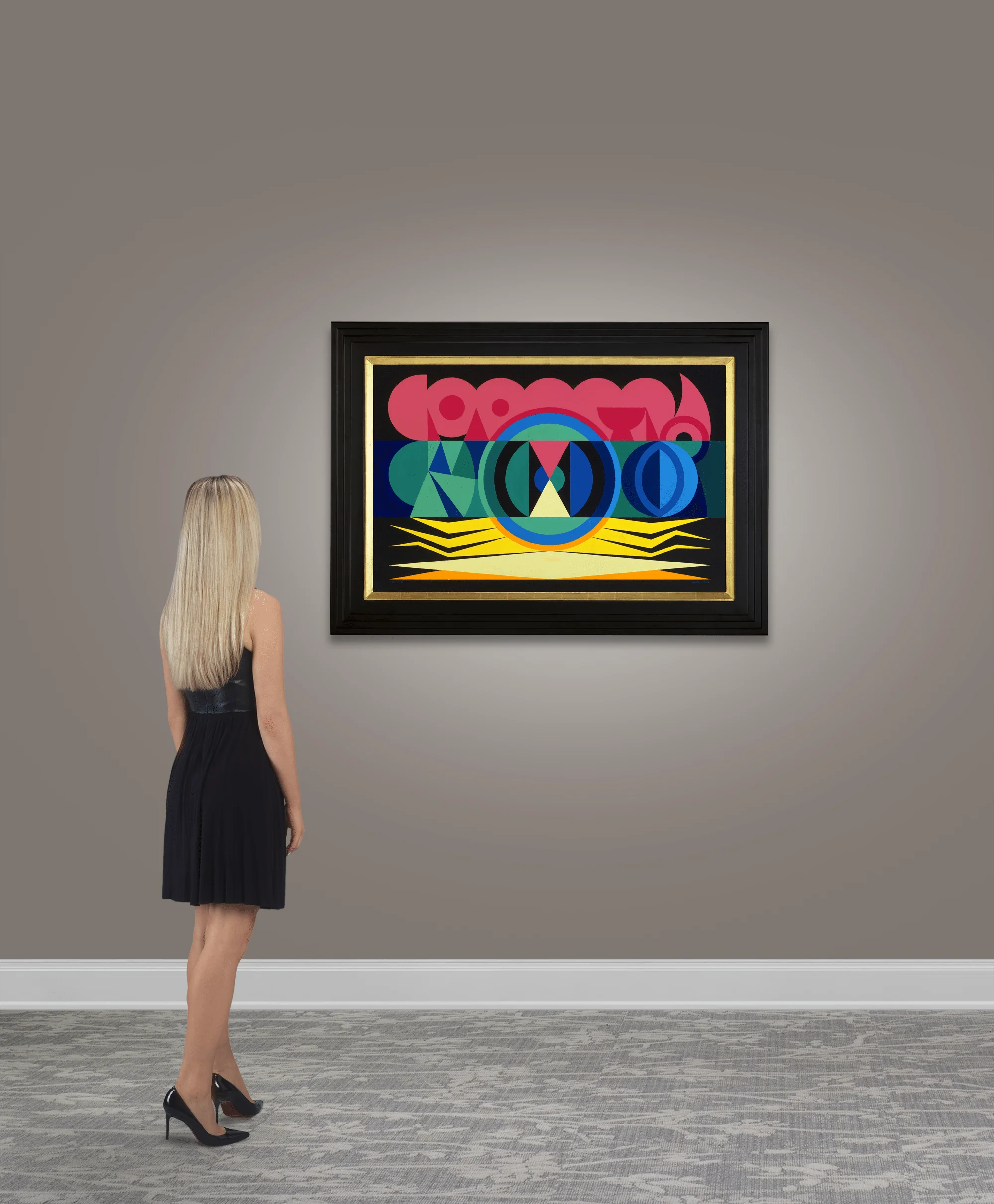
Painted in 1944, Aoum II embodies Herbin’s fully-formed artistic aesthetic and stylistic tenets. Only two years prior to its creation, Herbin developed his “alphabet plastique,” a synergistic visual language of color and form that he described in detail in his published book L’art non-figuratif non-objectif. Though the artist was highly cerebral in his process of creating art, one does not need to perfectly understand his principles to feel Aoum II's magnetism. The geometric shapes visible in the composition — primarily fragmented triangles and circles — are rendered in bold pinks, blues and yellows on a deep black background. His tiered application of color creates a natural three-register visual effect as if to tell a story from the apex of the form to its denouement.
Auguste Herbin began his artistic training at the École des Beaux-Arts de Lille before moving to Paris in 1901. In the early years of his career, he experimented with a variety of styles, exhibiting Post-Impressionistic works at the Salon des Indépendants in 1906 and Fauvist paintings at the Salon d'Automne in 1907. After a brief Cubist period following his introduction to Pablo Picasso, Georges Braque and Otto Freundlich, Herbin co-founded his own artistic movement in the 1930s: Abstraction-Création group in Paris. Devoted to encouraging abstract art as a response to the representational tenets of the Surrealist movement, then led by André Breton, Herbin served as the publisher and author for the group's eponymous art journal. Today, Herbin’s work resides in prestigious private collections and museum institutions around the globe, including the Tate Modern in London, the Museum of Modern Art in New York and the Centre Pompidou in Paris, among others.
Painted 1944
Canvas: 25" high x 39" wide
Frame: 34 3/8" high x 48 1/8" wide x 2" deep
Provenance:
Private Collection, Switzerland
Private Collection, Belgium
Galerie Von Bartha, Basel
Sale: Tajan, Paris, November 30, 2004, lot 7
Private collection
M.S. Rau, New Orleans
Literature:
Geneviève Claisse, Herbin, Catalogue raisonné de l'oeuvre peint, Lausanne, 1993, no. 817, illustrated p. 424
Exhibitions:
Brussels, Palais des Beaux-Arts, Herbin Rétrospective, 1956, no. 33
Cologne, Galerie Bargera, Abstraction-Création, 1974, no. 22, illustrated in the catalogue
1882-1960 | French
Aoum II
Signed and dated 'herbin 1944' (lower right); titled "aoum" 2 (lower left)
Oil on canvas
This bold and vivid abstract oil on canvas was painted by French painter Auguste Herbin, a pioneer in popularizing Modernist abstraction. Over his expansive nearly 60-year career, Herbin rubbed shoulders with art history greats from Pablo Picasso to Georges Braque before honing his personal and innovative style. Entitled Aoum II, the painting stands apart for its daring color palette and crisp composition.
Painted in 1944, Aoum II embodies Herbin’s fully-formed artistic aesthetic and stylistic tenets. Only two years prior to its creation, Herbin developed his “alphabet plastique,” a synergistic visual language of color and form that he described in detail in his published book L’art non-figuratif non-objectif. Though the artist was highly cerebral in his process of creating art, one does not need to perfectly understand his principles to feel Aoum II's magnetism. The geometric shapes visible in the composition — primarily fragmented triangles and circles — are rendered in bold pinks, blues and yellows on a deep black background. His tiered application of color creates a natural three-register visual effect as if to tell a story from the apex of the form to its denouement.
Auguste Herbin began his artistic training at the École des Beaux-Arts de Lille before moving to Paris in 1901. In the early years of his career, he experimented with a variety of styles, exhibiting Post-Impressionistic works at the Salon des Indépendants in 1906 and Fauvist paintings at the Salon d'Automne in 1907. After a brief Cubist period following his introduction to Pablo Picasso, Georges Braque and Otto Freundlich, Herbin co-founded his own artistic movement in the 1930s: Abstraction-Création group in Paris. Devoted to encouraging abstract art as a response to the representational tenets of the Surrealist movement, then led by André Breton, Herbin served as the publisher and author for the group's eponymous art journal. Today, Herbin’s work resides in prestigious private collections and museum institutions around the globe, including the Tate Modern in London, the Museum of Modern Art in New York and the Centre Pompidou in Paris, among others.
Painted 1944
Canvas: 25" high x 39" wide
Frame: 34 3/8" high x 48 1/8" wide x 2" deep
Provenance:
Private Collection, Switzerland
Private Collection, Belgium
Galerie Von Bartha, Basel
Sale: Tajan, Paris, November 30, 2004, lot 7
Private collection
M.S. Rau, New Orleans
Literature:
Geneviève Claisse, Herbin, Catalogue raisonné de l'oeuvre peint, Lausanne, 1993, no. 817, illustrated p. 424
Exhibitions:
Brussels, Palais des Beaux-Arts, Herbin Rétrospective, 1956, no. 33
Cologne, Galerie Bargera, Abstraction-Création, 1974, no. 22, illustrated in the catalogue
$134,500.00
Aoum II by Auguste Herbin—
$134,500.00
Description
Auguste Herbin
1882-1960 | French
Aoum II
Signed and dated 'herbin 1944' (lower right); titled "aoum" 2 (lower left)
Oil on canvas
This bold and vivid abstract oil on canvas was painted by French painter Auguste Herbin, a pioneer in popularizing Modernist abstraction. Over his expansive nearly 60-year career, Herbin rubbed shoulders with art history greats from Pablo Picasso to Georges Braque before honing his personal and innovative style. Entitled Aoum II, the painting stands apart for its daring color palette and crisp composition.
Painted in 1944, Aoum II embodies Herbin’s fully-formed artistic aesthetic and stylistic tenets. Only two years prior to its creation, Herbin developed his “alphabet plastique,” a synergistic visual language of color and form that he described in detail in his published book L’art non-figuratif non-objectif. Though the artist was highly cerebral in his process of creating art, one does not need to perfectly understand his principles to feel Aoum II's magnetism. The geometric shapes visible in the composition — primarily fragmented triangles and circles — are rendered in bold pinks, blues and yellows on a deep black background. His tiered application of color creates a natural three-register visual effect as if to tell a story from the apex of the form to its denouement.
Auguste Herbin began his artistic training at the École des Beaux-Arts de Lille before moving to Paris in 1901. In the early years of his career, he experimented with a variety of styles, exhibiting Post-Impressionistic works at the Salon des Indépendants in 1906 and Fauvist paintings at the Salon d'Automne in 1907. After a brief Cubist period following his introduction to Pablo Picasso, Georges Braque and Otto Freundlich, Herbin co-founded his own artistic movement in the 1930s: Abstraction-Création group in Paris. Devoted to encouraging abstract art as a response to the representational tenets of the Surrealist movement, then led by André Breton, Herbin served as the publisher and author for the group's eponymous art journal. Today, Herbin’s work resides in prestigious private collections and museum institutions around the globe, including the Tate Modern in London, the Museum of Modern Art in New York and the Centre Pompidou in Paris, among others.
Painted 1944
Canvas: 25" high x 39" wide
Frame: 34 3/8" high x 48 1/8" wide x 2" deep
Provenance:
Private Collection, Switzerland
Private Collection, Belgium
Galerie Von Bartha, Basel
Sale: Tajan, Paris, November 30, 2004, lot 7
Private collection
M.S. Rau, New Orleans
Literature:
Geneviève Claisse, Herbin, Catalogue raisonné de l'oeuvre peint, Lausanne, 1993, no. 817, illustrated p. 424
Exhibitions:
Brussels, Palais des Beaux-Arts, Herbin Rétrospective, 1956, no. 33
Cologne, Galerie Bargera, Abstraction-Création, 1974, no. 22, illustrated in the catalogue
1882-1960 | French
Aoum II
Signed and dated 'herbin 1944' (lower right); titled "aoum" 2 (lower left)
Oil on canvas
This bold and vivid abstract oil on canvas was painted by French painter Auguste Herbin, a pioneer in popularizing Modernist abstraction. Over his expansive nearly 60-year career, Herbin rubbed shoulders with art history greats from Pablo Picasso to Georges Braque before honing his personal and innovative style. Entitled Aoum II, the painting stands apart for its daring color palette and crisp composition.
Painted in 1944, Aoum II embodies Herbin’s fully-formed artistic aesthetic and stylistic tenets. Only two years prior to its creation, Herbin developed his “alphabet plastique,” a synergistic visual language of color and form that he described in detail in his published book L’art non-figuratif non-objectif. Though the artist was highly cerebral in his process of creating art, one does not need to perfectly understand his principles to feel Aoum II's magnetism. The geometric shapes visible in the composition — primarily fragmented triangles and circles — are rendered in bold pinks, blues and yellows on a deep black background. His tiered application of color creates a natural three-register visual effect as if to tell a story from the apex of the form to its denouement.
Auguste Herbin began his artistic training at the École des Beaux-Arts de Lille before moving to Paris in 1901. In the early years of his career, he experimented with a variety of styles, exhibiting Post-Impressionistic works at the Salon des Indépendants in 1906 and Fauvist paintings at the Salon d'Automne in 1907. After a brief Cubist period following his introduction to Pablo Picasso, Georges Braque and Otto Freundlich, Herbin co-founded his own artistic movement in the 1930s: Abstraction-Création group in Paris. Devoted to encouraging abstract art as a response to the representational tenets of the Surrealist movement, then led by André Breton, Herbin served as the publisher and author for the group's eponymous art journal. Today, Herbin’s work resides in prestigious private collections and museum institutions around the globe, including the Tate Modern in London, the Museum of Modern Art in New York and the Centre Pompidou in Paris, among others.
Painted 1944
Canvas: 25" high x 39" wide
Frame: 34 3/8" high x 48 1/8" wide x 2" deep
Provenance:
Private Collection, Switzerland
Private Collection, Belgium
Galerie Von Bartha, Basel
Sale: Tajan, Paris, November 30, 2004, lot 7
Private collection
M.S. Rau, New Orleans
Literature:
Geneviève Claisse, Herbin, Catalogue raisonné de l'oeuvre peint, Lausanne, 1993, no. 817, illustrated p. 424
Exhibitions:
Brussels, Palais des Beaux-Arts, Herbin Rétrospective, 1956, no. 33
Cologne, Galerie Bargera, Abstraction-Création, 1974, no. 22, illustrated in the catalogue