🎉 Up to 70% Off Selected ItemsShop Sale

Gallé Cameo Elephant Vase
Cameo Glass Elephant Vase
Émile Gallé
Circa 1925
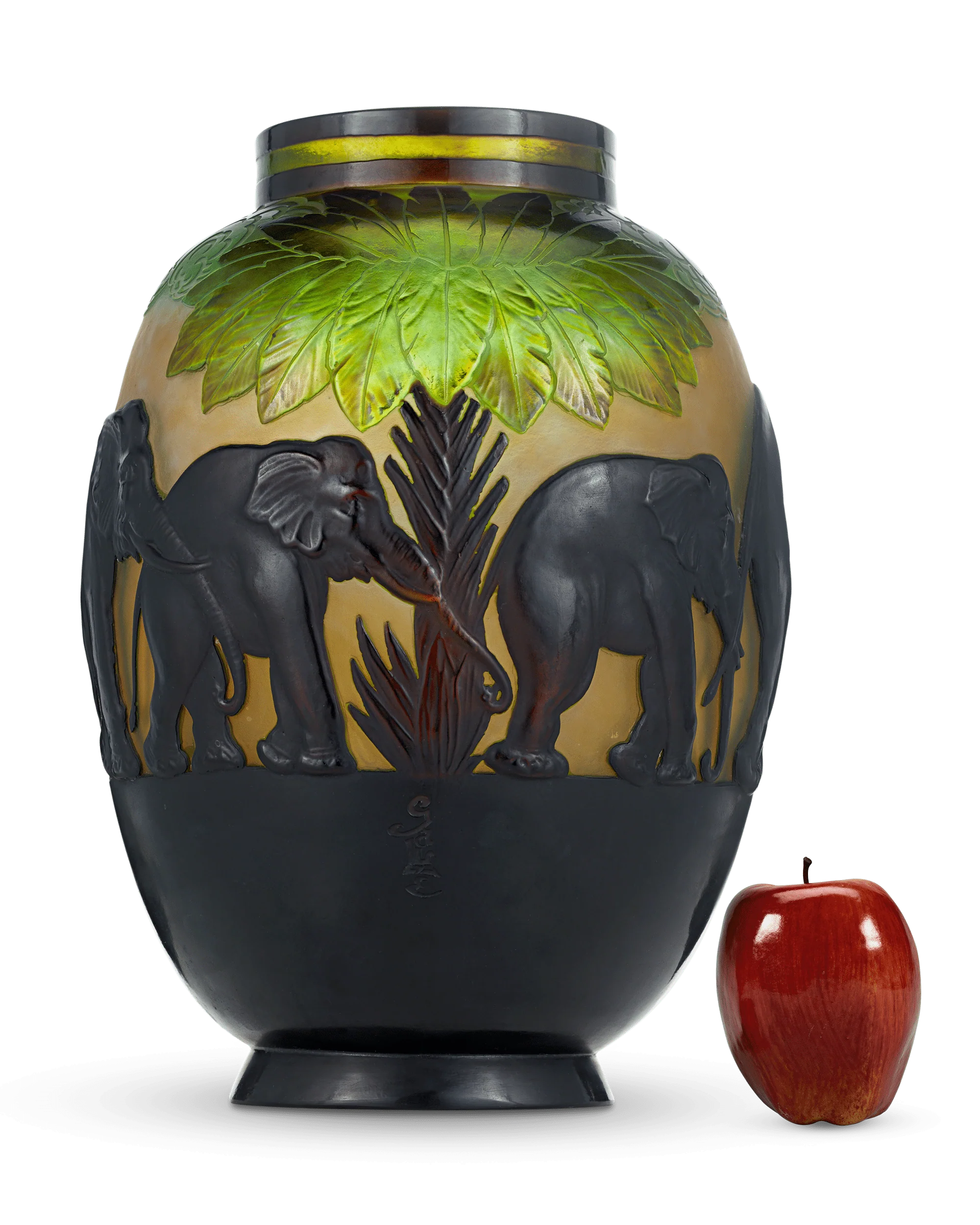
This monumental Art Nouveau vase is one of the finest achievements of Émile Gallé’s iconic glassmaking firm. Showcasing Gallé’s mastery of the labor-intensive mold-blown technique, the vase’s impressive scale and intricate decoration required extraordinary precision. Few examples of this breathtaking elephant design were ever produced, making it one of the rarest and most prized of Gallé's output. In fact, this vase was chosen as the cover for Tim Newark's important book, The Art of Emile Gallé, published in 1989.
Crafted for the 1925 Paris Universal Exhibition, the Elephant vase is believed to celebrate the Croisière Noire, a French expedition across Africa. Its design features amber elephants marching beneath vibrant green palm trees and swirling clouds on a sunny yellow backdrop, brought to life through expertly cut layers of cameo glass. These dynamic, naturalistic motifs embody the Art Nouveau movement’s fascination with the beauty and mystique of the natural world. The impressive size is significant, as it required substantially more glass to create such a tall and wide design. This challenge was amplified by the mold-blown technique, which is particularly prone to breakage during production. The vase’s wrap-around composition and masterful craftsmanship elevate it to an exceptional work of art, recognized as one of Gallé’s most iconic creations.
The Gallé firm's innovative techniques and nature-inspired designs revolutionized glassmaking in the late 19th and early 20th centuries. The Elephant vase stands as a testament to this extraordinary vision and technical ingenuity, embodying the pinnacle of artistic achievements in glass. This masterpiece is a rare and significant example of Gallé’s contribution to decorative arts, securing its place among the most important glassworks of the early 20th century.
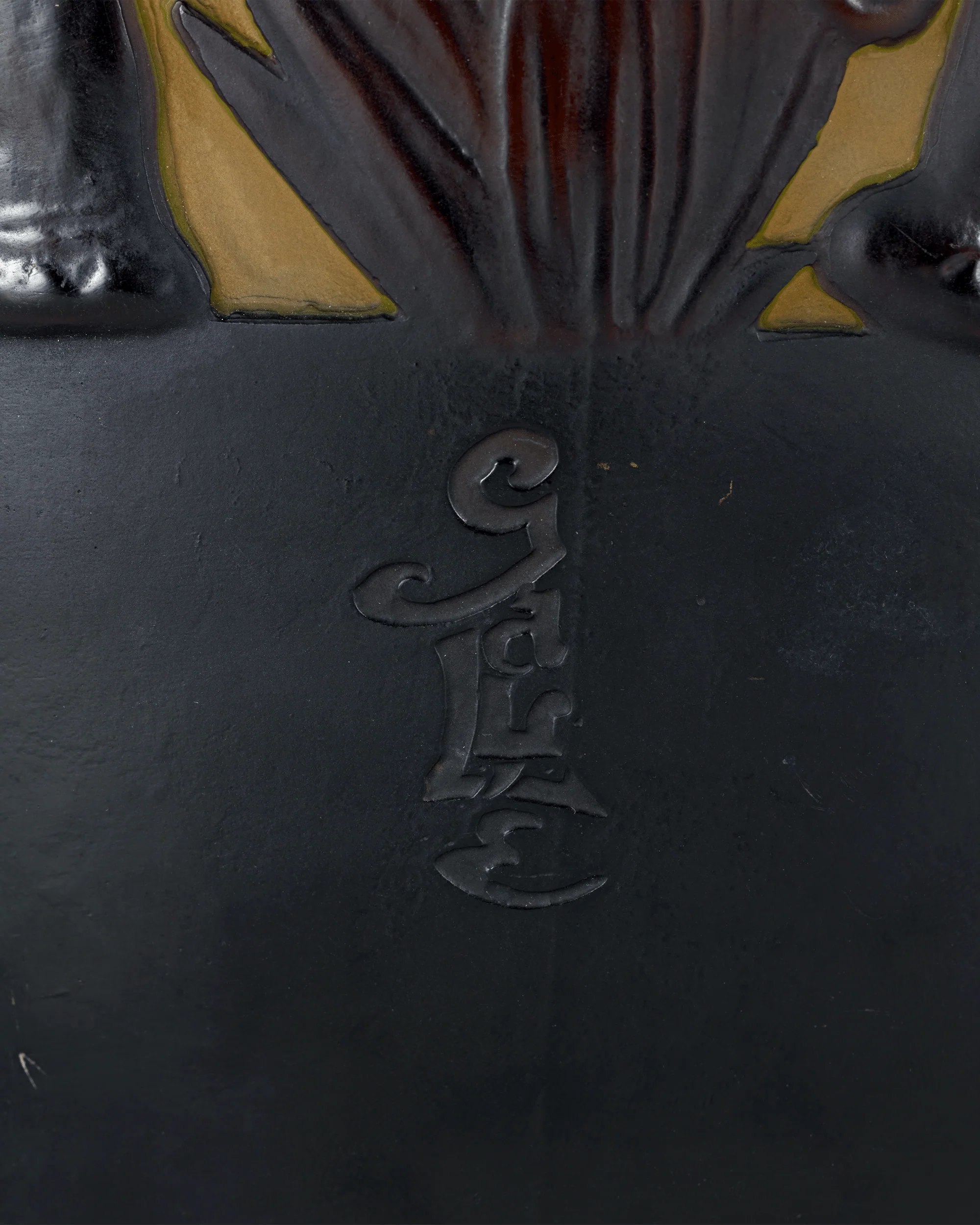
Signed “Gallé”
15 1/4” high x 10 1/2” diameter
Literature:
Tim Newark, The Art of Emile Gallé, 1989, cover, p. 121 (illustrated)
Émile Gallé
Circa 1925
This monumental Art Nouveau vase is one of the finest achievements of Émile Gallé’s iconic glassmaking firm. Showcasing Gallé’s mastery of the labor-intensive mold-blown technique, the vase’s impressive scale and intricate decoration required extraordinary precision. Few examples of this breathtaking elephant design were ever produced, making it one of the rarest and most prized of Gallé's output. In fact, this vase was chosen as the cover for Tim Newark's important book, The Art of Emile Gallé, published in 1989.
Crafted for the 1925 Paris Universal Exhibition, the Elephant vase is believed to celebrate the Croisière Noire, a French expedition across Africa. Its design features amber elephants marching beneath vibrant green palm trees and swirling clouds on a sunny yellow backdrop, brought to life through expertly cut layers of cameo glass. These dynamic, naturalistic motifs embody the Art Nouveau movement’s fascination with the beauty and mystique of the natural world. The impressive size is significant, as it required substantially more glass to create such a tall and wide design. This challenge was amplified by the mold-blown technique, which is particularly prone to breakage during production. The vase’s wrap-around composition and masterful craftsmanship elevate it to an exceptional work of art, recognized as one of Gallé’s most iconic creations.
The Gallé firm's innovative techniques and nature-inspired designs revolutionized glassmaking in the late 19th and early 20th centuries. The Elephant vase stands as a testament to this extraordinary vision and technical ingenuity, embodying the pinnacle of artistic achievements in glass. This masterpiece is a rare and significant example of Gallé’s contribution to decorative arts, securing its place among the most important glassworks of the early 20th century.
Signed “Gallé”
15 1/4” high x 10 1/2” diameter
Literature:
Tim Newark, The Art of Emile Gallé, 1989, cover, p. 121 (illustrated)
$34,475.00
Original: $98,500.00
-65%Gallé Cameo Elephant Vase—
$98,500.00
$34,475.00


Description
Cameo Glass Elephant Vase
Émile Gallé
Circa 1925
This monumental Art Nouveau vase is one of the finest achievements of Émile Gallé’s iconic glassmaking firm. Showcasing Gallé’s mastery of the labor-intensive mold-blown technique, the vase’s impressive scale and intricate decoration required extraordinary precision. Few examples of this breathtaking elephant design were ever produced, making it one of the rarest and most prized of Gallé's output. In fact, this vase was chosen as the cover for Tim Newark's important book, The Art of Emile Gallé, published in 1989.
Crafted for the 1925 Paris Universal Exhibition, the Elephant vase is believed to celebrate the Croisière Noire, a French expedition across Africa. Its design features amber elephants marching beneath vibrant green palm trees and swirling clouds on a sunny yellow backdrop, brought to life through expertly cut layers of cameo glass. These dynamic, naturalistic motifs embody the Art Nouveau movement’s fascination with the beauty and mystique of the natural world. The impressive size is significant, as it required substantially more glass to create such a tall and wide design. This challenge was amplified by the mold-blown technique, which is particularly prone to breakage during production. The vase’s wrap-around composition and masterful craftsmanship elevate it to an exceptional work of art, recognized as one of Gallé’s most iconic creations.
The Gallé firm's innovative techniques and nature-inspired designs revolutionized glassmaking in the late 19th and early 20th centuries. The Elephant vase stands as a testament to this extraordinary vision and technical ingenuity, embodying the pinnacle of artistic achievements in glass. This masterpiece is a rare and significant example of Gallé’s contribution to decorative arts, securing its place among the most important glassworks of the early 20th century.
Signed “Gallé”
15 1/4” high x 10 1/2” diameter
Literature:
Tim Newark, The Art of Emile Gallé, 1989, cover, p. 121 (illustrated)
Émile Gallé
Circa 1925
This monumental Art Nouveau vase is one of the finest achievements of Émile Gallé’s iconic glassmaking firm. Showcasing Gallé’s mastery of the labor-intensive mold-blown technique, the vase’s impressive scale and intricate decoration required extraordinary precision. Few examples of this breathtaking elephant design were ever produced, making it one of the rarest and most prized of Gallé's output. In fact, this vase was chosen as the cover for Tim Newark's important book, The Art of Emile Gallé, published in 1989.
Crafted for the 1925 Paris Universal Exhibition, the Elephant vase is believed to celebrate the Croisière Noire, a French expedition across Africa. Its design features amber elephants marching beneath vibrant green palm trees and swirling clouds on a sunny yellow backdrop, brought to life through expertly cut layers of cameo glass. These dynamic, naturalistic motifs embody the Art Nouveau movement’s fascination with the beauty and mystique of the natural world. The impressive size is significant, as it required substantially more glass to create such a tall and wide design. This challenge was amplified by the mold-blown technique, which is particularly prone to breakage during production. The vase’s wrap-around composition and masterful craftsmanship elevate it to an exceptional work of art, recognized as one of Gallé’s most iconic creations.
The Gallé firm's innovative techniques and nature-inspired designs revolutionized glassmaking in the late 19th and early 20th centuries. The Elephant vase stands as a testament to this extraordinary vision and technical ingenuity, embodying the pinnacle of artistic achievements in glass. This masterpiece is a rare and significant example of Gallé’s contribution to decorative arts, securing its place among the most important glassworks of the early 20th century.
Signed “Gallé”
15 1/4” high x 10 1/2” diameter
Literature:
Tim Newark, The Art of Emile Gallé, 1989, cover, p. 121 (illustrated)