🎉 Up to 70% Off Selected ItemsShop Sale

Japanese Lacquer Box
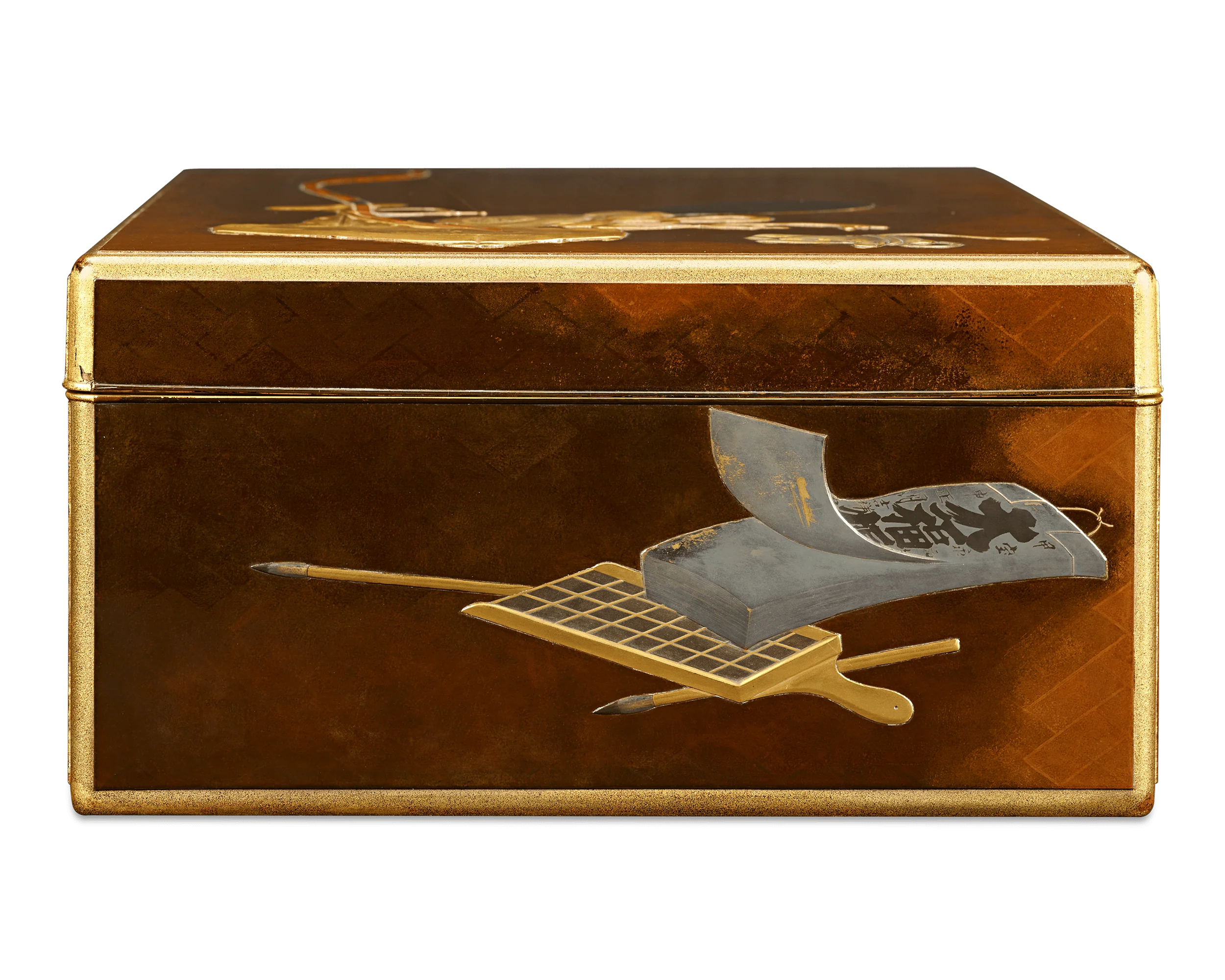
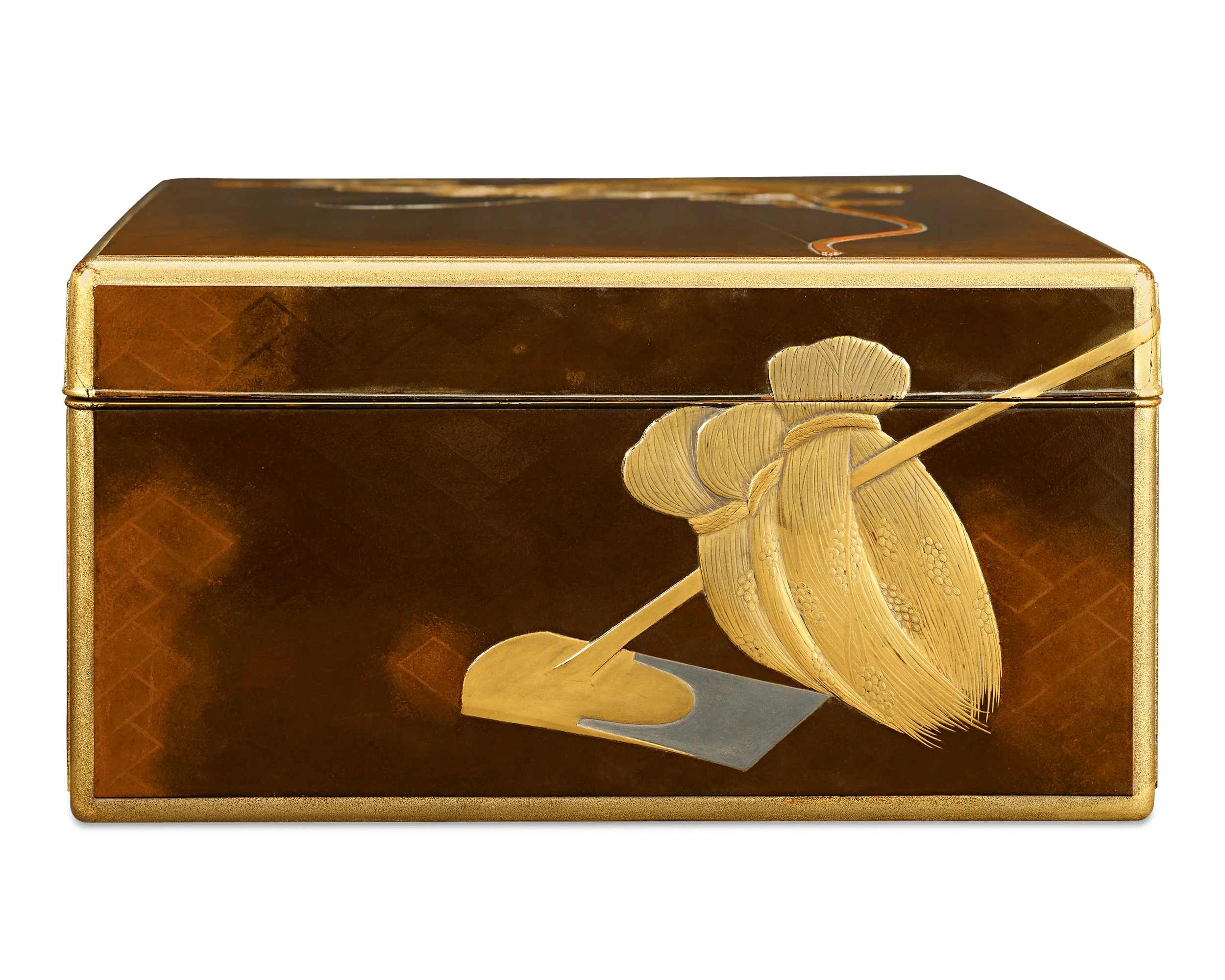
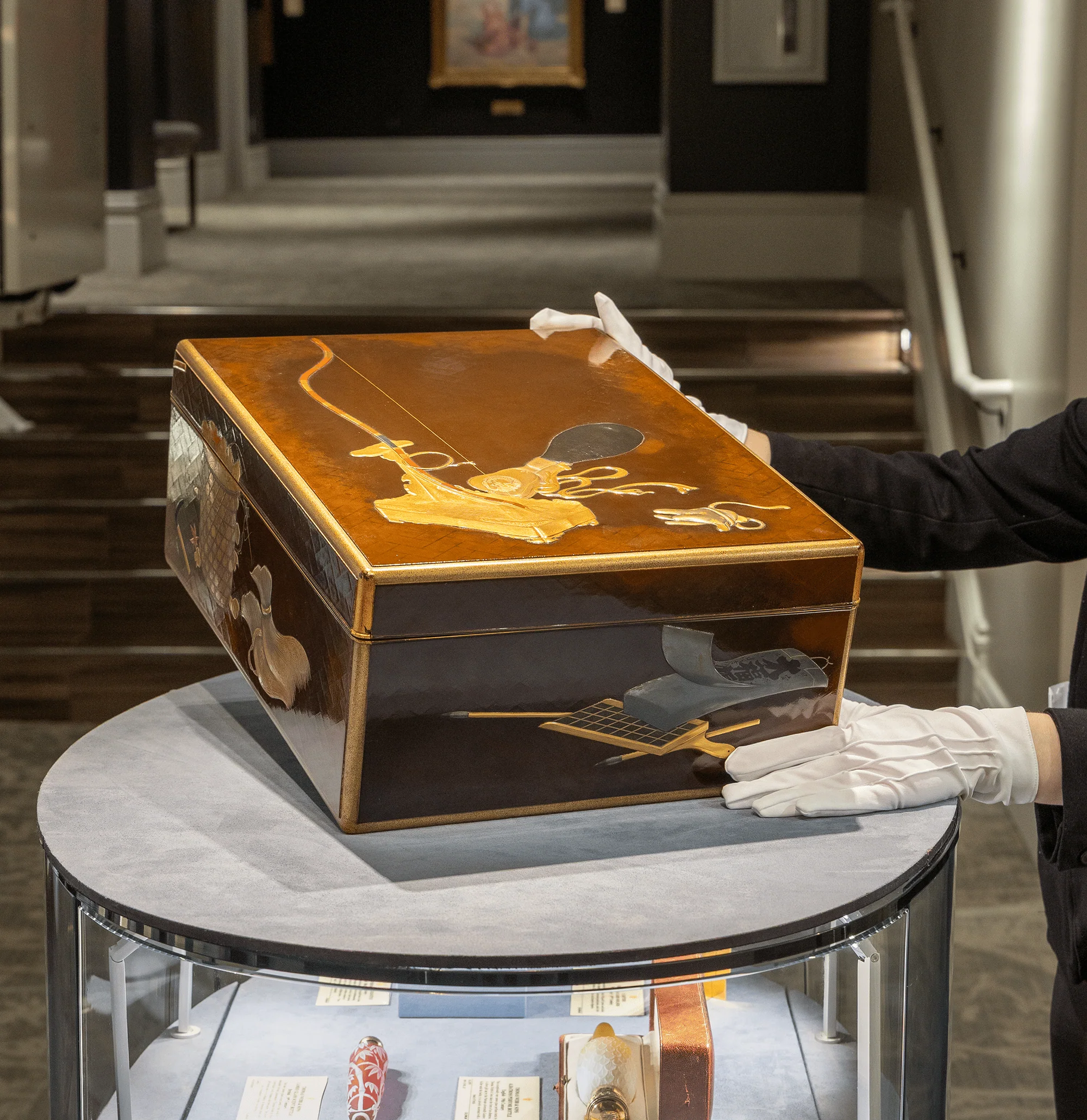
This exquisite Meiji-period lacquer document box known as a ryoshibako showcases the meticulous artistry of maki-e, a technique of raised lacquer decoration. Adorned with gold and vibrant hues, it features emblems representing the four esteemed classes of Edo society: samurai and warriors, farmers, craftsmen and merchants. Each class is symbolized through intricately rendered designs, including a bow on a stand for the warriors, a basket of leaves for the farmers, calligraphy tools for the craftsmen and a set of scales and abacus for the merchants. The box's exterior is a sophisticated black ground, achieved through shibonuri, a technique mimicking a woven texture.
The creation of a lacquer box such as this would have been an incredibly time-consuming process; the art form is considered among the most labor-intensive in the world and requires an exceptional level of finesse. Intricately detailed lacquer boxes such as this reveal the mastery of their maker and the storied tradition of Japanese craftsmanship.
Circa 1870
7 1/4“ high x 17 3/4” wide x 13 3/4“ deep
The creation of a lacquer box such as this would have been an incredibly time-consuming process; the art form is considered among the most labor-intensive in the world and requires an exceptional level of finesse. Intricately detailed lacquer boxes such as this reveal the mastery of their maker and the storied tradition of Japanese craftsmanship.
Circa 1870
7 1/4“ high x 17 3/4” wide x 13 3/4“ deep
$13,947.50
Original: $39,850.00
-65%Japanese Lacquer Box—
$39,850.00
$13,947.50



Description
This exquisite Meiji-period lacquer document box known as a ryoshibako showcases the meticulous artistry of maki-e, a technique of raised lacquer decoration. Adorned with gold and vibrant hues, it features emblems representing the four esteemed classes of Edo society: samurai and warriors, farmers, craftsmen and merchants. Each class is symbolized through intricately rendered designs, including a bow on a stand for the warriors, a basket of leaves for the farmers, calligraphy tools for the craftsmen and a set of scales and abacus for the merchants. The box's exterior is a sophisticated black ground, achieved through shibonuri, a technique mimicking a woven texture.
The creation of a lacquer box such as this would have been an incredibly time-consuming process; the art form is considered among the most labor-intensive in the world and requires an exceptional level of finesse. Intricately detailed lacquer boxes such as this reveal the mastery of their maker and the storied tradition of Japanese craftsmanship.
Circa 1870
7 1/4“ high x 17 3/4” wide x 13 3/4“ deep
The creation of a lacquer box such as this would have been an incredibly time-consuming process; the art form is considered among the most labor-intensive in the world and requires an exceptional level of finesse. Intricately detailed lacquer boxes such as this reveal the mastery of their maker and the storied tradition of Japanese craftsmanship.
Circa 1870
7 1/4“ high x 17 3/4” wide x 13 3/4“ deep