🎉 Up to 70% Off Selected ItemsShop Sale

Kronen-Narr by Paul Klee
Paul Klee
1879-1940 | Swiss-German
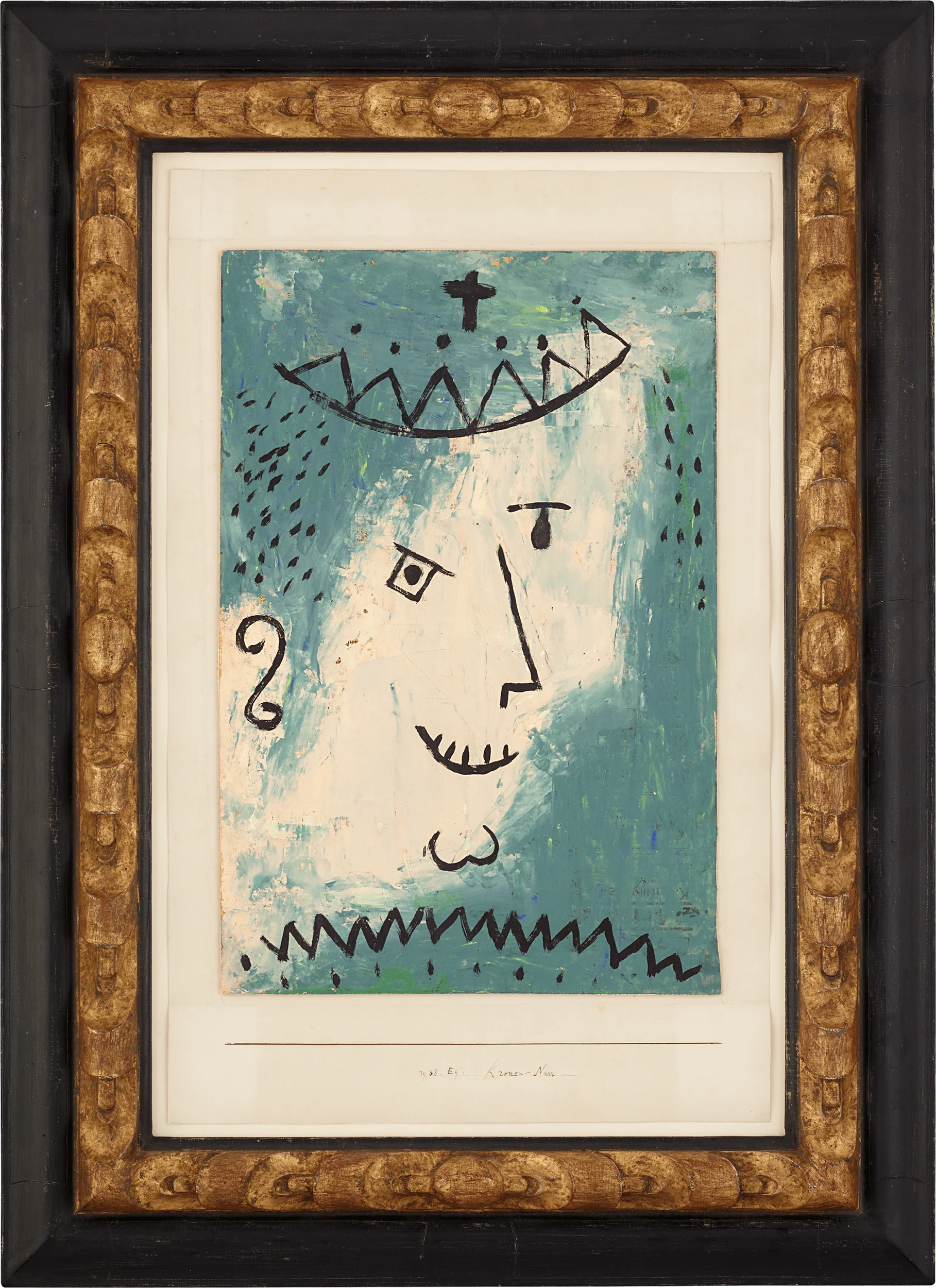
Kronen-Narr
(Crown Fool)
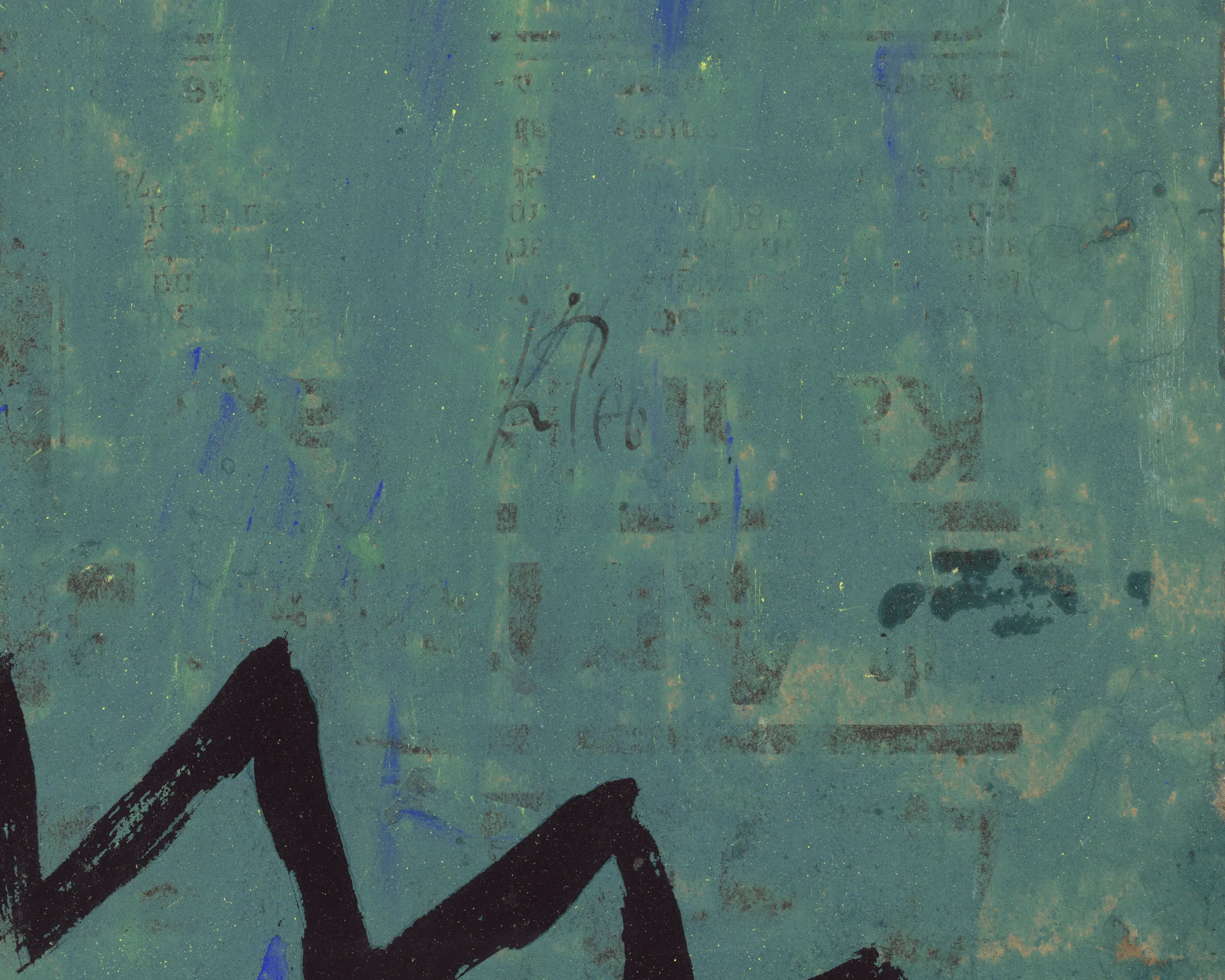
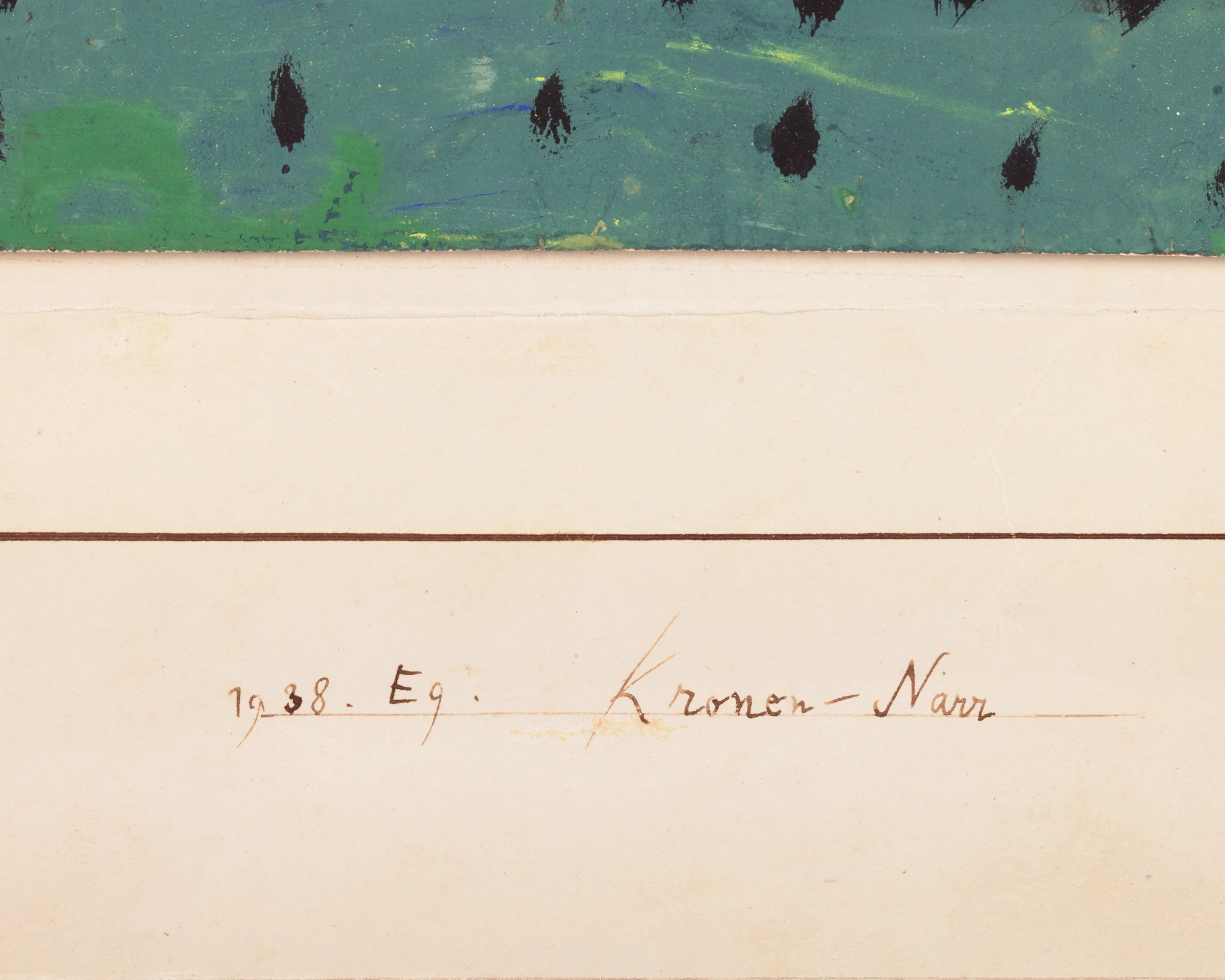
Signed "Klee" (lower right)
Gouache and ink on newsprint on cardboard
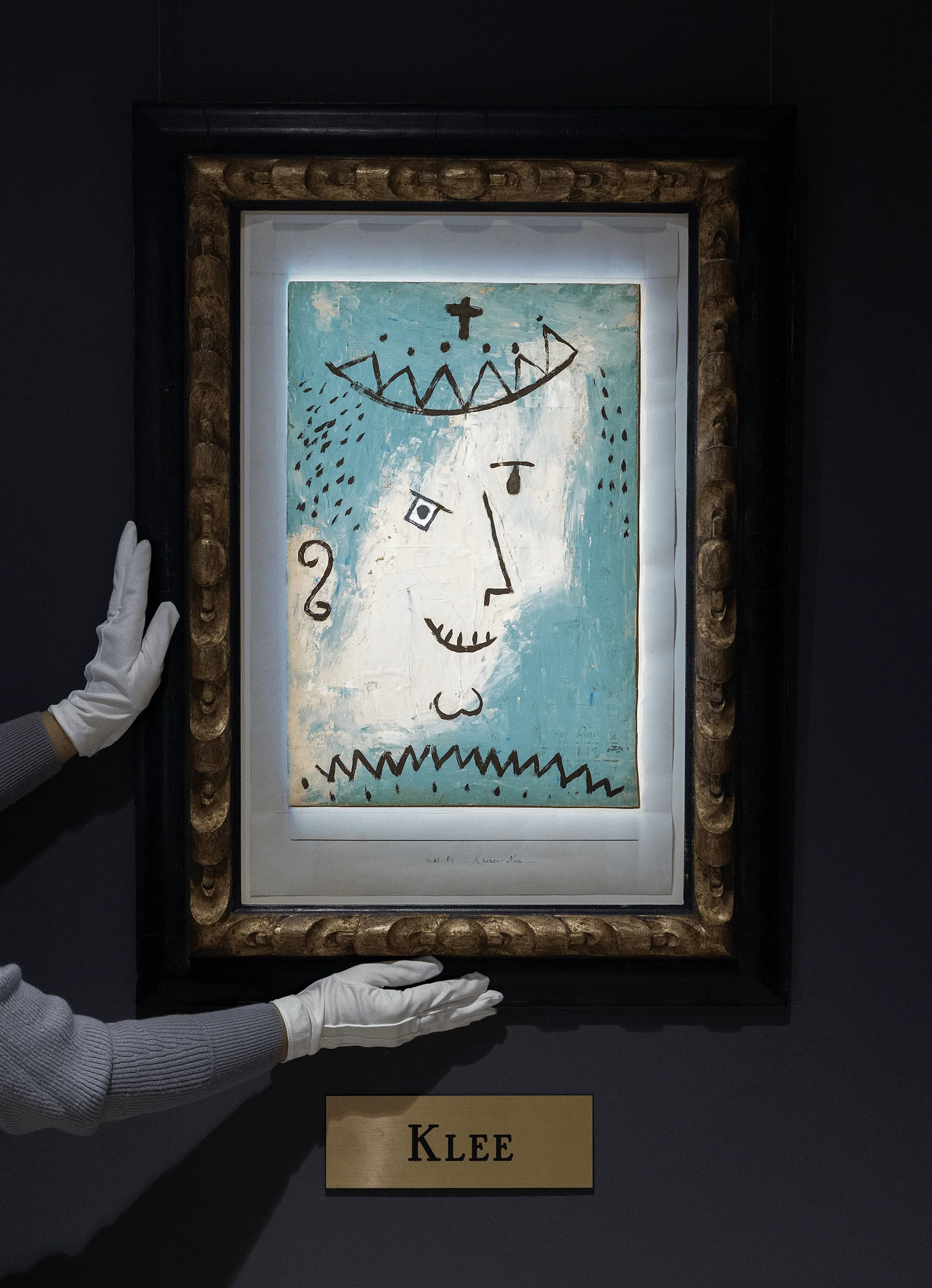
One of the most important artists of the 20th century, Paul Klee's revolutionary compositions defied easy categorization. His paintings blended abstraction, personal and historical narratives into works that transformed the history of modern art. This striking 1938 gouache, entitled Kronen-Narr (Crowned Fool), is an exceptional example of Klee's masterful technique and unique vision.
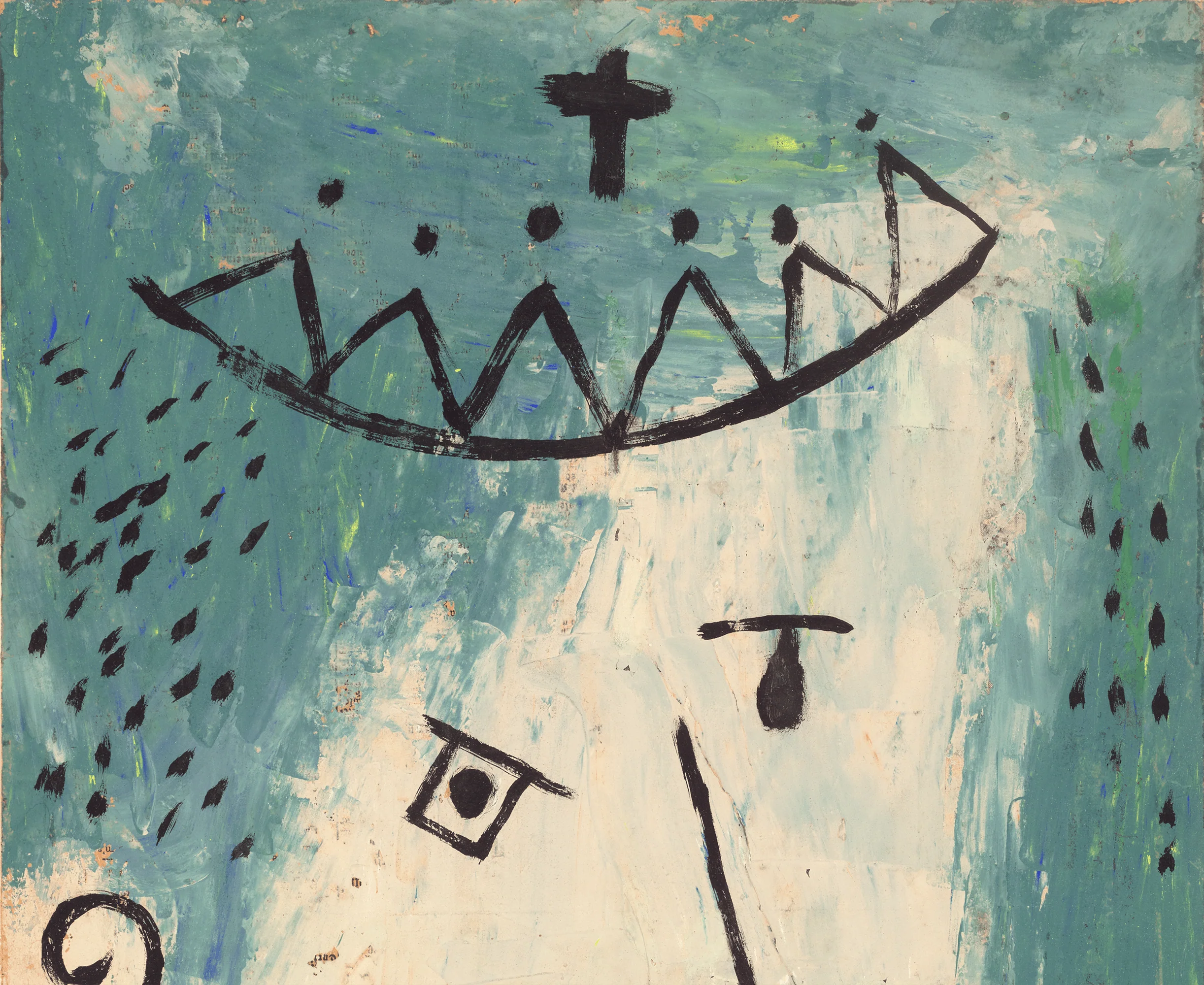
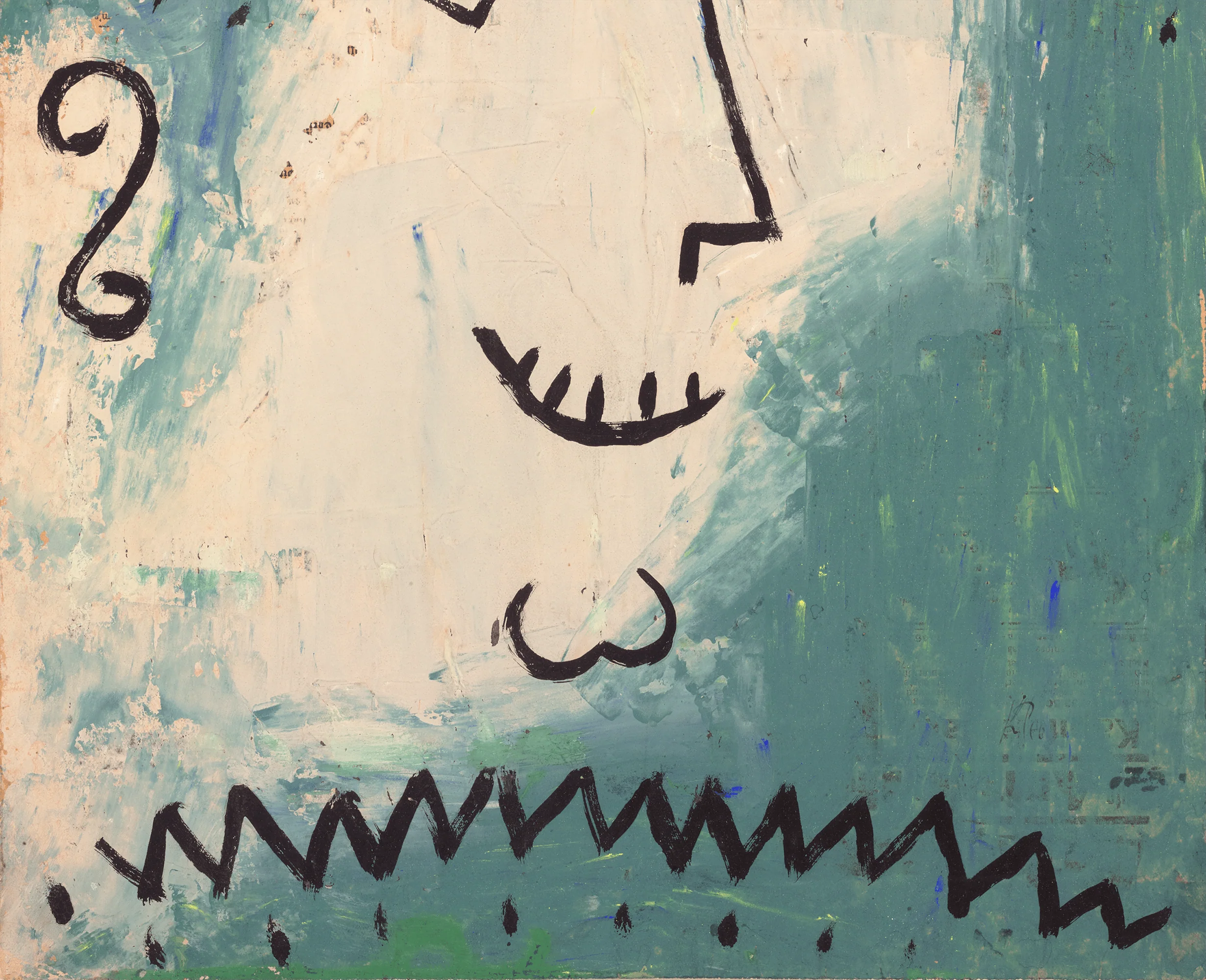
Rendered in gouache and ink on newsprint, the crowned figure hovers over fragments of contemporary headlines—a bold juxtaposition of whimsical imagery and the era's turbulence in Europe. The fool’s elongated form and angular crown recall medieval jesters, while his bright palette and graphic precision imbue the figure with both humor and profound weight. Bright and playful, the composition demonstrates Klee's genius for balancing serious political commentary and delightful works of art.
Born in Switzerland in 1879, Klee began his studies in both art and music before dedicating himself fully to painting. His practice was transformed during a 1914 journey to Tunisia, where the intensity of the North African light awakened his celebrated approach to color. By 1915 he had abandoned representational painting, choosing instead to create compositions from imagination, memory and musical rhythm.
His influence extended beyond his own practice to his role as a Bauhaus teacher alongside Wassily Kandinsky, where he articulated theories of color and form that shaped the trajectory of modern abstraction. Even after his exile from Germany in 1933, Klee continued to innovate, producing a remarkable body of work despite his declining health. Kronen-Narr belongs to this final period, when the artist’s imagery grew sharper and more symbolic, distilling complex themes into deceptively simple forms. Today, works of this caliber belong to the world's leading institutions, including the Museum of Modern Art, Tate Modern, the Centre Pompidou and the San Francisco Museum of Modern Art.
Dated 1938
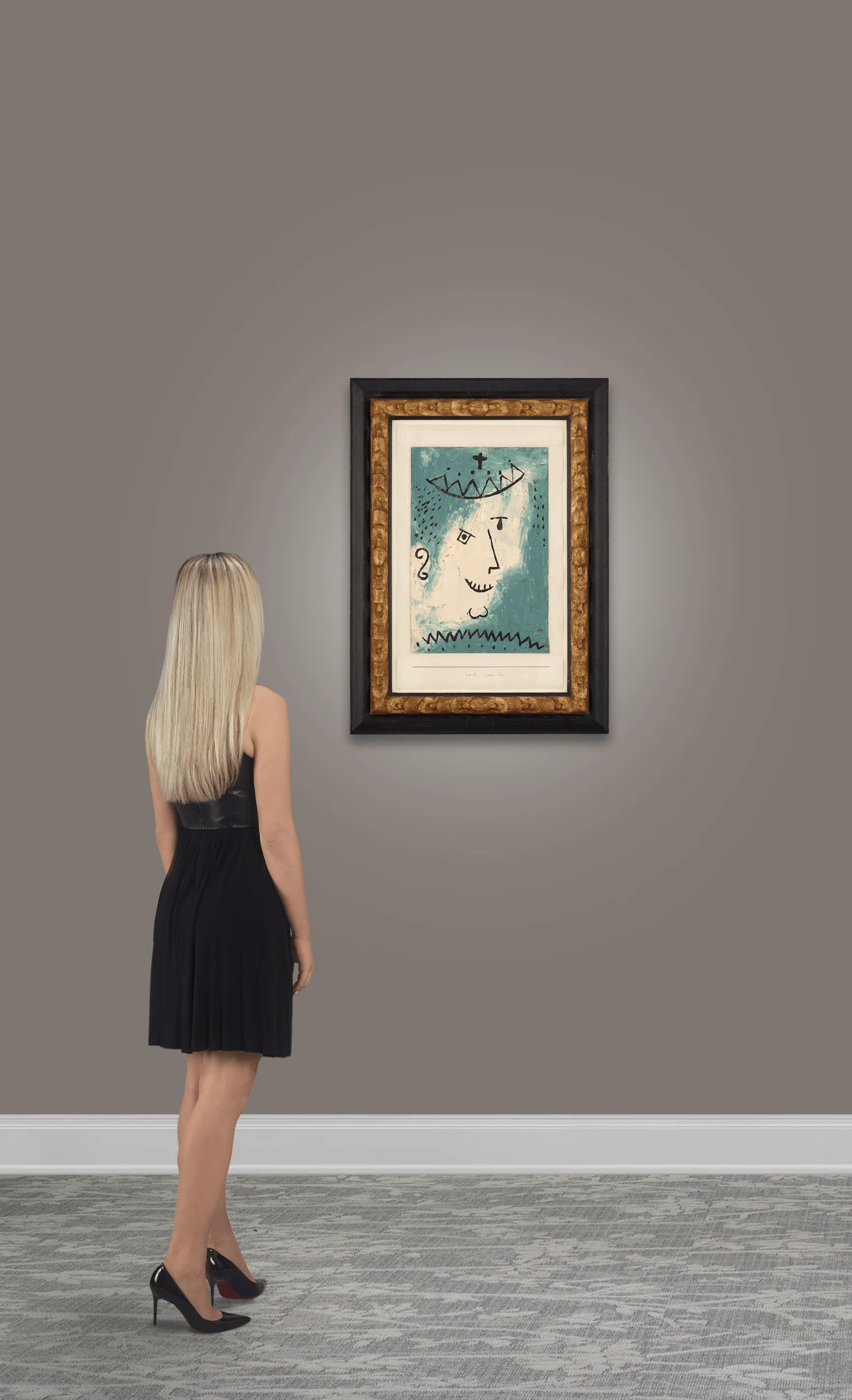
Paper: 24 3/8" high x 15 3/8" wide (61.91 x 39.05 cm)
Frame: 33 1/4" high x 24 1/4" wide x 2 1/2" deep (84.46 x 61.60 x 6.35 cm)
Provenance:
Hans and Erika Meyer-Bentelli, Bern until 1955
Berggruen & Cie, Paris, 1955-58
Saidenberg Gallery, Inc., New York, 1958-59
James Wise, Geneva, New York and Nice from 1959
Nahum Goldman, Jerusalem until 1983
The Collection of Sidney Rothberg, Philadelphia, Pennsylvania
Private collection, The Netherlands
M.S. Rau, New Orleans
Literature:
Paul Klee Foundation, Kunstmuseum Bern, Paul Klee: Catalogue Raisonné, Band 7, 1934-1938, Thames and Hudson, London, 1998-2004, p. 344, n° 7250 (illustrated)
Exhibited:
Amsterdam and Brussels, Stedelijk Museum and Palais de Beaux-Arts, Paul Klee, 1957, no. 97a
1879-1940 | Swiss-German
Kronen-Narr
(Crown Fool)
Signed "Klee" (lower right)
Gouache and ink on newsprint on cardboard
One of the most important artists of the 20th century, Paul Klee's revolutionary compositions defied easy categorization. His paintings blended abstraction, personal and historical narratives into works that transformed the history of modern art. This striking 1938 gouache, entitled Kronen-Narr (Crowned Fool), is an exceptional example of Klee's masterful technique and unique vision.
Rendered in gouache and ink on newsprint, the crowned figure hovers over fragments of contemporary headlines—a bold juxtaposition of whimsical imagery and the era's turbulence in Europe. The fool’s elongated form and angular crown recall medieval jesters, while his bright palette and graphic precision imbue the figure with both humor and profound weight. Bright and playful, the composition demonstrates Klee's genius for balancing serious political commentary and delightful works of art.
Born in Switzerland in 1879, Klee began his studies in both art and music before dedicating himself fully to painting. His practice was transformed during a 1914 journey to Tunisia, where the intensity of the North African light awakened his celebrated approach to color. By 1915 he had abandoned representational painting, choosing instead to create compositions from imagination, memory and musical rhythm.
His influence extended beyond his own practice to his role as a Bauhaus teacher alongside Wassily Kandinsky, where he articulated theories of color and form that shaped the trajectory of modern abstraction. Even after his exile from Germany in 1933, Klee continued to innovate, producing a remarkable body of work despite his declining health. Kronen-Narr belongs to this final period, when the artist’s imagery grew sharper and more symbolic, distilling complex themes into deceptively simple forms. Today, works of this caliber belong to the world's leading institutions, including the Museum of Modern Art, Tate Modern, the Centre Pompidou and the San Francisco Museum of Modern Art.
Dated 1938
Paper: 24 3/8" high x 15 3/8" wide (61.91 x 39.05 cm)
Frame: 33 1/4" high x 24 1/4" wide x 2 1/2" deep (84.46 x 61.60 x 6.35 cm)
Provenance:
Hans and Erika Meyer-Bentelli, Bern until 1955
Berggruen & Cie, Paris, 1955-58
Saidenberg Gallery, Inc., New York, 1958-59
James Wise, Geneva, New York and Nice from 1959
Nahum Goldman, Jerusalem until 1983
The Collection of Sidney Rothberg, Philadelphia, Pennsylvania
Private collection, The Netherlands
M.S. Rau, New Orleans
Literature:
Paul Klee Foundation, Kunstmuseum Bern, Paul Klee: Catalogue Raisonné, Band 7, 1934-1938, Thames and Hudson, London, 1998-2004, p. 344, n° 7250 (illustrated)
Exhibited:
Amsterdam and Brussels, Stedelijk Museum and Palais de Beaux-Arts, Paul Klee, 1957, no. 97a
$104,475.00
Original: $298,500.00
-65%Kronen-Narr by Paul Klee—
$298,500.00
$104,475.00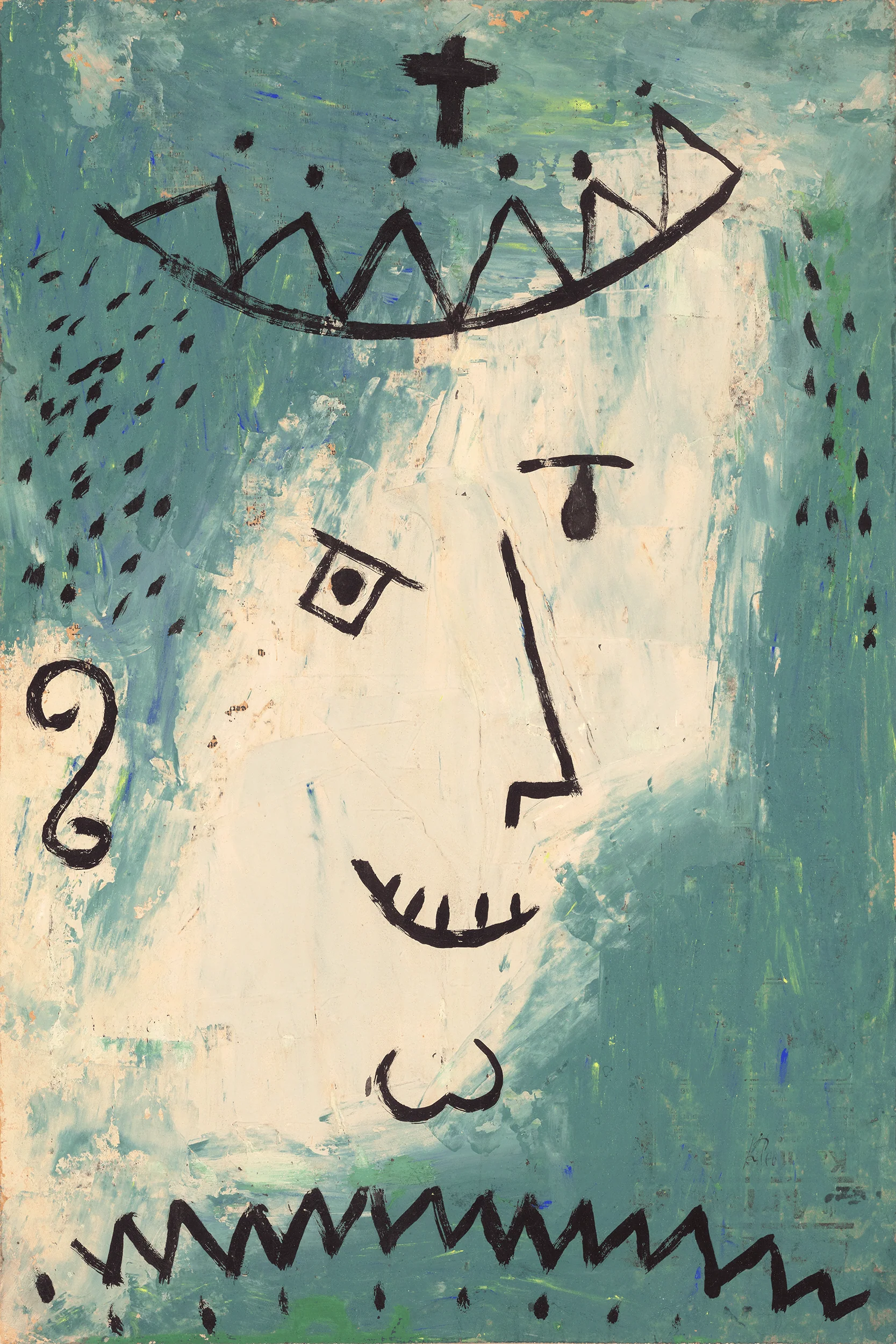
Description
Paul Klee
1879-1940 | Swiss-German
Kronen-Narr
(Crown Fool)
Signed "Klee" (lower right)
Gouache and ink on newsprint on cardboard
One of the most important artists of the 20th century, Paul Klee's revolutionary compositions defied easy categorization. His paintings blended abstraction, personal and historical narratives into works that transformed the history of modern art. This striking 1938 gouache, entitled Kronen-Narr (Crowned Fool), is an exceptional example of Klee's masterful technique and unique vision.
Rendered in gouache and ink on newsprint, the crowned figure hovers over fragments of contemporary headlines—a bold juxtaposition of whimsical imagery and the era's turbulence in Europe. The fool’s elongated form and angular crown recall medieval jesters, while his bright palette and graphic precision imbue the figure with both humor and profound weight. Bright and playful, the composition demonstrates Klee's genius for balancing serious political commentary and delightful works of art.
Born in Switzerland in 1879, Klee began his studies in both art and music before dedicating himself fully to painting. His practice was transformed during a 1914 journey to Tunisia, where the intensity of the North African light awakened his celebrated approach to color. By 1915 he had abandoned representational painting, choosing instead to create compositions from imagination, memory and musical rhythm.
His influence extended beyond his own practice to his role as a Bauhaus teacher alongside Wassily Kandinsky, where he articulated theories of color and form that shaped the trajectory of modern abstraction. Even after his exile from Germany in 1933, Klee continued to innovate, producing a remarkable body of work despite his declining health. Kronen-Narr belongs to this final period, when the artist’s imagery grew sharper and more symbolic, distilling complex themes into deceptively simple forms. Today, works of this caliber belong to the world's leading institutions, including the Museum of Modern Art, Tate Modern, the Centre Pompidou and the San Francisco Museum of Modern Art.
Dated 1938
Paper: 24 3/8" high x 15 3/8" wide (61.91 x 39.05 cm)
Frame: 33 1/4" high x 24 1/4" wide x 2 1/2" deep (84.46 x 61.60 x 6.35 cm)
Provenance:
Hans and Erika Meyer-Bentelli, Bern until 1955
Berggruen & Cie, Paris, 1955-58
Saidenberg Gallery, Inc., New York, 1958-59
James Wise, Geneva, New York and Nice from 1959
Nahum Goldman, Jerusalem until 1983
The Collection of Sidney Rothberg, Philadelphia, Pennsylvania
Private collection, The Netherlands
M.S. Rau, New Orleans
Literature:
Paul Klee Foundation, Kunstmuseum Bern, Paul Klee: Catalogue Raisonné, Band 7, 1934-1938, Thames and Hudson, London, 1998-2004, p. 344, n° 7250 (illustrated)
Exhibited:
Amsterdam and Brussels, Stedelijk Museum and Palais de Beaux-Arts, Paul Klee, 1957, no. 97a
1879-1940 | Swiss-German
Kronen-Narr
(Crown Fool)
Signed "Klee" (lower right)
Gouache and ink on newsprint on cardboard
One of the most important artists of the 20th century, Paul Klee's revolutionary compositions defied easy categorization. His paintings blended abstraction, personal and historical narratives into works that transformed the history of modern art. This striking 1938 gouache, entitled Kronen-Narr (Crowned Fool), is an exceptional example of Klee's masterful technique and unique vision.
Rendered in gouache and ink on newsprint, the crowned figure hovers over fragments of contemporary headlines—a bold juxtaposition of whimsical imagery and the era's turbulence in Europe. The fool’s elongated form and angular crown recall medieval jesters, while his bright palette and graphic precision imbue the figure with both humor and profound weight. Bright and playful, the composition demonstrates Klee's genius for balancing serious political commentary and delightful works of art.
Born in Switzerland in 1879, Klee began his studies in both art and music before dedicating himself fully to painting. His practice was transformed during a 1914 journey to Tunisia, where the intensity of the North African light awakened his celebrated approach to color. By 1915 he had abandoned representational painting, choosing instead to create compositions from imagination, memory and musical rhythm.
His influence extended beyond his own practice to his role as a Bauhaus teacher alongside Wassily Kandinsky, where he articulated theories of color and form that shaped the trajectory of modern abstraction. Even after his exile from Germany in 1933, Klee continued to innovate, producing a remarkable body of work despite his declining health. Kronen-Narr belongs to this final period, when the artist’s imagery grew sharper and more symbolic, distilling complex themes into deceptively simple forms. Today, works of this caliber belong to the world's leading institutions, including the Museum of Modern Art, Tate Modern, the Centre Pompidou and the San Francisco Museum of Modern Art.
Dated 1938
Paper: 24 3/8" high x 15 3/8" wide (61.91 x 39.05 cm)
Frame: 33 1/4" high x 24 1/4" wide x 2 1/2" deep (84.46 x 61.60 x 6.35 cm)
Provenance:
Hans and Erika Meyer-Bentelli, Bern until 1955
Berggruen & Cie, Paris, 1955-58
Saidenberg Gallery, Inc., New York, 1958-59
James Wise, Geneva, New York and Nice from 1959
Nahum Goldman, Jerusalem until 1983
The Collection of Sidney Rothberg, Philadelphia, Pennsylvania
Private collection, The Netherlands
M.S. Rau, New Orleans
Literature:
Paul Klee Foundation, Kunstmuseum Bern, Paul Klee: Catalogue Raisonné, Band 7, 1934-1938, Thames and Hudson, London, 1998-2004, p. 344, n° 7250 (illustrated)
Exhibited:
Amsterdam and Brussels, Stedelijk Museum and Palais de Beaux-Arts, Paul Klee, 1957, no. 97a