🎉 Up to 70% Off Selected ItemsShop Sale

La neige au Grand-Lemps by Pierre Bonnard
Pierre Bonnard
1867-1947 | French
La neige au Grand-Lemps
(The Snow at Grand-Lemps)
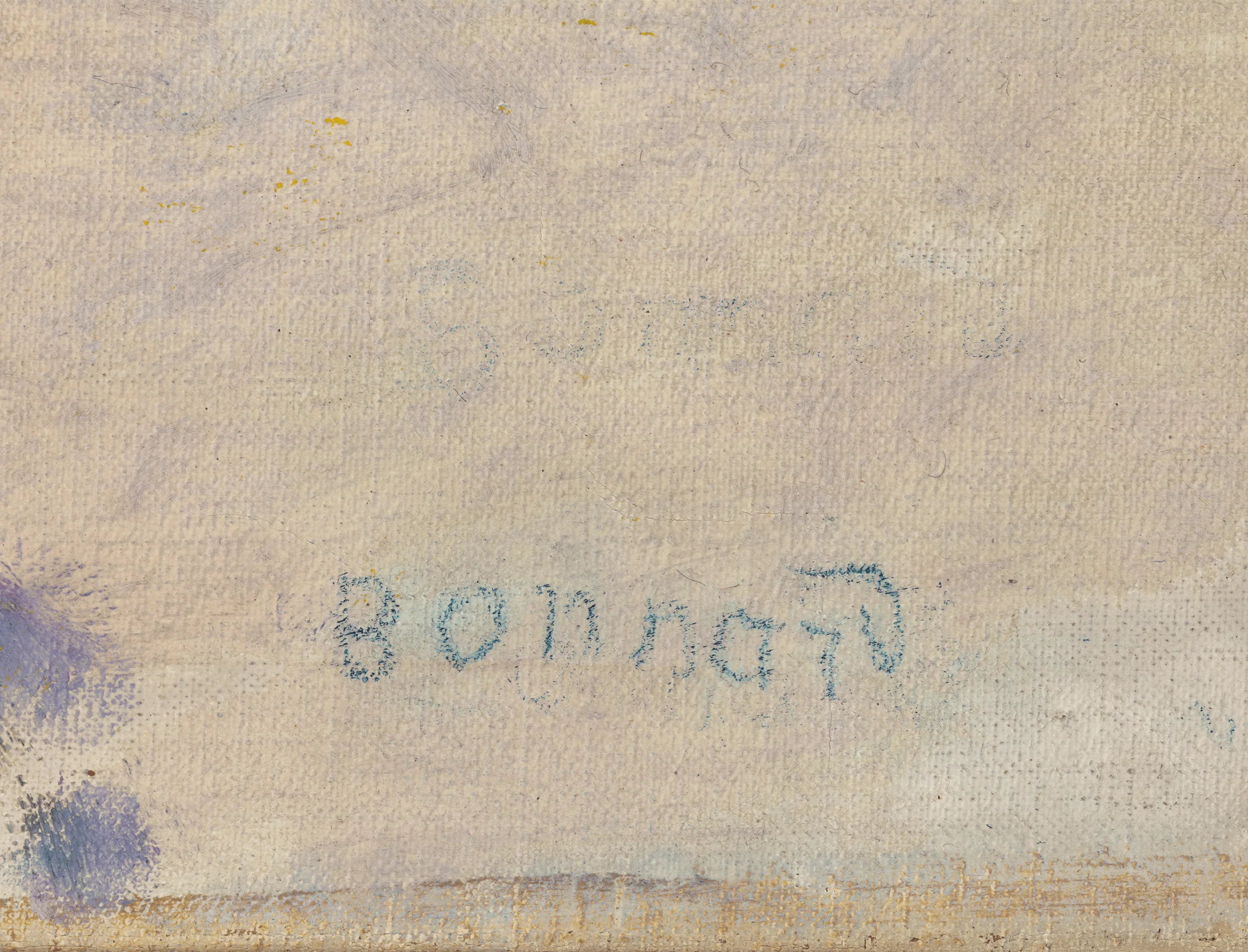
Signed "Bonnard" (lower right)
Oil on canvas
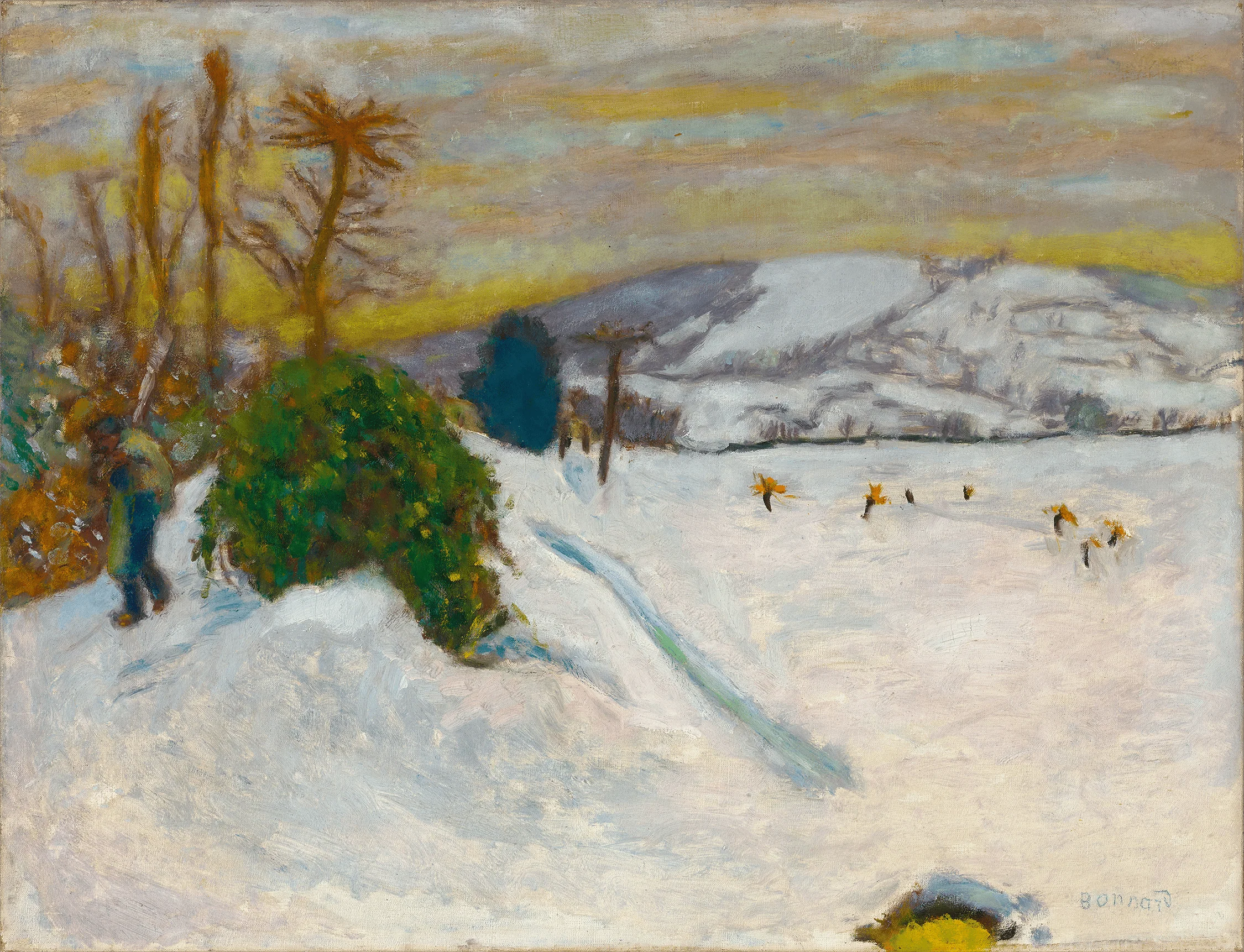
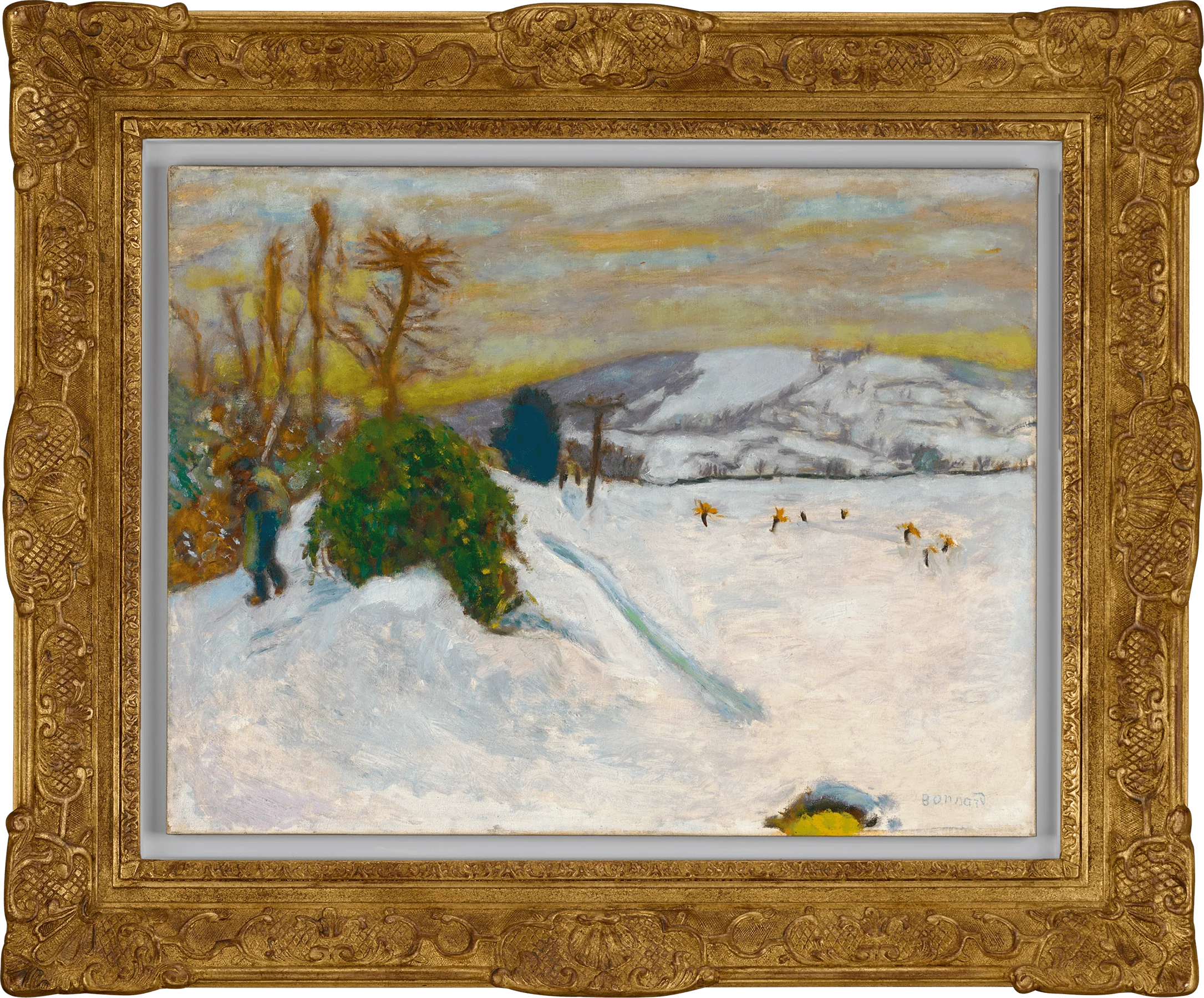
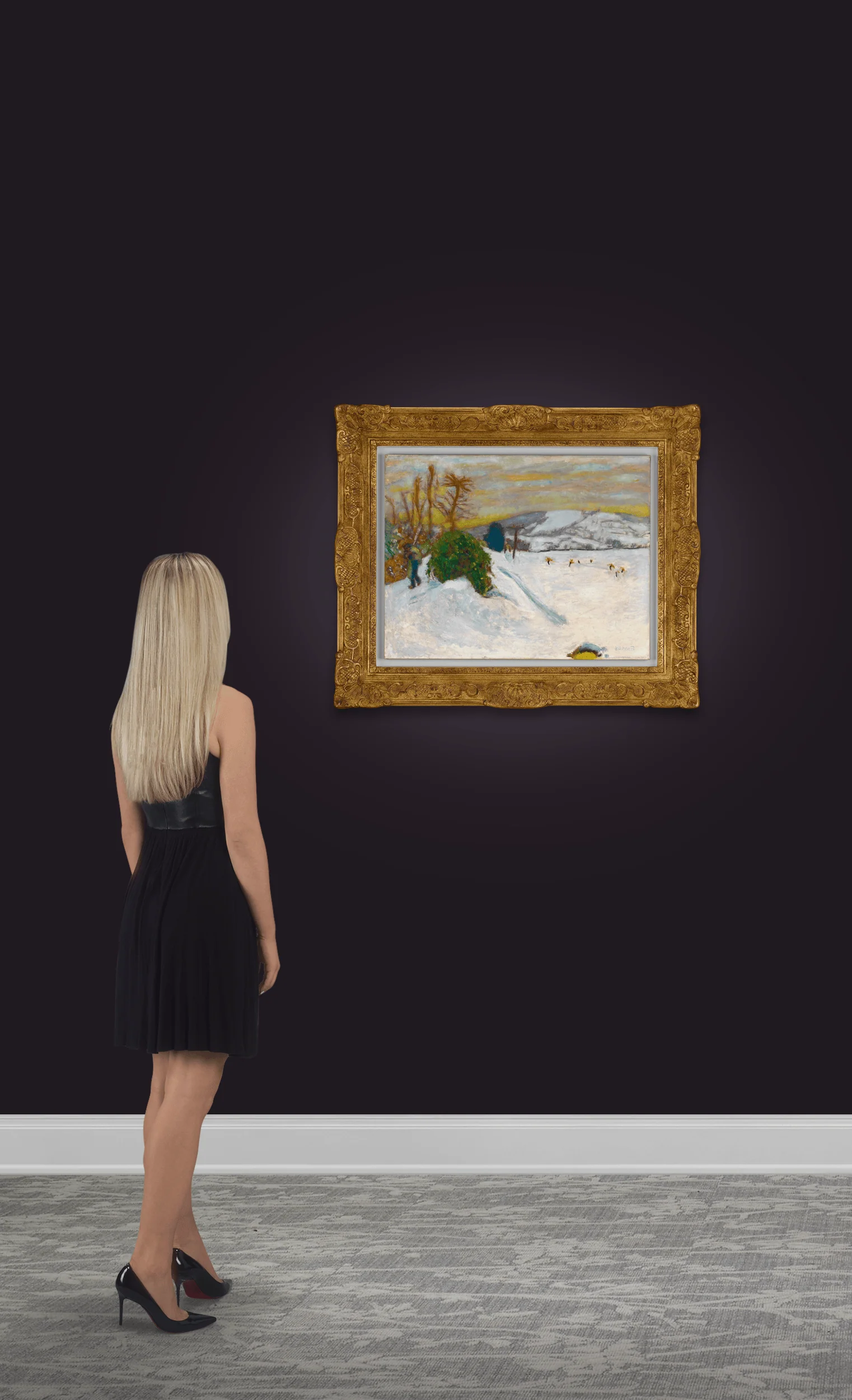
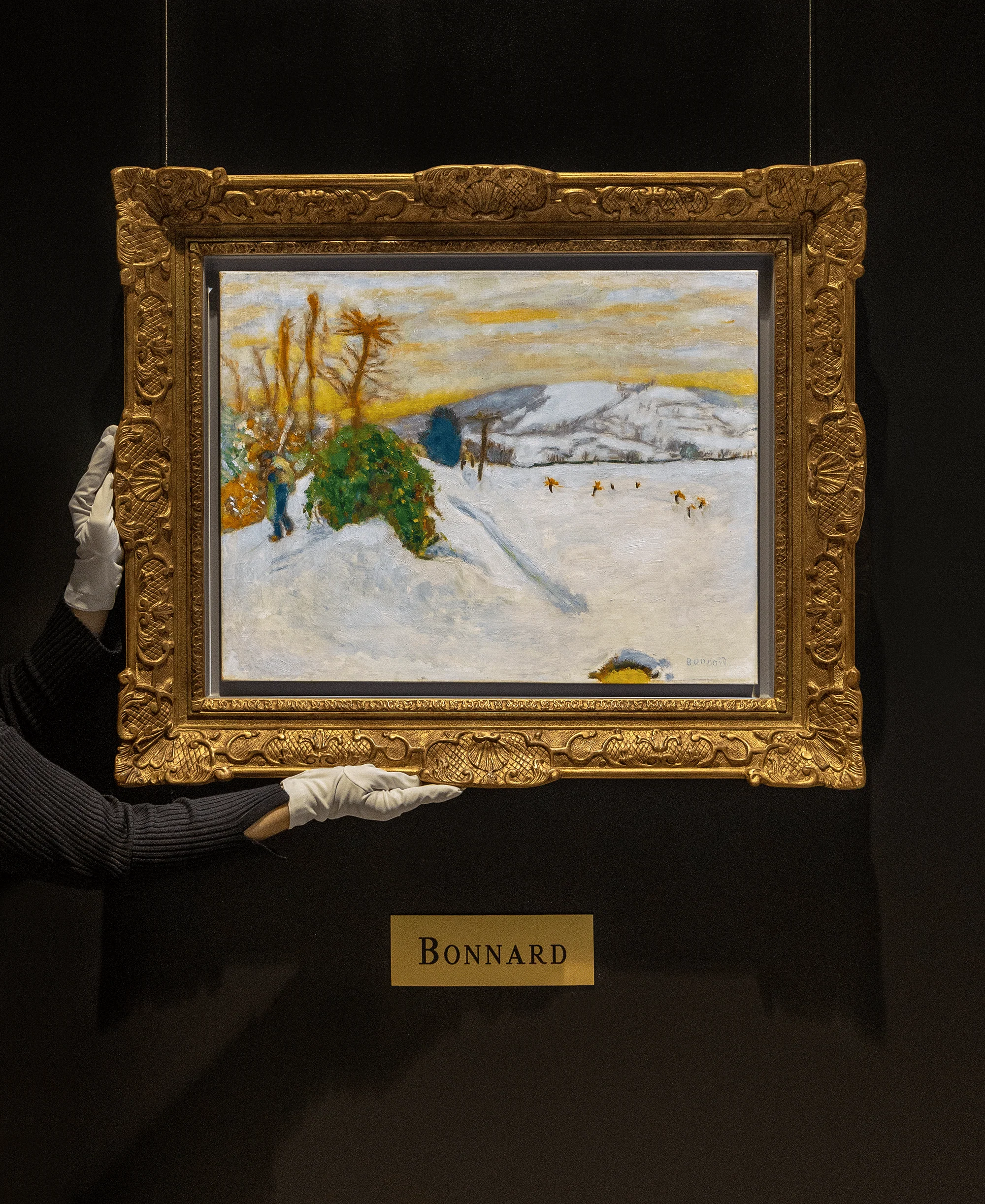
Pierre Bonnard is widely celebrated as one of the greatest colorists in art history, central to the evolution of modern art. His captivating canvases are distinguished by their luminosity and chromatic complexity, and this rare winter landscape is no exception. La neige au Grand-Lemps captures one of Bonnard's most beloved locales and embodies his lifelong fascination with—and mastery of—the color white.
Painted in 1910, La neige au Grand-Lemps reflects a pivotal moment in Bonnard’s artistic practice. As a founder of the influential group Les Nabis, Bonnard was known throughout the 1890s for his colorful, highly complex interior scenes that infused the everyday with symbolic meaning. Around 1900, Bonnard drifted away from the bustle of Paris and traveled Europe with his friend Édouard Vuillard, finding new inspiration in the idyllic landscapes of France.
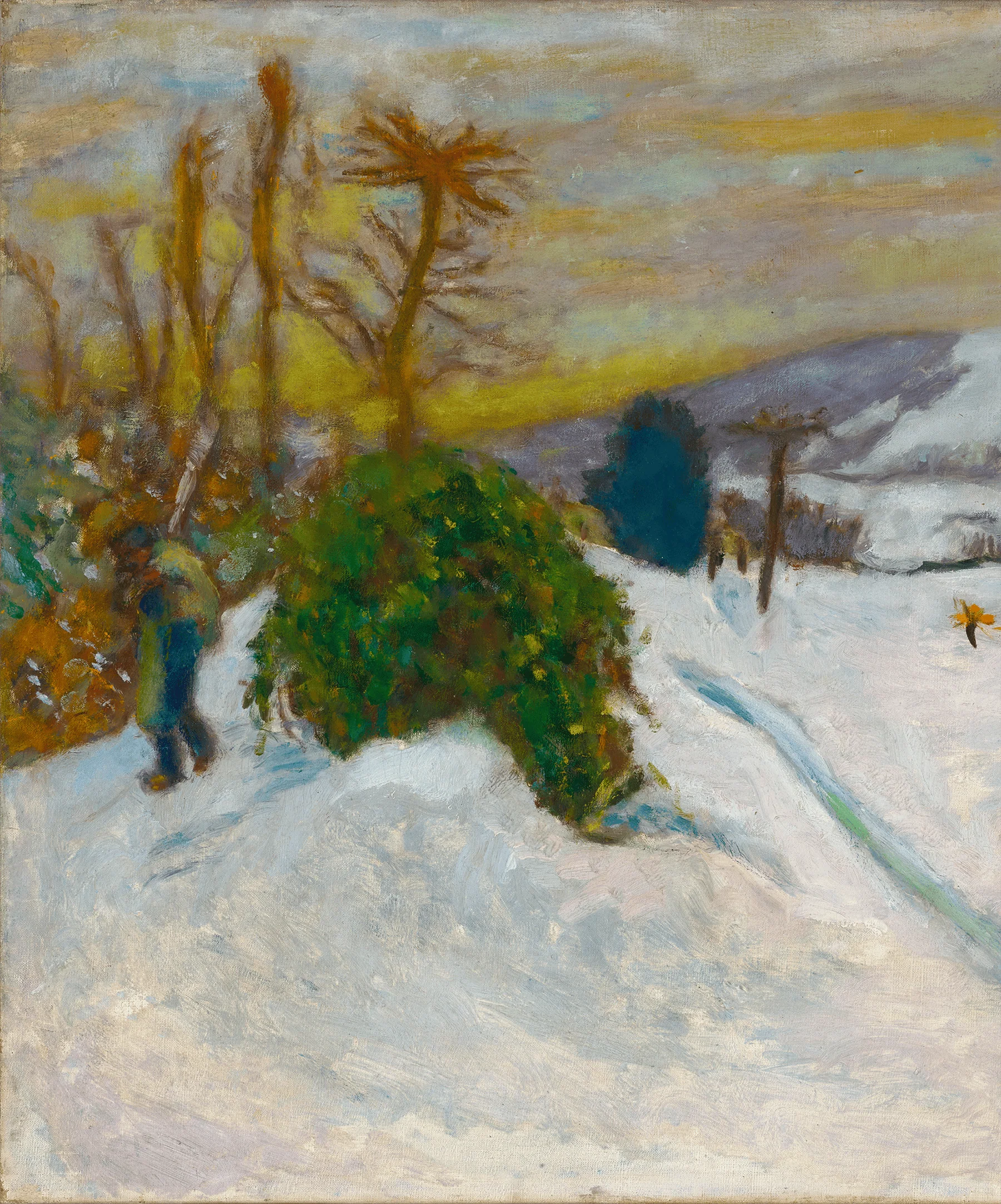
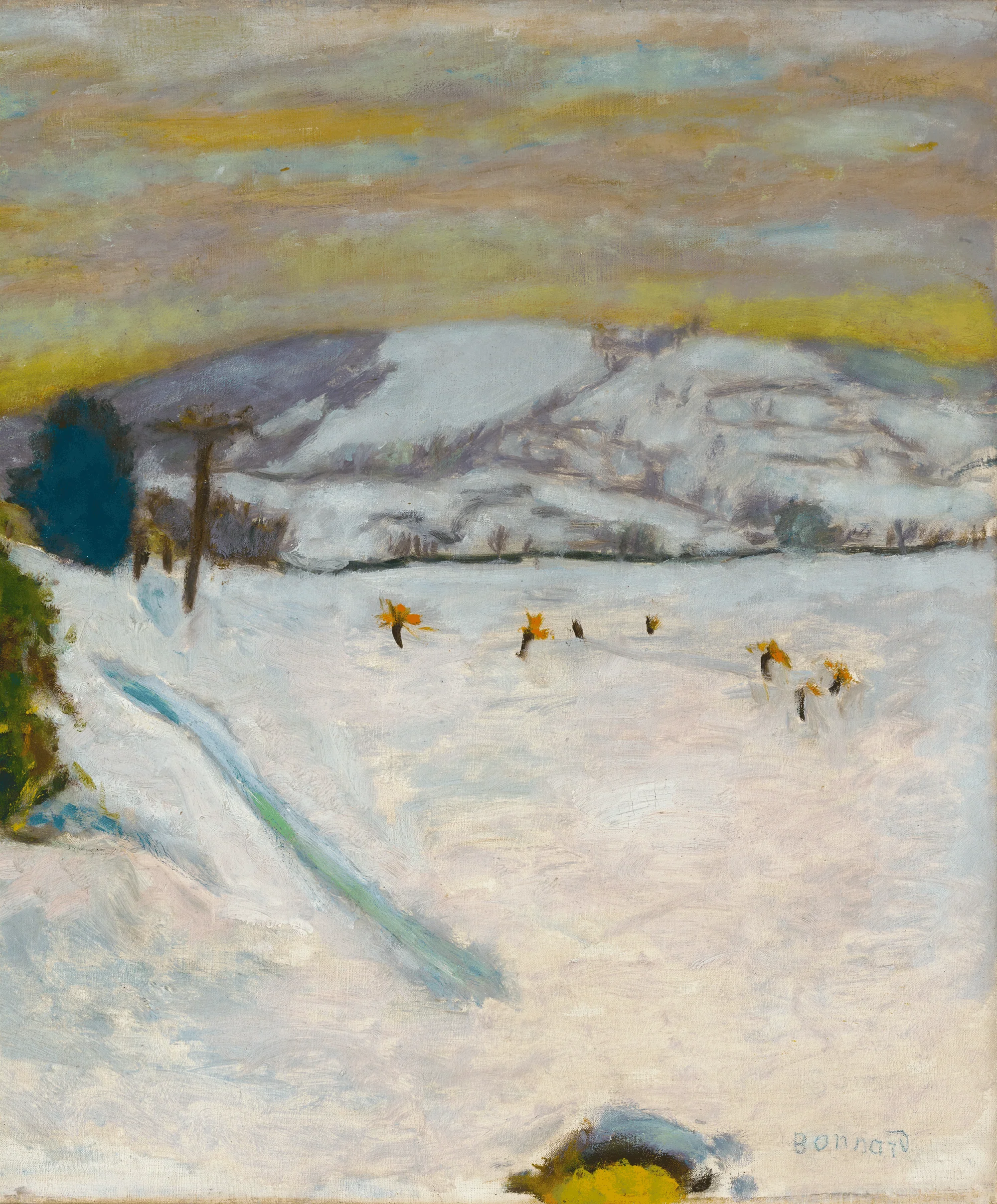
Unlike the Impressionists who painted en plein air, Bonnard painted almost entirely from memory—and this painting evocatively depicts the scenery of his childhood in Le Grand-Lemps. This work also reveals Bonnard’s obsession with capturing the elusive brilliance of white. He composes the entire painting around this color, carefully layering hundreds of subtle hues to bring the snow, ice and winter sky shimmering to life.
Bonnard's landscapes are exceptionally rare today, especially snowy scenes such as this one. With its prestigious provenance and exhibition history, this work is an exceptional, museum-caliber masterpiece. Similar landscapes by Bonnard belong to important museum collections worldwide, including the Metropolitan Museum of Art, the Tate Modern and the National Gallery of Art in Washington, D.C. The Musée Bonnard is dedicated entirely to the artist's legacy, and La neige au Grand-Lemps was exhibited there in 2024.
Born in 1867 in Fontenay-aux-Roses, Bonnard initially studied law before training as an artist at the Académie Julian and the École des Beaux-Arts. Aligning himself with the Symbolist avant-garde, he founded the important group, Les Nabis, along with Maurice Denis and Édouard Vuillard. Known for his intimate interior scenes and evocative nudes, Bonnard developed a highly sophisticated and unique color palette that earned him widespread acclaim. The artist spent his later decades in the South of France, where he continued to refine an increasingly introspective style until his death in 1947. His commitment to the subtleties of perception and color secured his position as one of the most influential figures in modern art, and his landscapes remain among the most sought-after expressions of his lifelong pursuit of visual sensation.
Painted 1910
Canvas: 19 1/2" high x 25 1/2" wide (49.53 x 64.77 cm)
Frame: 28 1/2" high x 34 3/4" wide x 3" deep (72.39 x 88.27 x 7.62 cm)
View the Dossier
Provenance:
Charles Terrasse, Paris (artist's nephew), by descent from the artist
Thence by descent
Private Collection, Paris
M.S. Rau, New Orleans
Literature:
A. Terrasse, Bonnard, Geneva, 1965, p. 51 (illustrated)
J. & H. Dauberville, Bonnard, Catalogue raisonné de l'oeuvre peint, vol. II, 1906-1919, Paris, 1968, no. 609, p. 200 (illustrated)
Bonnard: The Late Paintings, exhibition catalog, New York, 1984, p. 178 (illustrated)
Exhibited:
Paris, Orangerie des Tuileries, Bonnard, 1947, no. 44
Edinburgh, Royal Scottish Academy, Exhibition of Paintings by Pierre Bonnard and Edouard Vuillard, 1948, no. 33, p 12
Basel, Musée des Beaux-Arts, Pierre Bonnard, 1955, no. 41, p. 23
Nice, Musée de Ponchettes, Bonnard, 1955, no. 14, p. 27
Paris, Galerie Bernheim-Jeune, Hommage à Bonnard, 1956, no. 18
Munich, Haus der Kunst, Secession Gallery, Europaïsche Kunst, 1964, no. 41
London, Royal Academy of Arts, Pierre Bonnard, 1966, no. 94
Oslo, Kunstnerforbundet, Pierre Bonnard, 1966, no. 9
Munich, Haus der Kunst, Pierre Bonnard, 1966-1967, no. 59 (illustrated)
Paris, Orangerie des Tuileries, Centenaire de la naissance de Pierre Bonnard, 1967, no. 66 (illustrated)
Colmar, Musée d'Unterlinden, Autour d'une acquisition, Bonnard, 1982
Paris, Galerie Schmit, Pierre Bonnard, 1995, no. 22 (illustrated)
Musée Bonnard, le Cannet, 2024
Paris, Fondation Maeght, Bonnard & Matisse: A Friendship, 2024
1867-1947 | French
La neige au Grand-Lemps
(The Snow at Grand-Lemps)
Signed "Bonnard" (lower right)
Oil on canvas
Pierre Bonnard is widely celebrated as one of the greatest colorists in art history, central to the evolution of modern art. His captivating canvases are distinguished by their luminosity and chromatic complexity, and this rare winter landscape is no exception. La neige au Grand-Lemps captures one of Bonnard's most beloved locales and embodies his lifelong fascination with—and mastery of—the color white.
Painted in 1910, La neige au Grand-Lemps reflects a pivotal moment in Bonnard’s artistic practice. As a founder of the influential group Les Nabis, Bonnard was known throughout the 1890s for his colorful, highly complex interior scenes that infused the everyday with symbolic meaning. Around 1900, Bonnard drifted away from the bustle of Paris and traveled Europe with his friend Édouard Vuillard, finding new inspiration in the idyllic landscapes of France.
Unlike the Impressionists who painted en plein air, Bonnard painted almost entirely from memory—and this painting evocatively depicts the scenery of his childhood in Le Grand-Lemps. This work also reveals Bonnard’s obsession with capturing the elusive brilliance of white. He composes the entire painting around this color, carefully layering hundreds of subtle hues to bring the snow, ice and winter sky shimmering to life.
Bonnard's landscapes are exceptionally rare today, especially snowy scenes such as this one. With its prestigious provenance and exhibition history, this work is an exceptional, museum-caliber masterpiece. Similar landscapes by Bonnard belong to important museum collections worldwide, including the Metropolitan Museum of Art, the Tate Modern and the National Gallery of Art in Washington, D.C. The Musée Bonnard is dedicated entirely to the artist's legacy, and La neige au Grand-Lemps was exhibited there in 2024.
Born in 1867 in Fontenay-aux-Roses, Bonnard initially studied law before training as an artist at the Académie Julian and the École des Beaux-Arts. Aligning himself with the Symbolist avant-garde, he founded the important group, Les Nabis, along with Maurice Denis and Édouard Vuillard. Known for his intimate interior scenes and evocative nudes, Bonnard developed a highly sophisticated and unique color palette that earned him widespread acclaim. The artist spent his later decades in the South of France, where he continued to refine an increasingly introspective style until his death in 1947. His commitment to the subtleties of perception and color secured his position as one of the most influential figures in modern art, and his landscapes remain among the most sought-after expressions of his lifelong pursuit of visual sensation.
Painted 1910
Canvas: 19 1/2" high x 25 1/2" wide (49.53 x 64.77 cm)
Frame: 28 1/2" high x 34 3/4" wide x 3" deep (72.39 x 88.27 x 7.62 cm)
View the Dossier
Provenance:
Charles Terrasse, Paris (artist's nephew), by descent from the artist
Thence by descent
Private Collection, Paris
M.S. Rau, New Orleans
Literature:
A. Terrasse, Bonnard, Geneva, 1965, p. 51 (illustrated)
J. & H. Dauberville, Bonnard, Catalogue raisonné de l'oeuvre peint, vol. II, 1906-1919, Paris, 1968, no. 609, p. 200 (illustrated)
Bonnard: The Late Paintings, exhibition catalog, New York, 1984, p. 178 (illustrated)
Exhibited:
Paris, Orangerie des Tuileries, Bonnard, 1947, no. 44
Edinburgh, Royal Scottish Academy, Exhibition of Paintings by Pierre Bonnard and Edouard Vuillard, 1948, no. 33, p 12
Basel, Musée des Beaux-Arts, Pierre Bonnard, 1955, no. 41, p. 23
Nice, Musée de Ponchettes, Bonnard, 1955, no. 14, p. 27
Paris, Galerie Bernheim-Jeune, Hommage à Bonnard, 1956, no. 18
Munich, Haus der Kunst, Secession Gallery, Europaïsche Kunst, 1964, no. 41
London, Royal Academy of Arts, Pierre Bonnard, 1966, no. 94
Oslo, Kunstnerforbundet, Pierre Bonnard, 1966, no. 9
Munich, Haus der Kunst, Pierre Bonnard, 1966-1967, no. 59 (illustrated)
Paris, Orangerie des Tuileries, Centenaire de la naissance de Pierre Bonnard, 1967, no. 66 (illustrated)
Colmar, Musée d'Unterlinden, Autour d'une acquisition, Bonnard, 1982
Paris, Galerie Schmit, Pierre Bonnard, 1995, no. 22 (illustrated)
Musée Bonnard, le Cannet, 2024
Paris, Fondation Maeght, Bonnard & Matisse: A Friendship, 2024
$1,250,000.00
La neige au Grand-Lemps by Pierre Bonnard—
$1,250,000.00
Description
Pierre Bonnard
1867-1947 | French
La neige au Grand-Lemps
(The Snow at Grand-Lemps)
Signed "Bonnard" (lower right)
Oil on canvas
Pierre Bonnard is widely celebrated as one of the greatest colorists in art history, central to the evolution of modern art. His captivating canvases are distinguished by their luminosity and chromatic complexity, and this rare winter landscape is no exception. La neige au Grand-Lemps captures one of Bonnard's most beloved locales and embodies his lifelong fascination with—and mastery of—the color white.
Painted in 1910, La neige au Grand-Lemps reflects a pivotal moment in Bonnard’s artistic practice. As a founder of the influential group Les Nabis, Bonnard was known throughout the 1890s for his colorful, highly complex interior scenes that infused the everyday with symbolic meaning. Around 1900, Bonnard drifted away from the bustle of Paris and traveled Europe with his friend Édouard Vuillard, finding new inspiration in the idyllic landscapes of France.
Unlike the Impressionists who painted en plein air, Bonnard painted almost entirely from memory—and this painting evocatively depicts the scenery of his childhood in Le Grand-Lemps. This work also reveals Bonnard’s obsession with capturing the elusive brilliance of white. He composes the entire painting around this color, carefully layering hundreds of subtle hues to bring the snow, ice and winter sky shimmering to life.
Bonnard's landscapes are exceptionally rare today, especially snowy scenes such as this one. With its prestigious provenance and exhibition history, this work is an exceptional, museum-caliber masterpiece. Similar landscapes by Bonnard belong to important museum collections worldwide, including the Metropolitan Museum of Art, the Tate Modern and the National Gallery of Art in Washington, D.C. The Musée Bonnard is dedicated entirely to the artist's legacy, and La neige au Grand-Lemps was exhibited there in 2024.
Born in 1867 in Fontenay-aux-Roses, Bonnard initially studied law before training as an artist at the Académie Julian and the École des Beaux-Arts. Aligning himself with the Symbolist avant-garde, he founded the important group, Les Nabis, along with Maurice Denis and Édouard Vuillard. Known for his intimate interior scenes and evocative nudes, Bonnard developed a highly sophisticated and unique color palette that earned him widespread acclaim. The artist spent his later decades in the South of France, where he continued to refine an increasingly introspective style until his death in 1947. His commitment to the subtleties of perception and color secured his position as one of the most influential figures in modern art, and his landscapes remain among the most sought-after expressions of his lifelong pursuit of visual sensation.
Painted 1910
Canvas: 19 1/2" high x 25 1/2" wide (49.53 x 64.77 cm)
Frame: 28 1/2" high x 34 3/4" wide x 3" deep (72.39 x 88.27 x 7.62 cm)
View the Dossier
Provenance:
Charles Terrasse, Paris (artist's nephew), by descent from the artist
Thence by descent
Private Collection, Paris
M.S. Rau, New Orleans
Literature:
A. Terrasse, Bonnard, Geneva, 1965, p. 51 (illustrated)
J. & H. Dauberville, Bonnard, Catalogue raisonné de l'oeuvre peint, vol. II, 1906-1919, Paris, 1968, no. 609, p. 200 (illustrated)
Bonnard: The Late Paintings, exhibition catalog, New York, 1984, p. 178 (illustrated)
Exhibited:
Paris, Orangerie des Tuileries, Bonnard, 1947, no. 44
Edinburgh, Royal Scottish Academy, Exhibition of Paintings by Pierre Bonnard and Edouard Vuillard, 1948, no. 33, p 12
Basel, Musée des Beaux-Arts, Pierre Bonnard, 1955, no. 41, p. 23
Nice, Musée de Ponchettes, Bonnard, 1955, no. 14, p. 27
Paris, Galerie Bernheim-Jeune, Hommage à Bonnard, 1956, no. 18
Munich, Haus der Kunst, Secession Gallery, Europaïsche Kunst, 1964, no. 41
London, Royal Academy of Arts, Pierre Bonnard, 1966, no. 94
Oslo, Kunstnerforbundet, Pierre Bonnard, 1966, no. 9
Munich, Haus der Kunst, Pierre Bonnard, 1966-1967, no. 59 (illustrated)
Paris, Orangerie des Tuileries, Centenaire de la naissance de Pierre Bonnard, 1967, no. 66 (illustrated)
Colmar, Musée d'Unterlinden, Autour d'une acquisition, Bonnard, 1982
Paris, Galerie Schmit, Pierre Bonnard, 1995, no. 22 (illustrated)
Musée Bonnard, le Cannet, 2024
Paris, Fondation Maeght, Bonnard & Matisse: A Friendship, 2024
1867-1947 | French
La neige au Grand-Lemps
(The Snow at Grand-Lemps)
Signed "Bonnard" (lower right)
Oil on canvas
Pierre Bonnard is widely celebrated as one of the greatest colorists in art history, central to the evolution of modern art. His captivating canvases are distinguished by their luminosity and chromatic complexity, and this rare winter landscape is no exception. La neige au Grand-Lemps captures one of Bonnard's most beloved locales and embodies his lifelong fascination with—and mastery of—the color white.
Painted in 1910, La neige au Grand-Lemps reflects a pivotal moment in Bonnard’s artistic practice. As a founder of the influential group Les Nabis, Bonnard was known throughout the 1890s for his colorful, highly complex interior scenes that infused the everyday with symbolic meaning. Around 1900, Bonnard drifted away from the bustle of Paris and traveled Europe with his friend Édouard Vuillard, finding new inspiration in the idyllic landscapes of France.
Unlike the Impressionists who painted en plein air, Bonnard painted almost entirely from memory—and this painting evocatively depicts the scenery of his childhood in Le Grand-Lemps. This work also reveals Bonnard’s obsession with capturing the elusive brilliance of white. He composes the entire painting around this color, carefully layering hundreds of subtle hues to bring the snow, ice and winter sky shimmering to life.
Bonnard's landscapes are exceptionally rare today, especially snowy scenes such as this one. With its prestigious provenance and exhibition history, this work is an exceptional, museum-caliber masterpiece. Similar landscapes by Bonnard belong to important museum collections worldwide, including the Metropolitan Museum of Art, the Tate Modern and the National Gallery of Art in Washington, D.C. The Musée Bonnard is dedicated entirely to the artist's legacy, and La neige au Grand-Lemps was exhibited there in 2024.
Born in 1867 in Fontenay-aux-Roses, Bonnard initially studied law before training as an artist at the Académie Julian and the École des Beaux-Arts. Aligning himself with the Symbolist avant-garde, he founded the important group, Les Nabis, along with Maurice Denis and Édouard Vuillard. Known for his intimate interior scenes and evocative nudes, Bonnard developed a highly sophisticated and unique color palette that earned him widespread acclaim. The artist spent his later decades in the South of France, where he continued to refine an increasingly introspective style until his death in 1947. His commitment to the subtleties of perception and color secured his position as one of the most influential figures in modern art, and his landscapes remain among the most sought-after expressions of his lifelong pursuit of visual sensation.
Painted 1910
Canvas: 19 1/2" high x 25 1/2" wide (49.53 x 64.77 cm)
Frame: 28 1/2" high x 34 3/4" wide x 3" deep (72.39 x 88.27 x 7.62 cm)
View the Dossier
Provenance:
Charles Terrasse, Paris (artist's nephew), by descent from the artist
Thence by descent
Private Collection, Paris
M.S. Rau, New Orleans
Literature:
A. Terrasse, Bonnard, Geneva, 1965, p. 51 (illustrated)
J. & H. Dauberville, Bonnard, Catalogue raisonné de l'oeuvre peint, vol. II, 1906-1919, Paris, 1968, no. 609, p. 200 (illustrated)
Bonnard: The Late Paintings, exhibition catalog, New York, 1984, p. 178 (illustrated)
Exhibited:
Paris, Orangerie des Tuileries, Bonnard, 1947, no. 44
Edinburgh, Royal Scottish Academy, Exhibition of Paintings by Pierre Bonnard and Edouard Vuillard, 1948, no. 33, p 12
Basel, Musée des Beaux-Arts, Pierre Bonnard, 1955, no. 41, p. 23
Nice, Musée de Ponchettes, Bonnard, 1955, no. 14, p. 27
Paris, Galerie Bernheim-Jeune, Hommage à Bonnard, 1956, no. 18
Munich, Haus der Kunst, Secession Gallery, Europaïsche Kunst, 1964, no. 41
London, Royal Academy of Arts, Pierre Bonnard, 1966, no. 94
Oslo, Kunstnerforbundet, Pierre Bonnard, 1966, no. 9
Munich, Haus der Kunst, Pierre Bonnard, 1966-1967, no. 59 (illustrated)
Paris, Orangerie des Tuileries, Centenaire de la naissance de Pierre Bonnard, 1967, no. 66 (illustrated)
Colmar, Musée d'Unterlinden, Autour d'une acquisition, Bonnard, 1982
Paris, Galerie Schmit, Pierre Bonnard, 1995, no. 22 (illustrated)
Musée Bonnard, le Cannet, 2024
Paris, Fondation Maeght, Bonnard & Matisse: A Friendship, 2024