🎉 Up to 70% Off Selected ItemsShop Sale

Tall, Cylindrical Satsuma Vase
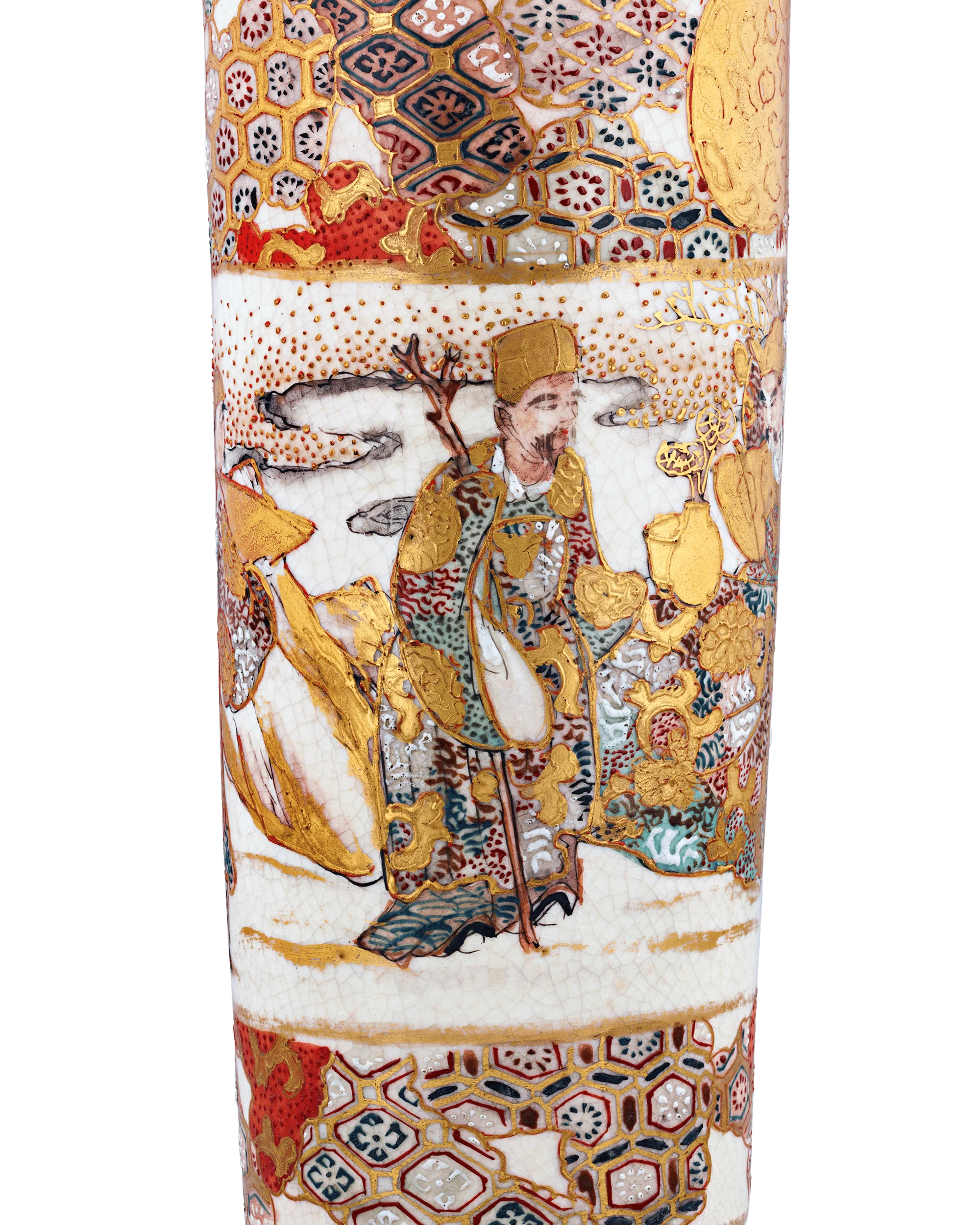
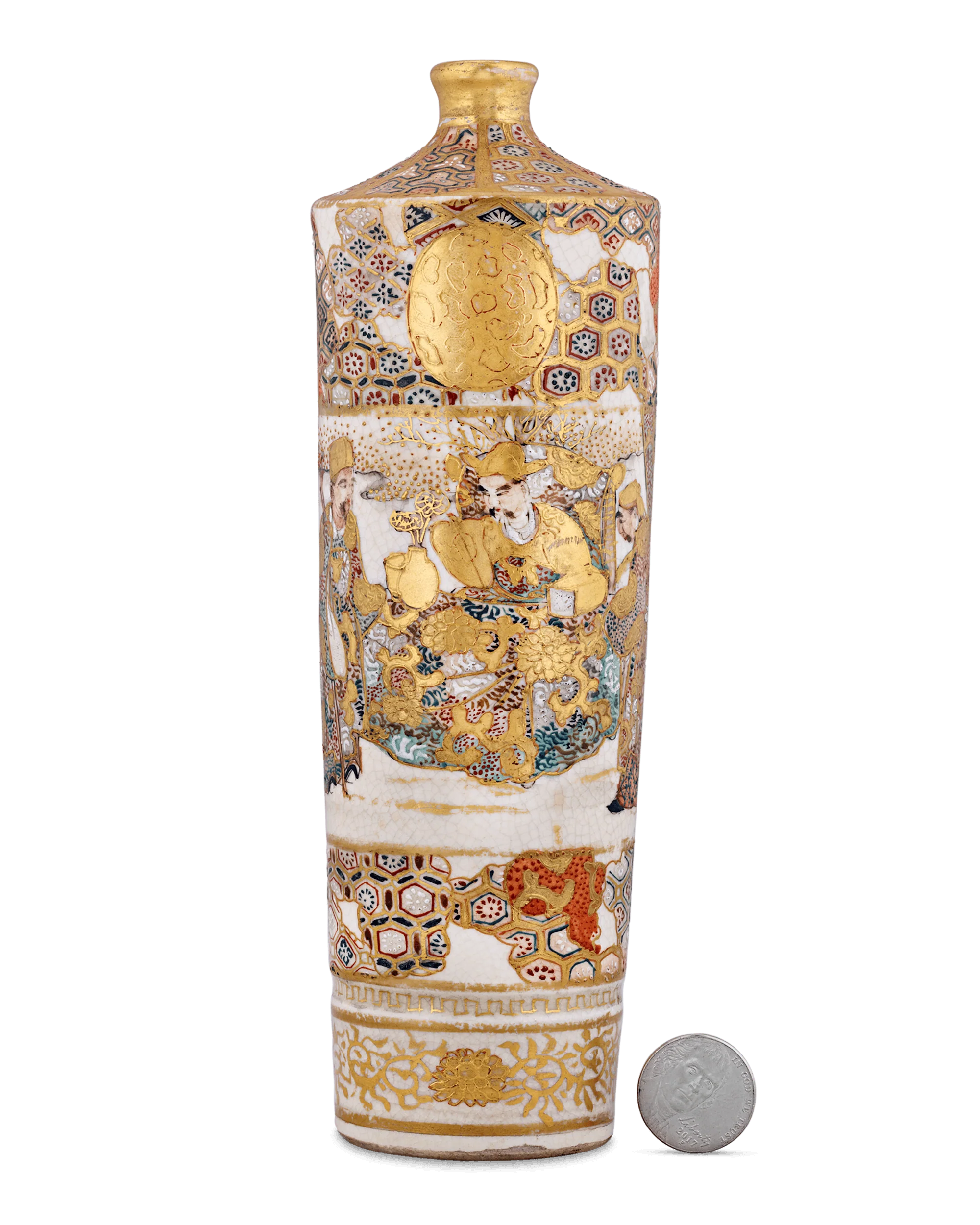
This vibrant and ornate vase captivates the eye with its intricate details which stand as a testament to the mastery of Satsuma artists. The vase features rich reds, deep blues and shining gold, all interwoven in geometric patterns alongside floral designs and figures. The men depicted wear fabrics adorned with colorful patterns, their attire reflecting both elegance and tradition. Their gazes converge on a seated noble figure in luxurious gold fabric. Prominently featured, the chrysanthemum blooms symbolize nobility in Japanese culture. The vase pays homage to the noble figure, shown as powerful and impressive. It is said that the artist’s devotion to detail while painting Satsuma ware was so intense that they risked blindness in pursuit of perfection.
For over 150 years, Satsuma ware has stood as a testament to the artistic brilliance of Japan’s Meiji period, captivating collectors around the globe. Celebrated for its unique style characterized by intricate overglaze enamel and delicate gilding, Satsuma ware beautifully portrays nature with detailed depictions of flowers and animals. This esteemed ceramic tradition originated near Kagoshima Prefecture on Kyushu Island, initially crafted by skilled Korean artisans for the local elite. Its international acclaim skyrocketed following the 1867 Exposition Universelle in Paris. Today, Satsuma ware continues to be a revered art form, cherished in major Japanese cities and highly sought after by collectors worldwide.
Circa Meiji period (1868-1912)
7 3/4” high x 3” wide x 3” deep
For over 150 years, Satsuma ware has stood as a testament to the artistic brilliance of Japan’s Meiji period, captivating collectors around the globe. Celebrated for its unique style characterized by intricate overglaze enamel and delicate gilding, Satsuma ware beautifully portrays nature with detailed depictions of flowers and animals. This esteemed ceramic tradition originated near Kagoshima Prefecture on Kyushu Island, initially crafted by skilled Korean artisans for the local elite. Its international acclaim skyrocketed following the 1867 Exposition Universelle in Paris. Today, Satsuma ware continues to be a revered art form, cherished in major Japanese cities and highly sought after by collectors worldwide.
Circa Meiji period (1868-1912)
7 3/4” high x 3” wide x 3” deep
$997.50
Original: $2,850.00
-65%Tall, Cylindrical Satsuma Vase—
$2,850.00
$997.50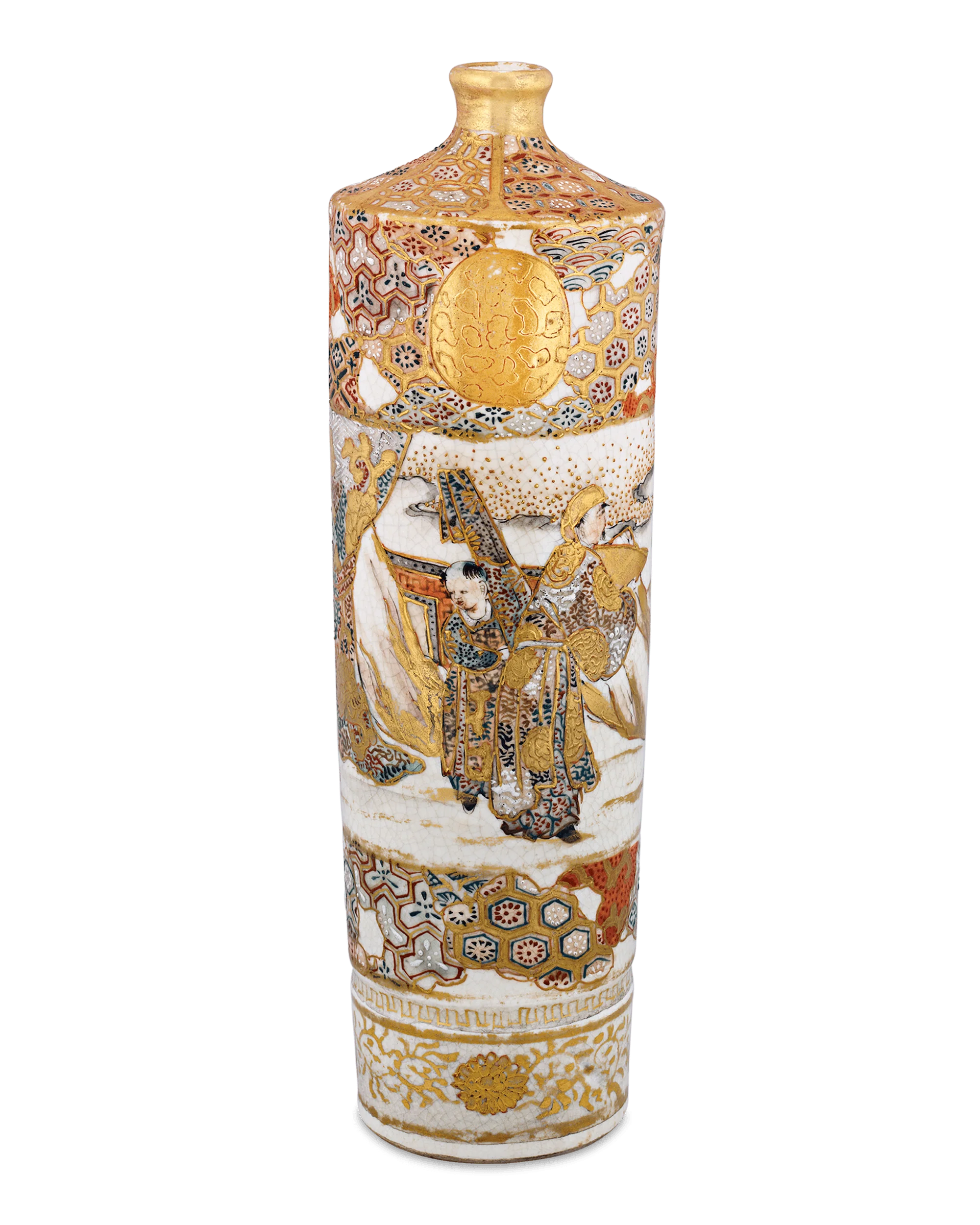
Description
This vibrant and ornate vase captivates the eye with its intricate details which stand as a testament to the mastery of Satsuma artists. The vase features rich reds, deep blues and shining gold, all interwoven in geometric patterns alongside floral designs and figures. The men depicted wear fabrics adorned with colorful patterns, their attire reflecting both elegance and tradition. Their gazes converge on a seated noble figure in luxurious gold fabric. Prominently featured, the chrysanthemum blooms symbolize nobility in Japanese culture. The vase pays homage to the noble figure, shown as powerful and impressive. It is said that the artist’s devotion to detail while painting Satsuma ware was so intense that they risked blindness in pursuit of perfection.
For over 150 years, Satsuma ware has stood as a testament to the artistic brilliance of Japan’s Meiji period, captivating collectors around the globe. Celebrated for its unique style characterized by intricate overglaze enamel and delicate gilding, Satsuma ware beautifully portrays nature with detailed depictions of flowers and animals. This esteemed ceramic tradition originated near Kagoshima Prefecture on Kyushu Island, initially crafted by skilled Korean artisans for the local elite. Its international acclaim skyrocketed following the 1867 Exposition Universelle in Paris. Today, Satsuma ware continues to be a revered art form, cherished in major Japanese cities and highly sought after by collectors worldwide.
Circa Meiji period (1868-1912)
7 3/4” high x 3” wide x 3” deep
For over 150 years, Satsuma ware has stood as a testament to the artistic brilliance of Japan’s Meiji period, captivating collectors around the globe. Celebrated for its unique style characterized by intricate overglaze enamel and delicate gilding, Satsuma ware beautifully portrays nature with detailed depictions of flowers and animals. This esteemed ceramic tradition originated near Kagoshima Prefecture on Kyushu Island, initially crafted by skilled Korean artisans for the local elite. Its international acclaim skyrocketed following the 1867 Exposition Universelle in Paris. Today, Satsuma ware continues to be a revered art form, cherished in major Japanese cities and highly sought after by collectors worldwide.
Circa Meiji period (1868-1912)
7 3/4” high x 3” wide x 3” deep