🎉 Up to 70% Off Selected ItemsShop Sale

Tang Dynasty Earthenware Horse
Tang Dynasty Earthenware Horse
Circa 618–907 CE
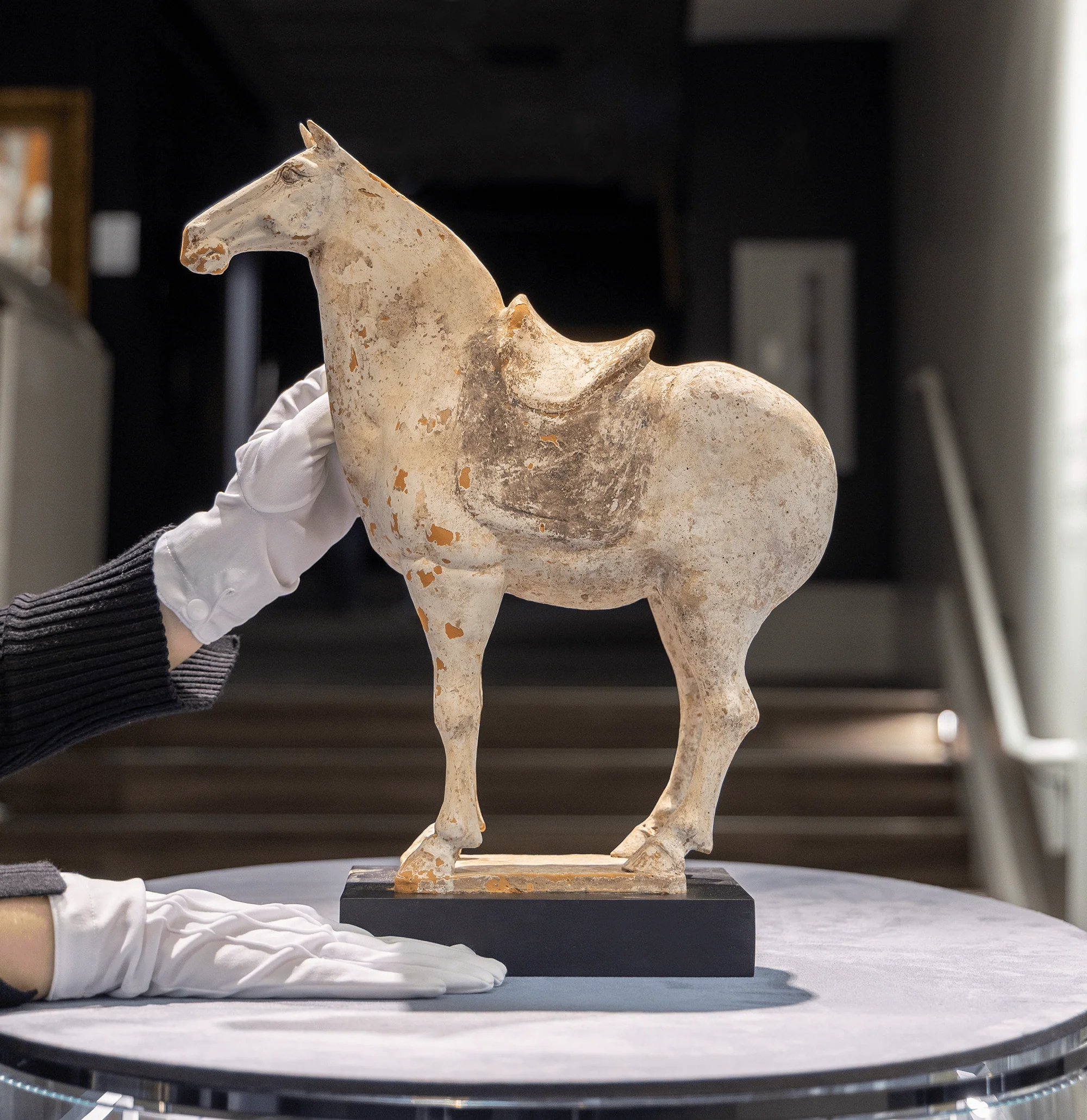
This Tang dynasty earthenware horse retains traces of its original white pigment, a feature rarely preserved on sculptures of this period. The figure is expertly modeled, with careful attention to proportion and stance, reflecting the Tang dynasty’s increasing interest in representing naturalistic form.
Horses were central to Tang society, valued for their roles in warfare, transportation and ceremonial life. Horses, much like camels, were absolutely integral to life on the Silk Road, a network that facilitated cultural exchange across East and Central Asia and the Middle East. Created as mingqi, funerary objects placed in tombs, such sculptures were intended to accompany and serve the deceased in the afterlife.
15 5/8” high x 13 1/2” wide x 5” deep
Provenance:
Private collection, Florida
M.S. Rau, New Orleans
Circa 618–907 CE
This Tang dynasty earthenware horse retains traces of its original white pigment, a feature rarely preserved on sculptures of this period. The figure is expertly modeled, with careful attention to proportion and stance, reflecting the Tang dynasty’s increasing interest in representing naturalistic form.
Horses were central to Tang society, valued for their roles in warfare, transportation and ceremonial life. Horses, much like camels, were absolutely integral to life on the Silk Road, a network that facilitated cultural exchange across East and Central Asia and the Middle East. Created as mingqi, funerary objects placed in tombs, such sculptures were intended to accompany and serve the deceased in the afterlife.
15 5/8” high x 13 1/2” wide x 5” deep
Provenance:
Private collection, Florida
M.S. Rau, New Orleans
$6,947.50
Original: $19,850.00
-65%Tang Dynasty Earthenware Horse—
$19,850.00
$6,947.50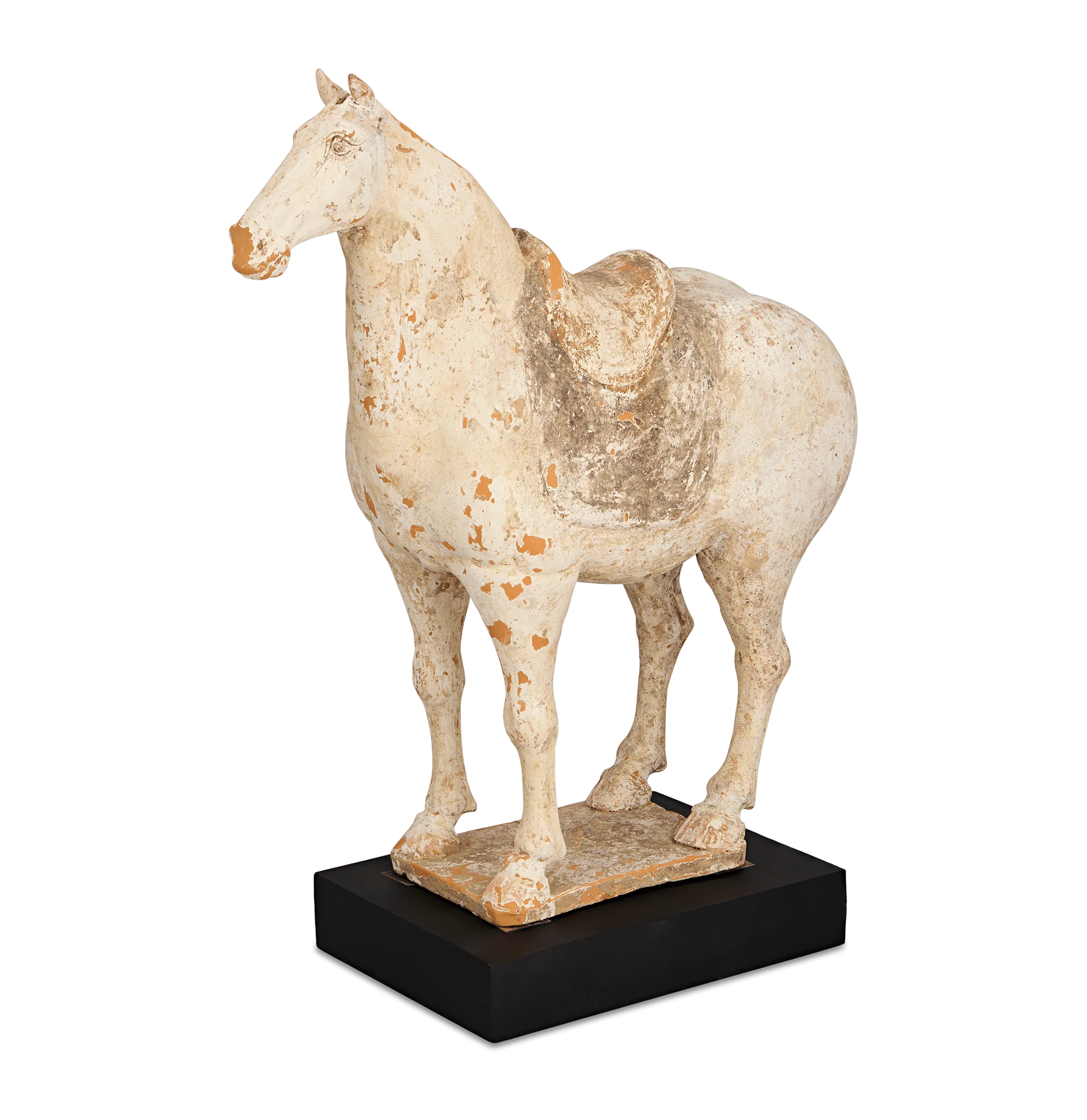


Description
Tang Dynasty Earthenware Horse
Circa 618–907 CE
This Tang dynasty earthenware horse retains traces of its original white pigment, a feature rarely preserved on sculptures of this period. The figure is expertly modeled, with careful attention to proportion and stance, reflecting the Tang dynasty’s increasing interest in representing naturalistic form.
Horses were central to Tang society, valued for their roles in warfare, transportation and ceremonial life. Horses, much like camels, were absolutely integral to life on the Silk Road, a network that facilitated cultural exchange across East and Central Asia and the Middle East. Created as mingqi, funerary objects placed in tombs, such sculptures were intended to accompany and serve the deceased in the afterlife.
15 5/8” high x 13 1/2” wide x 5” deep
Provenance:
Private collection, Florida
M.S. Rau, New Orleans
Circa 618–907 CE
This Tang dynasty earthenware horse retains traces of its original white pigment, a feature rarely preserved on sculptures of this period. The figure is expertly modeled, with careful attention to proportion and stance, reflecting the Tang dynasty’s increasing interest in representing naturalistic form.
Horses were central to Tang society, valued for their roles in warfare, transportation and ceremonial life. Horses, much like camels, were absolutely integral to life on the Silk Road, a network that facilitated cultural exchange across East and Central Asia and the Middle East. Created as mingqi, funerary objects placed in tombs, such sculptures were intended to accompany and serve the deceased in the afterlife.
15 5/8” high x 13 1/2” wide x 5” deep
Provenance:
Private collection, Florida
M.S. Rau, New Orleans