🎉 Up to 70% Off Selected ItemsShop Sale

Woman Bathing Her Feet in a Brook by Rembrandt van Rijn
Rembrandt van Rijn
1606-1669 | Dutch
Woman Bathing Her Feet in a Brook
Etching on paper
New Hollstein's 309, second state of II
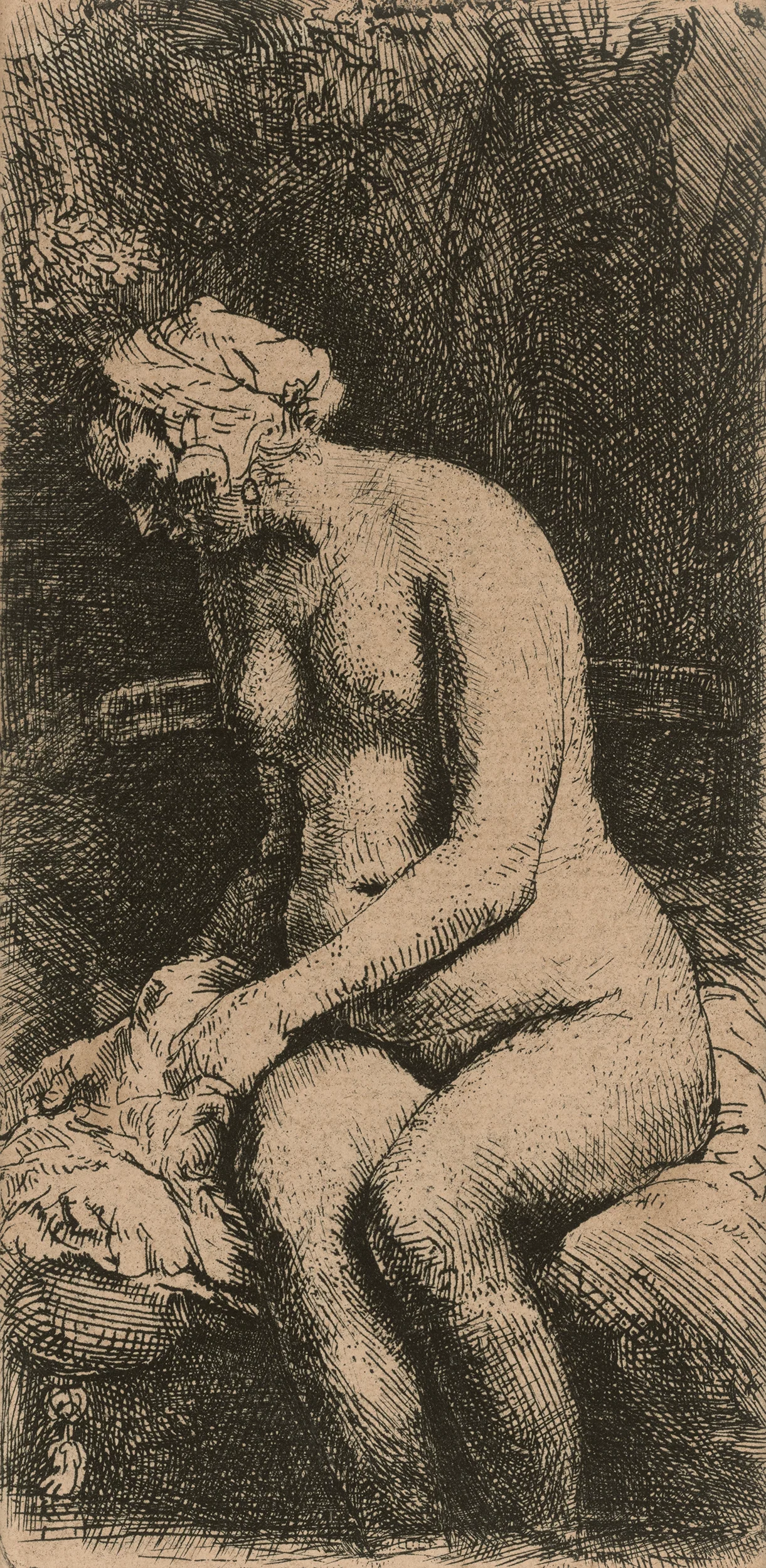
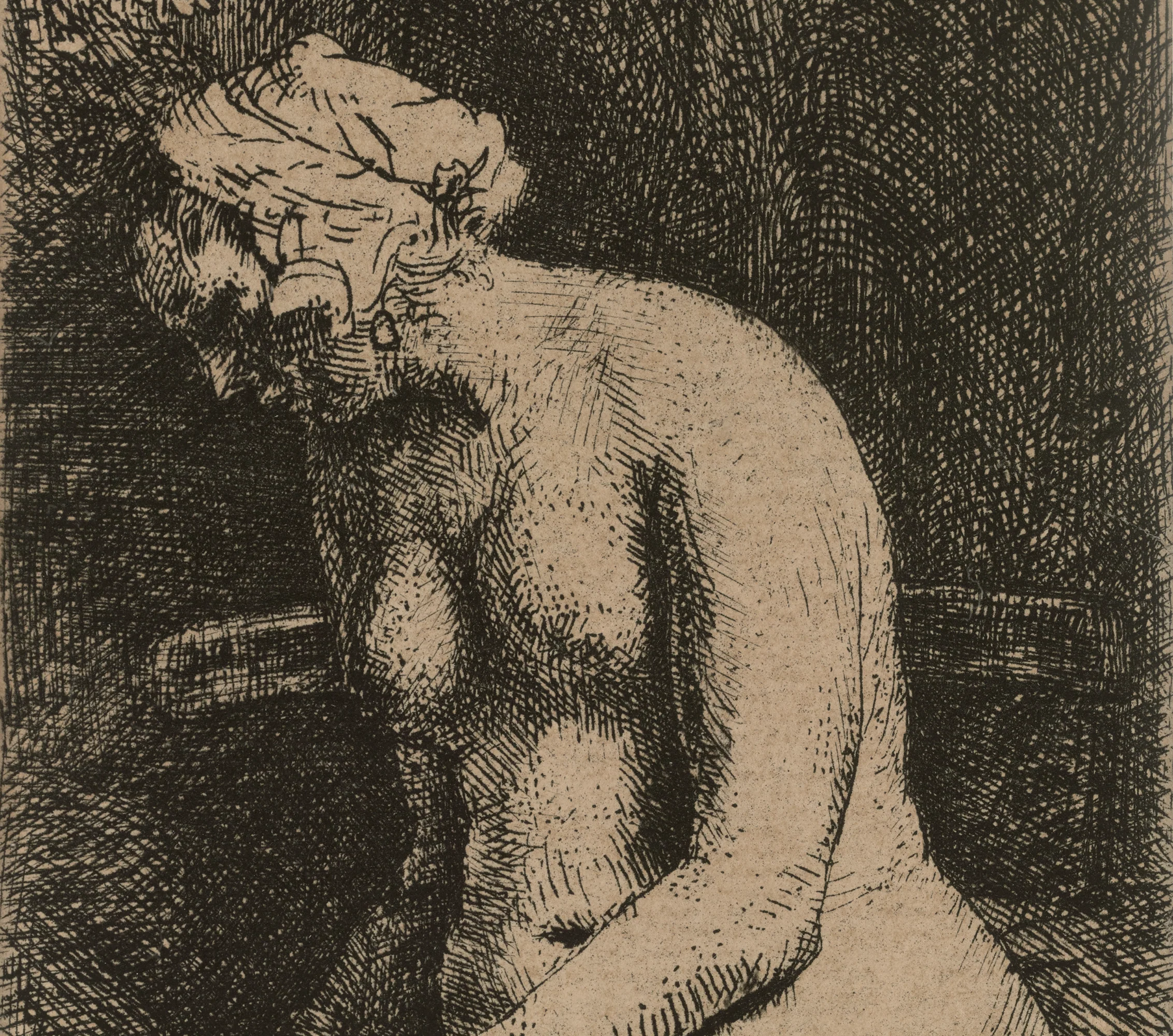
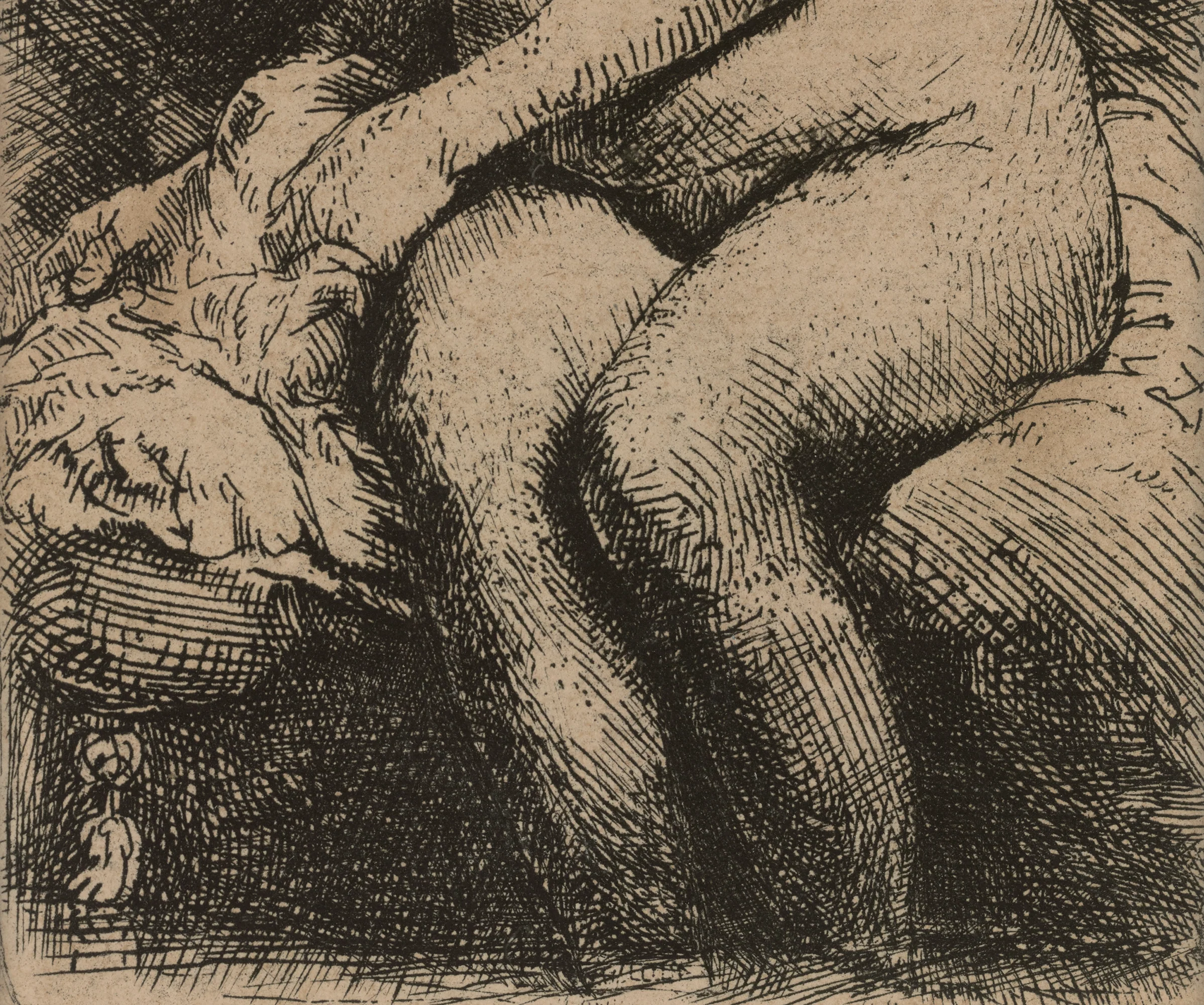
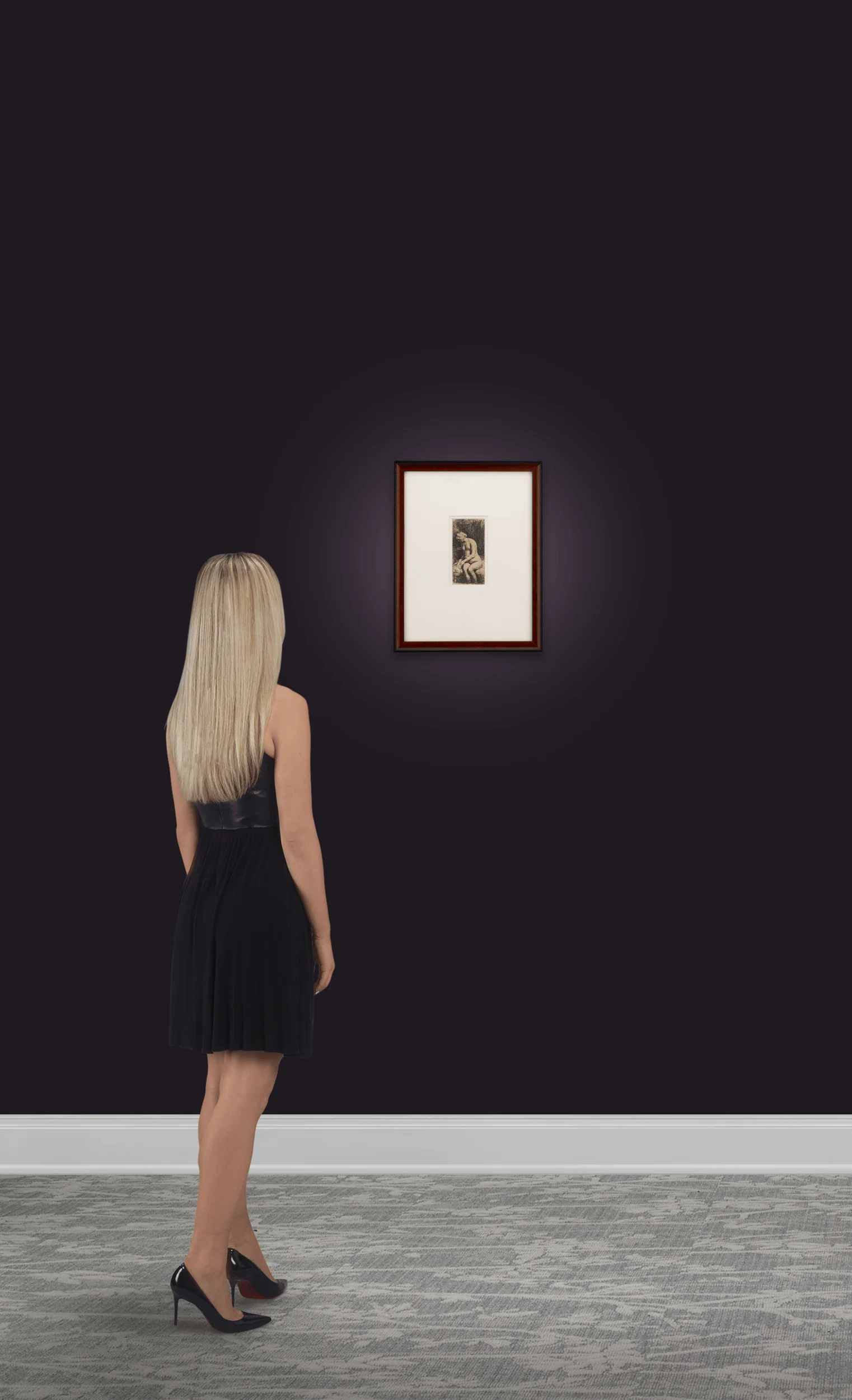
Created from observations of a live model, this work started as a figure study before evolving into a more imaginative setting. It remains ambiguous whether the scene is set indoors, as suggested by the cushion the figure is seated on, or outdoors, indicated by the foliage in the background. The omission of her feet, suggesting they may be dangling in a brook, adds a charming touch to Rembrandt’s imaginative scene. The figure seems unaware of the viewer, presenting a dignified yet sensual demeanor.
The son of a miller, Rembrandt van Rijn is believed to have been born in Leiden on July 15, 1606. He studied first at the Latin School and then was enrolled at the University of Leiden at the age of 14. He soon left to study art—first with a local master, Jacob van Swanenburch, and then, in Amsterdam, with Pieter Lastman, known for his historical paintings. Rembrandt was an exceptionally gifted student and mastered his art in a mere six months. Now 22 years old, he returned to Leiden and was soon so highly regarded that he was able to take students of his own.
Though known today primarily for his paintings, Rembrandt's fame spread outside the Netherlands thanks to his etchings. He made hundreds of etchings throughout his career from 1626 until 1660, the year he was forced to sell his presses. He created etchings of many subjects, including self-portraits, biblical subjects, saints and allegories, and his work was avidly admired and collected, even during his lifetime.
Versions of this etching reside in numerous museums, including the Metropolitan Museum of Art in New York, the Art Institute of Chicago and the Cleveland Museum of Art, among many others.
Plate created 1658
Etching: 6" high x 3 1/8" wide (15.24 x 7.94 cm)
Frame: 17 7/8" high x 14" wide x 1 1/4" deep (45.40 x 35.56 x 7.94 cm)
Provenance:
Unknown collection stamp: cross in oval, not in Lugt.
Private collection
M.S. Rau, New Orleans
Literature:
F. W. H. Hollstein Dutch and Flemish Etchings, Engravings and Woodcuts. vols. 1-64, Amsterdam, 1954–2010, cat. no. B200, p. 97.
F. W. H. Hollstein Dutch & Flemish Etchings, Engravings and Woodcuts, 1450-1700, 2008, cat. no. 309, p. 297, ill.
David Maskill, 'Rembrandt van Rijn 1606-69 Netherlands', in William McAloon (ed.), Art at Te Papa(Wellington: Te Papa Press, 2009), p. 33.
1606-1669 | Dutch
Woman Bathing Her Feet in a Brook
Etching on paper
New Hollstein's 309, second state of II
Created from observations of a live model, this work started as a figure study before evolving into a more imaginative setting. It remains ambiguous whether the scene is set indoors, as suggested by the cushion the figure is seated on, or outdoors, indicated by the foliage in the background. The omission of her feet, suggesting they may be dangling in a brook, adds a charming touch to Rembrandt’s imaginative scene. The figure seems unaware of the viewer, presenting a dignified yet sensual demeanor.
The son of a miller, Rembrandt van Rijn is believed to have been born in Leiden on July 15, 1606. He studied first at the Latin School and then was enrolled at the University of Leiden at the age of 14. He soon left to study art—first with a local master, Jacob van Swanenburch, and then, in Amsterdam, with Pieter Lastman, known for his historical paintings. Rembrandt was an exceptionally gifted student and mastered his art in a mere six months. Now 22 years old, he returned to Leiden and was soon so highly regarded that he was able to take students of his own.
Though known today primarily for his paintings, Rembrandt's fame spread outside the Netherlands thanks to his etchings. He made hundreds of etchings throughout his career from 1626 until 1660, the year he was forced to sell his presses. He created etchings of many subjects, including self-portraits, biblical subjects, saints and allegories, and his work was avidly admired and collected, even during his lifetime.
Versions of this etching reside in numerous museums, including the Metropolitan Museum of Art in New York, the Art Institute of Chicago and the Cleveland Museum of Art, among many others.
Plate created 1658
Etching: 6" high x 3 1/8" wide (15.24 x 7.94 cm)
Frame: 17 7/8" high x 14" wide x 1 1/4" deep (45.40 x 35.56 x 7.94 cm)
Provenance:
Unknown collection stamp: cross in oval, not in Lugt.
Private collection
M.S. Rau, New Orleans
Literature:
F. W. H. Hollstein Dutch and Flemish Etchings, Engravings and Woodcuts. vols. 1-64, Amsterdam, 1954–2010, cat. no. B200, p. 97.
F. W. H. Hollstein Dutch & Flemish Etchings, Engravings and Woodcuts, 1450-1700, 2008, cat. no. 309, p. 297, ill.
David Maskill, 'Rembrandt van Rijn 1606-69 Netherlands', in William McAloon (ed.), Art at Te Papa(Wellington: Te Papa Press, 2009), p. 33.
$12,075.00
Original: $34,500.00
-65%Woman Bathing Her Feet in a Brook by Rembrandt van Rijn—
$34,500.00
$12,075.00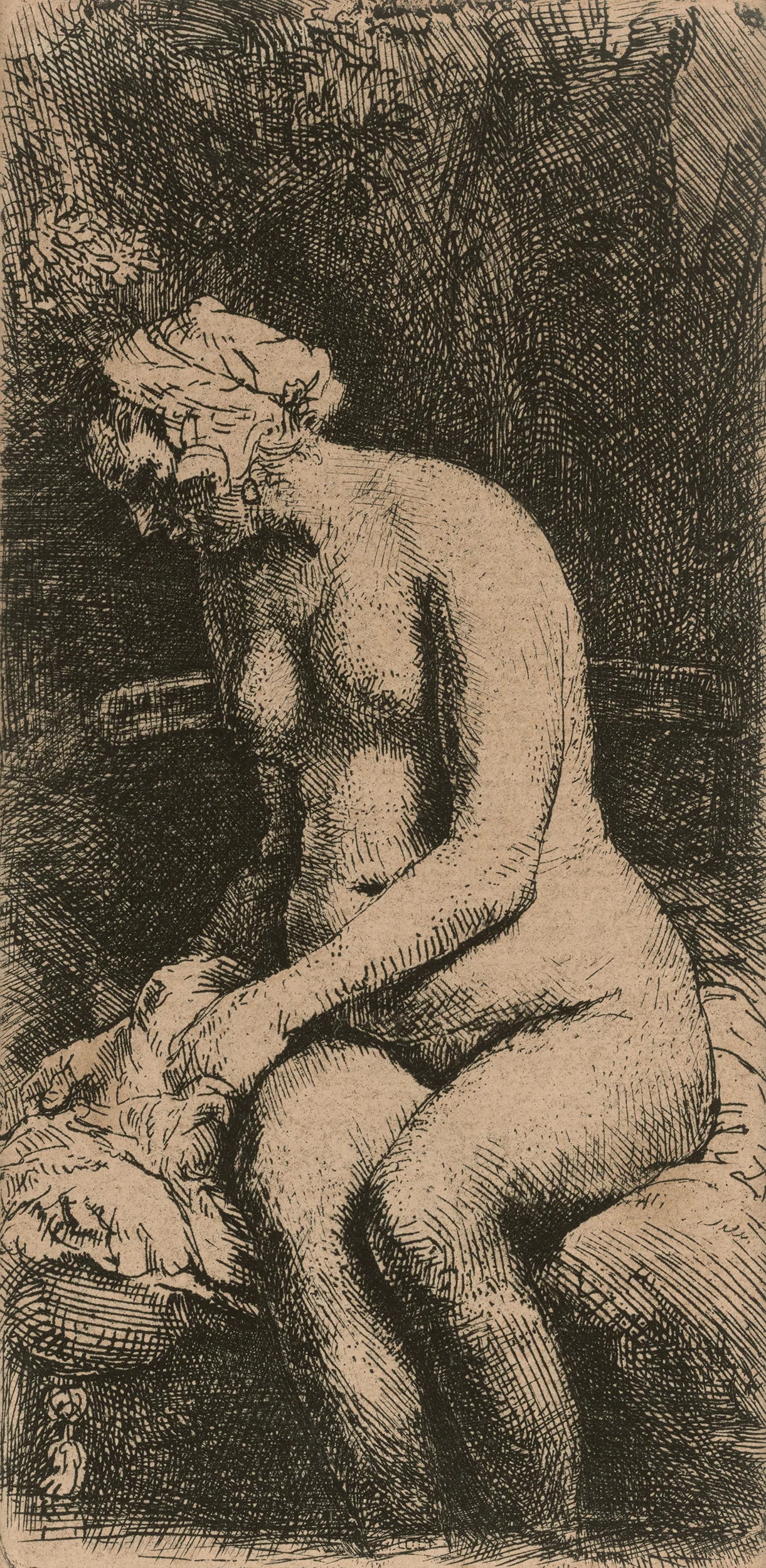

Description
Rembrandt van Rijn
1606-1669 | Dutch
Woman Bathing Her Feet in a Brook
Etching on paper
New Hollstein's 309, second state of II
Created from observations of a live model, this work started as a figure study before evolving into a more imaginative setting. It remains ambiguous whether the scene is set indoors, as suggested by the cushion the figure is seated on, or outdoors, indicated by the foliage in the background. The omission of her feet, suggesting they may be dangling in a brook, adds a charming touch to Rembrandt’s imaginative scene. The figure seems unaware of the viewer, presenting a dignified yet sensual demeanor.
The son of a miller, Rembrandt van Rijn is believed to have been born in Leiden on July 15, 1606. He studied first at the Latin School and then was enrolled at the University of Leiden at the age of 14. He soon left to study art—first with a local master, Jacob van Swanenburch, and then, in Amsterdam, with Pieter Lastman, known for his historical paintings. Rembrandt was an exceptionally gifted student and mastered his art in a mere six months. Now 22 years old, he returned to Leiden and was soon so highly regarded that he was able to take students of his own.
Though known today primarily for his paintings, Rembrandt's fame spread outside the Netherlands thanks to his etchings. He made hundreds of etchings throughout his career from 1626 until 1660, the year he was forced to sell his presses. He created etchings of many subjects, including self-portraits, biblical subjects, saints and allegories, and his work was avidly admired and collected, even during his lifetime.
Versions of this etching reside in numerous museums, including the Metropolitan Museum of Art in New York, the Art Institute of Chicago and the Cleveland Museum of Art, among many others.
Plate created 1658
Etching: 6" high x 3 1/8" wide (15.24 x 7.94 cm)
Frame: 17 7/8" high x 14" wide x 1 1/4" deep (45.40 x 35.56 x 7.94 cm)
Provenance:
Unknown collection stamp: cross in oval, not in Lugt.
Private collection
M.S. Rau, New Orleans
Literature:
F. W. H. Hollstein Dutch and Flemish Etchings, Engravings and Woodcuts. vols. 1-64, Amsterdam, 1954–2010, cat. no. B200, p. 97.
F. W. H. Hollstein Dutch & Flemish Etchings, Engravings and Woodcuts, 1450-1700, 2008, cat. no. 309, p. 297, ill.
David Maskill, 'Rembrandt van Rijn 1606-69 Netherlands', in William McAloon (ed.), Art at Te Papa(Wellington: Te Papa Press, 2009), p. 33.
1606-1669 | Dutch
Woman Bathing Her Feet in a Brook
Etching on paper
New Hollstein's 309, second state of II
Created from observations of a live model, this work started as a figure study before evolving into a more imaginative setting. It remains ambiguous whether the scene is set indoors, as suggested by the cushion the figure is seated on, or outdoors, indicated by the foliage in the background. The omission of her feet, suggesting they may be dangling in a brook, adds a charming touch to Rembrandt’s imaginative scene. The figure seems unaware of the viewer, presenting a dignified yet sensual demeanor.
The son of a miller, Rembrandt van Rijn is believed to have been born in Leiden on July 15, 1606. He studied first at the Latin School and then was enrolled at the University of Leiden at the age of 14. He soon left to study art—first with a local master, Jacob van Swanenburch, and then, in Amsterdam, with Pieter Lastman, known for his historical paintings. Rembrandt was an exceptionally gifted student and mastered his art in a mere six months. Now 22 years old, he returned to Leiden and was soon so highly regarded that he was able to take students of his own.
Though known today primarily for his paintings, Rembrandt's fame spread outside the Netherlands thanks to his etchings. He made hundreds of etchings throughout his career from 1626 until 1660, the year he was forced to sell his presses. He created etchings of many subjects, including self-portraits, biblical subjects, saints and allegories, and his work was avidly admired and collected, even during his lifetime.
Versions of this etching reside in numerous museums, including the Metropolitan Museum of Art in New York, the Art Institute of Chicago and the Cleveland Museum of Art, among many others.
Plate created 1658
Etching: 6" high x 3 1/8" wide (15.24 x 7.94 cm)
Frame: 17 7/8" high x 14" wide x 1 1/4" deep (45.40 x 35.56 x 7.94 cm)
Provenance:
Unknown collection stamp: cross in oval, not in Lugt.
Private collection
M.S. Rau, New Orleans
Literature:
F. W. H. Hollstein Dutch and Flemish Etchings, Engravings and Woodcuts. vols. 1-64, Amsterdam, 1954–2010, cat. no. B200, p. 97.
F. W. H. Hollstein Dutch & Flemish Etchings, Engravings and Woodcuts, 1450-1700, 2008, cat. no. 309, p. 297, ill.
David Maskill, 'Rembrandt van Rijn 1606-69 Netherlands', in William McAloon (ed.), Art at Te Papa(Wellington: Te Papa Press, 2009), p. 33.