🎉 Up to 70% Off Selected ItemsShop Sale

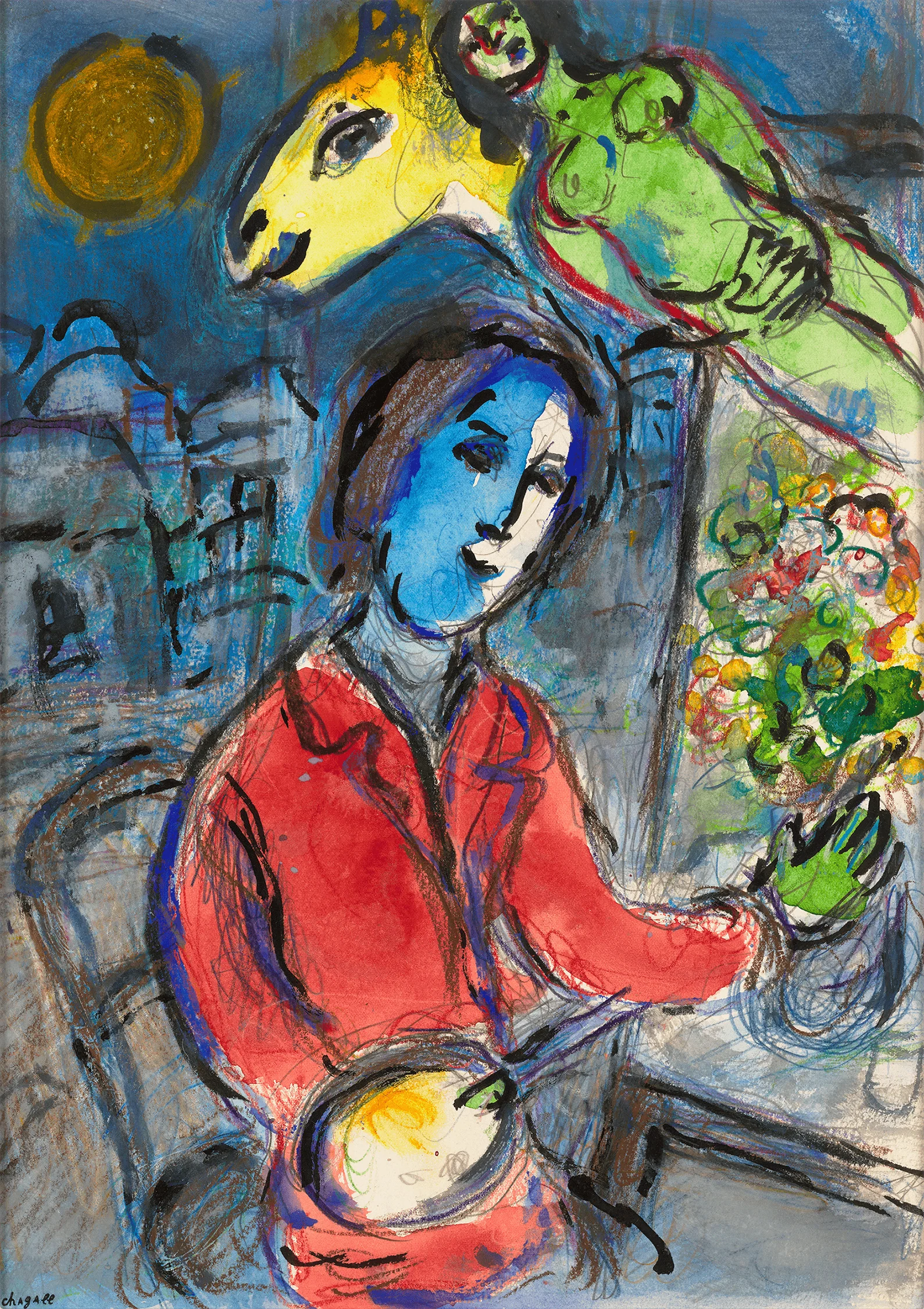
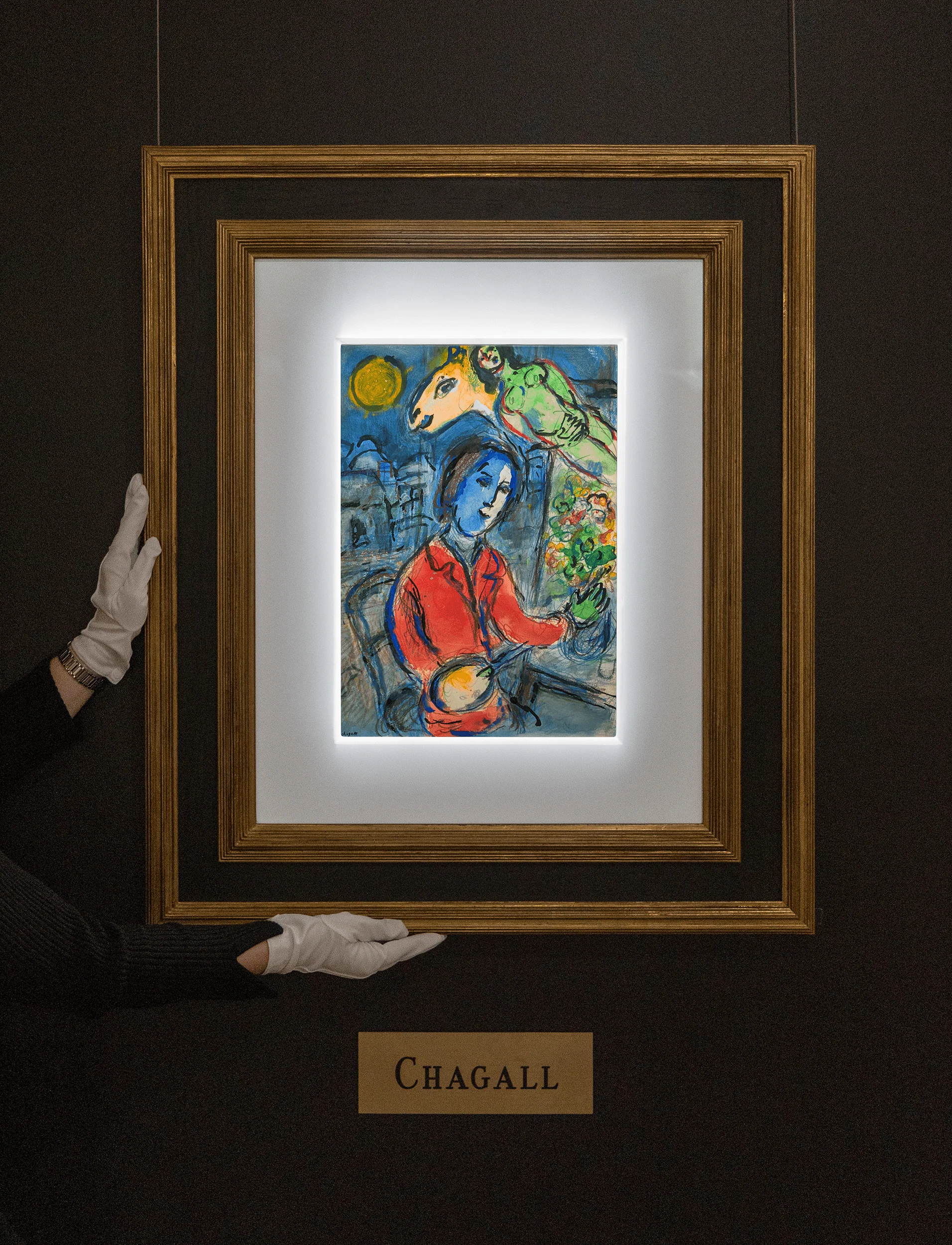
Peintre à la veste rouge et le nu vert by Marc Chagall
Marc Chagall
1887-1985 | Russian
Peintre à la veste rouge et le nu vert
(Painter with the Red Jacket and the Green Nude)
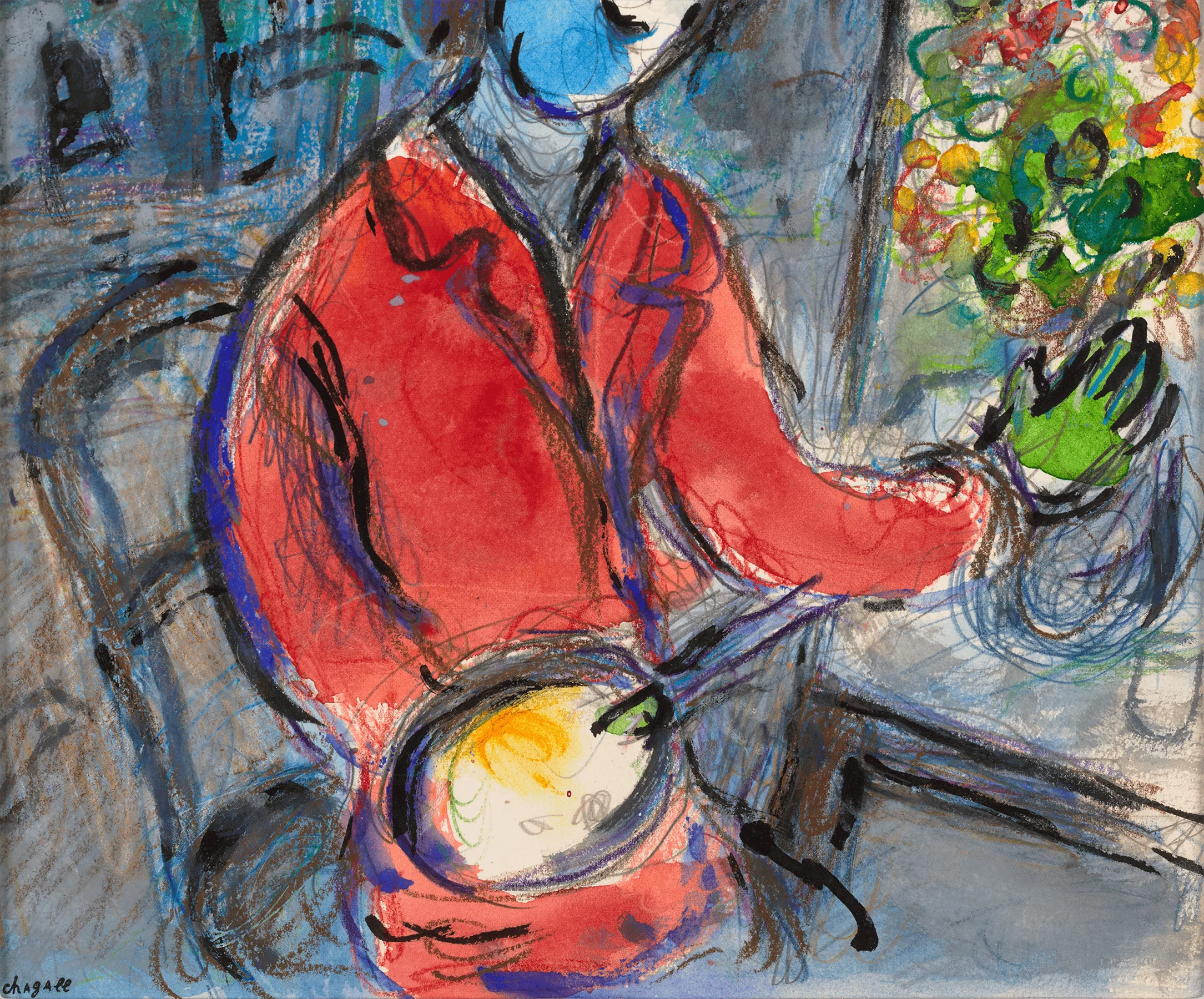
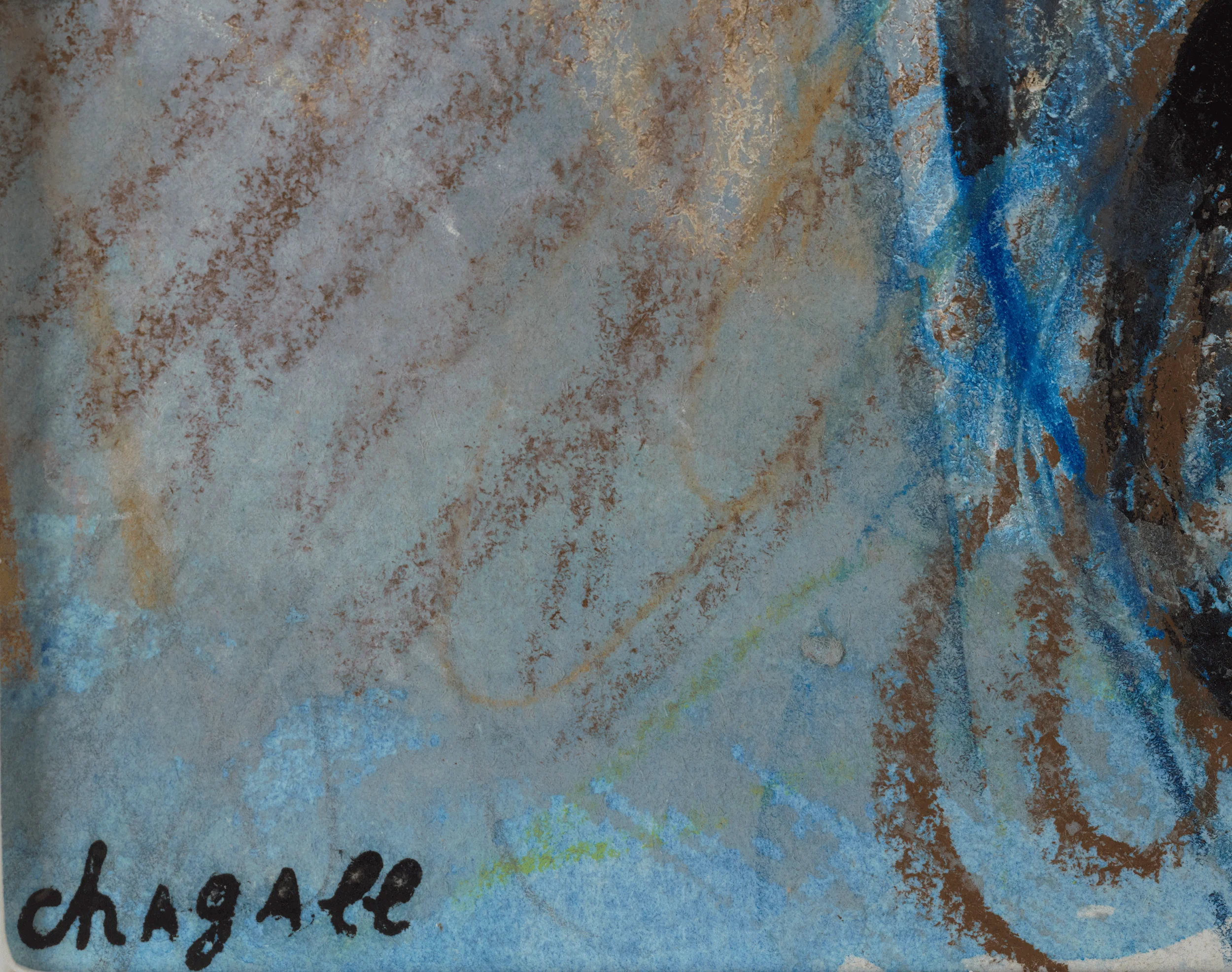
Stamped with signature "Chagall" (lower left)
Pastel, India ink and graphite on paper
This masterful self-portrait vividly captures some of Marc Chagall's most iconic motifs in his signature dreamlike style. Painted circa 1960, this work embodies the extraordinary significance of Chagall’s final decades, often referred to as his “Mediterranean Renaissance.”
Much like Rembrandt, whom Chagall greatly admired, the artist returned frequently to his own image as a means of exploring identity, memory and the very nature of artistic creation. In this vibrant work, Chagall depicts himself as the painter in a vivid red jacket, surrounded by the signature symbols of his unique visual language: a lush bouquet of florals, a floating nude, the yellow-headed goat and the rooftops of his beloved birthplace of Vitebsk. The result is a profoundly autobiographical composition in which the artist places himself at the center of his own dreamlike world.
This painting dates to one of the most consequential periods of Chagall's career. He had recently completed his revolutionary stained-glass windows for the Hadassah synagogue in Jerusalem and the Metz Cathedral. In 1960, France's Minister of Cultural Affairs commissioned Chagall to paint the iconic ceiling of the Paris Opera—a monumental undertaking that cemented his status as one of the most important living artists in the world. Despite being in his seventies, this extraordinary era of Chagall's output would ultimately prove to be one of his most ambitious and internationally acclaimed.
Marc Chagall was born in Vitebsk, Russia, to a large, close-knit Jewish family of herring merchants. He began studying painting in 1906 under the famed artist Yehuda Pen. In 1907, he moved to St. Petersburg and joined the school of the Society of Art Supporters. In 1910, Chagall relocated to Paris to be near the art community of the Montparnasse district, and he would eventually become a French citizen. Amongst the turmoil of the 20th century, including the Soviet regime and the outbreak of WWII, Chagall would continue to move between Russia, France and the United States throughout his life.
Chagall died at the age of 97 in Saint-Paul de Vence, France, in 1985, leaving behind an incredible body of work that remains among the most coveted in the art world, especially his profound self-portraits such as this one. His works belong to the collections of prestigious museums across the world, including the Museum of Modern Art, the Centre Pompidou, Tate Modern and the Art Institute of Chicago.
This work is accompanied by its certificate of authenticity issued by the Comité Marc Chagall.
Circa 1960
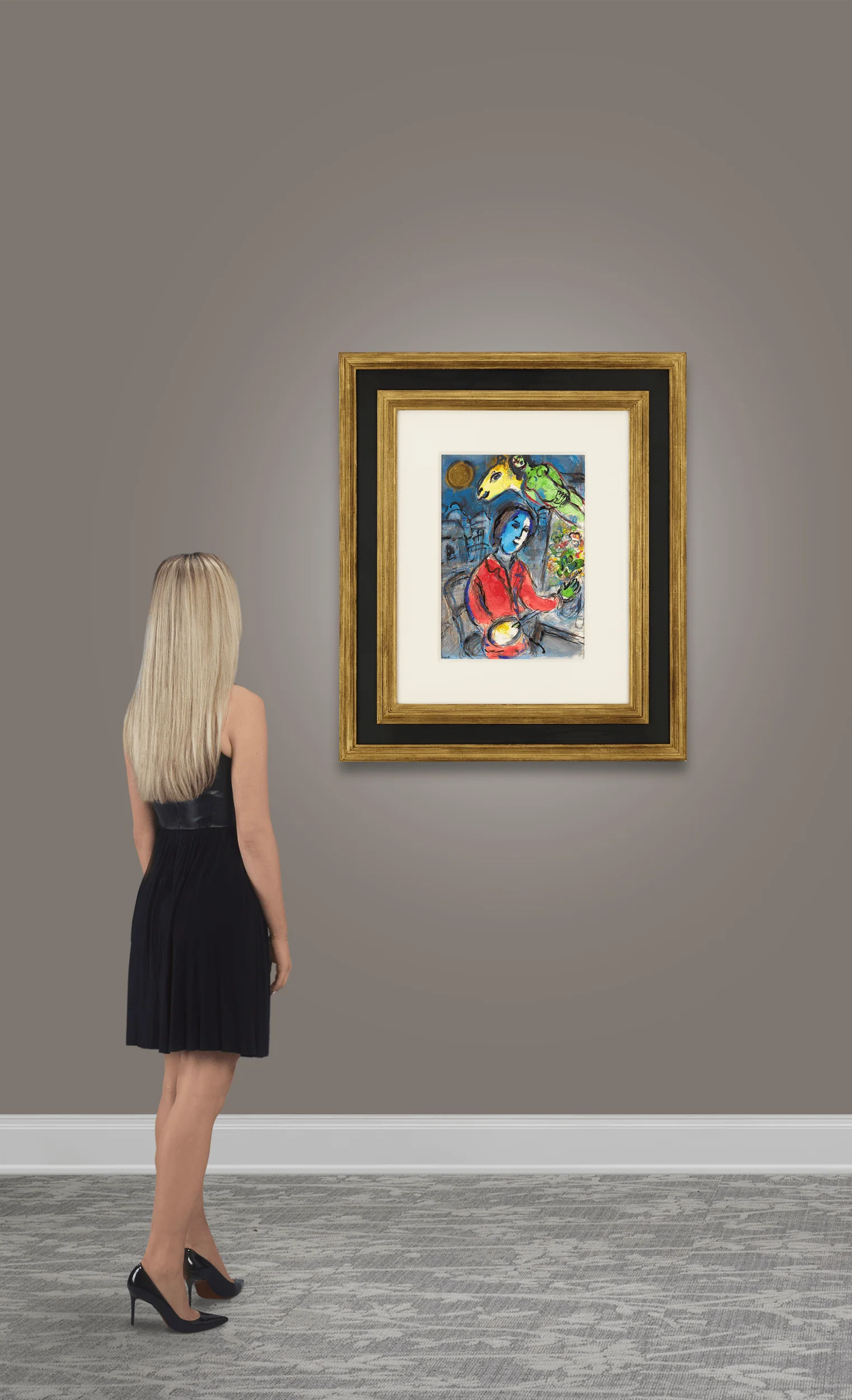
Paper: 16 1/2” high x 11 1/2” wide (41.9 x 29.2 cm)
Frame: 33” high x 28” wide x 1 1/2” deep (83.8 x 71.1 x 3.8 cm)
Provenance:
Estate of the artist
M.S. Rau, New Orleans
1887-1985 | Russian
Peintre à la veste rouge et le nu vert
(Painter with the Red Jacket and the Green Nude)
Stamped with signature "Chagall" (lower left)
Pastel, India ink and graphite on paper
This masterful self-portrait vividly captures some of Marc Chagall's most iconic motifs in his signature dreamlike style. Painted circa 1960, this work embodies the extraordinary significance of Chagall’s final decades, often referred to as his “Mediterranean Renaissance.”
Much like Rembrandt, whom Chagall greatly admired, the artist returned frequently to his own image as a means of exploring identity, memory and the very nature of artistic creation. In this vibrant work, Chagall depicts himself as the painter in a vivid red jacket, surrounded by the signature symbols of his unique visual language: a lush bouquet of florals, a floating nude, the yellow-headed goat and the rooftops of his beloved birthplace of Vitebsk. The result is a profoundly autobiographical composition in which the artist places himself at the center of his own dreamlike world.
This painting dates to one of the most consequential periods of Chagall's career. He had recently completed his revolutionary stained-glass windows for the Hadassah synagogue in Jerusalem and the Metz Cathedral. In 1960, France's Minister of Cultural Affairs commissioned Chagall to paint the iconic ceiling of the Paris Opera—a monumental undertaking that cemented his status as one of the most important living artists in the world. Despite being in his seventies, this extraordinary era of Chagall's output would ultimately prove to be one of his most ambitious and internationally acclaimed.
Marc Chagall was born in Vitebsk, Russia, to a large, close-knit Jewish family of herring merchants. He began studying painting in 1906 under the famed artist Yehuda Pen. In 1907, he moved to St. Petersburg and joined the school of the Society of Art Supporters. In 1910, Chagall relocated to Paris to be near the art community of the Montparnasse district, and he would eventually become a French citizen. Amongst the turmoil of the 20th century, including the Soviet regime and the outbreak of WWII, Chagall would continue to move between Russia, France and the United States throughout his life.
Chagall died at the age of 97 in Saint-Paul de Vence, France, in 1985, leaving behind an incredible body of work that remains among the most coveted in the art world, especially his profound self-portraits such as this one. His works belong to the collections of prestigious museums across the world, including the Museum of Modern Art, the Centre Pompidou, Tate Modern and the Art Institute of Chicago.
This work is accompanied by its certificate of authenticity issued by the Comité Marc Chagall.
Circa 1960
Paper: 16 1/2” high x 11 1/2” wide (41.9 x 29.2 cm)
Frame: 33” high x 28” wide x 1 1/2” deep (83.8 x 71.1 x 3.8 cm)
Provenance:
Estate of the artist
M.S. Rau, New Orleans
$598,500.00
Peintre à la veste rouge et le nu vert by Marc Chagall—
$598,500.00


Description
Marc Chagall
1887-1985 | Russian
Peintre à la veste rouge et le nu vert
(Painter with the Red Jacket and the Green Nude)
Stamped with signature "Chagall" (lower left)
Pastel, India ink and graphite on paper
This masterful self-portrait vividly captures some of Marc Chagall's most iconic motifs in his signature dreamlike style. Painted circa 1960, this work embodies the extraordinary significance of Chagall’s final decades, often referred to as his “Mediterranean Renaissance.”
Much like Rembrandt, whom Chagall greatly admired, the artist returned frequently to his own image as a means of exploring identity, memory and the very nature of artistic creation. In this vibrant work, Chagall depicts himself as the painter in a vivid red jacket, surrounded by the signature symbols of his unique visual language: a lush bouquet of florals, a floating nude, the yellow-headed goat and the rooftops of his beloved birthplace of Vitebsk. The result is a profoundly autobiographical composition in which the artist places himself at the center of his own dreamlike world.
This painting dates to one of the most consequential periods of Chagall's career. He had recently completed his revolutionary stained-glass windows for the Hadassah synagogue in Jerusalem and the Metz Cathedral. In 1960, France's Minister of Cultural Affairs commissioned Chagall to paint the iconic ceiling of the Paris Opera—a monumental undertaking that cemented his status as one of the most important living artists in the world. Despite being in his seventies, this extraordinary era of Chagall's output would ultimately prove to be one of his most ambitious and internationally acclaimed.
Marc Chagall was born in Vitebsk, Russia, to a large, close-knit Jewish family of herring merchants. He began studying painting in 1906 under the famed artist Yehuda Pen. In 1907, he moved to St. Petersburg and joined the school of the Society of Art Supporters. In 1910, Chagall relocated to Paris to be near the art community of the Montparnasse district, and he would eventually become a French citizen. Amongst the turmoil of the 20th century, including the Soviet regime and the outbreak of WWII, Chagall would continue to move between Russia, France and the United States throughout his life.
Chagall died at the age of 97 in Saint-Paul de Vence, France, in 1985, leaving behind an incredible body of work that remains among the most coveted in the art world, especially his profound self-portraits such as this one. His works belong to the collections of prestigious museums across the world, including the Museum of Modern Art, the Centre Pompidou, Tate Modern and the Art Institute of Chicago.
This work is accompanied by its certificate of authenticity issued by the Comité Marc Chagall.
Circa 1960
Paper: 16 1/2” high x 11 1/2” wide (41.9 x 29.2 cm)
Frame: 33” high x 28” wide x 1 1/2” deep (83.8 x 71.1 x 3.8 cm)
Provenance:
Estate of the artist
M.S. Rau, New Orleans
1887-1985 | Russian
Peintre à la veste rouge et le nu vert
(Painter with the Red Jacket and the Green Nude)
Stamped with signature "Chagall" (lower left)
Pastel, India ink and graphite on paper
This masterful self-portrait vividly captures some of Marc Chagall's most iconic motifs in his signature dreamlike style. Painted circa 1960, this work embodies the extraordinary significance of Chagall’s final decades, often referred to as his “Mediterranean Renaissance.”
Much like Rembrandt, whom Chagall greatly admired, the artist returned frequently to his own image as a means of exploring identity, memory and the very nature of artistic creation. In this vibrant work, Chagall depicts himself as the painter in a vivid red jacket, surrounded by the signature symbols of his unique visual language: a lush bouquet of florals, a floating nude, the yellow-headed goat and the rooftops of his beloved birthplace of Vitebsk. The result is a profoundly autobiographical composition in which the artist places himself at the center of his own dreamlike world.
This painting dates to one of the most consequential periods of Chagall's career. He had recently completed his revolutionary stained-glass windows for the Hadassah synagogue in Jerusalem and the Metz Cathedral. In 1960, France's Minister of Cultural Affairs commissioned Chagall to paint the iconic ceiling of the Paris Opera—a monumental undertaking that cemented his status as one of the most important living artists in the world. Despite being in his seventies, this extraordinary era of Chagall's output would ultimately prove to be one of his most ambitious and internationally acclaimed.
Marc Chagall was born in Vitebsk, Russia, to a large, close-knit Jewish family of herring merchants. He began studying painting in 1906 under the famed artist Yehuda Pen. In 1907, he moved to St. Petersburg and joined the school of the Society of Art Supporters. In 1910, Chagall relocated to Paris to be near the art community of the Montparnasse district, and he would eventually become a French citizen. Amongst the turmoil of the 20th century, including the Soviet regime and the outbreak of WWII, Chagall would continue to move between Russia, France and the United States throughout his life.
Chagall died at the age of 97 in Saint-Paul de Vence, France, in 1985, leaving behind an incredible body of work that remains among the most coveted in the art world, especially his profound self-portraits such as this one. His works belong to the collections of prestigious museums across the world, including the Museum of Modern Art, the Centre Pompidou, Tate Modern and the Art Institute of Chicago.
This work is accompanied by its certificate of authenticity issued by the Comité Marc Chagall.
Circa 1960
Paper: 16 1/2” high x 11 1/2” wide (41.9 x 29.2 cm)
Frame: 33” high x 28” wide x 1 1/2” deep (83.8 x 71.1 x 3.8 cm)
Provenance:
Estate of the artist
M.S. Rau, New Orleans